



The Future of Farming: How Hydroponics Reduces Water Use and Environmental Impact
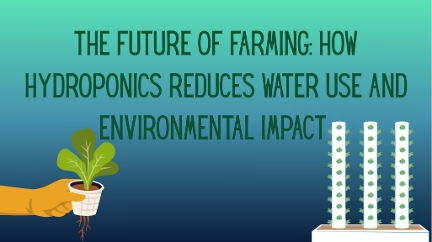
As our global population grows, the pressure on our planet’s resources intensifies. Traditional agriculture, while essential, faces significant challenges related to water scarcity, land use, and environmental pollution. But what if we could grow more food with fewer resources? A revolutionary approach to cultivation is gaining ground, promising a more sustainable path forward for feeding the world.
A Greener Way to Grow: Slashing Water Consumption
When you think of farming, you likely picture vast fields of soil under an open sky. Hydroponics turns that image on its head by eliminating soil entirely. Instead, plants are grown in a water-based, nutrient-rich solution. So, what makes this soil-free method so revolutionary for our planet’s most precious resource?
The answer lies in its efficiency. In traditional farming, a large percentage of water is lost to evaporation, runoff, or absorption into areas the plant roots can’t reach. Hydroponics tackles this inefficiency directly with closed-loop systems. In fact, by recirculating water and delivering it directly to the roots, well-managed sustainable hydroponic systems can use less water than traditional soil-based farming. This isn’t just a minor improvement; it’s a fundamental shift in how we manage one of our most essential resources.
Beyond Water: Eliminating Pesticide Runoff and Soil Degradation
But the environmental benefits don’t stop at the water tap. Hydroponics tackles another major agricultural challenge head-on: chemical pollution and soil health. Because these systems are often enclosed and precisely controlled, the need for chemical pesticides and herbicides is drastically reduced or even eliminated.
This has a powerful ripple effect. Without heavy pesticide use, there is no chemical runoff to contaminate nearby streams, rivers, and groundwater. Furthermore, by growing food without soil, hydroponics completely sidesteps the issues of soil degradation and erosion, which are serious long-term threats to global food production. It allows us to preserve our precious topsoil for future generations while still producing the fresh food we need today.
From Farm to Table in Fewer Miles
Imagine fresh lettuce, herbs, and tomatoes grown just a few blocks from your home, even in the heart of a bustling city. This isn’t science fiction; it’s the reality of localized hydroponic farming. Because these systems are not dependent on vast tracts of fertile land, they can be set up almost anywhere: on rooftops, in warehouses, or in repurposed shipping containers.
This rise of urban and vertical farming has a profound impact on our carbon footprint. By growing food closer to where it’s consumed, we drastically cut down on “food miles”—the distance food travels from farm to plate. This means less fuel burned for transportation, less need for refrigerated storage, and a significant reduction in food spoilage.
The result is fresher, more nutritious produce for communities and a lighter load on our environment. Visit https://hydroponics360.com to learn more.
Empowering Sustainable Communities Through Innovation
Hydroponics is more than just a farming technique—it is a tool for empowering communities to take control of their own food production. Reducing dependence on vast farmlands, unpredictable weather, and long supply chains allows both rural and urban areas to create localized, self-sufficient food systems. Schools, community centers, and cooperatives are beginning to adopt hydroponic projects, not only to grow food but also to educate people about sustainability, resource efficiency, and healthy eating. These initiatives foster community engagement, create green jobs, and inspire the next generation to innovate for a more resilient food future. When combined with renewable energy sources and sustainable building practices, hydroponic farming can become a cornerstone of climate-smart agriculture worldwide.
FAQs
Is hydroponics complicated or expensive for beginners?
While commercial-scale operations are complex, starting a small home hydroponics system can be surprisingly simple and affordable. Many starter kits are available, and basic systems can be built using common materials. It’s a great way to learn the principles of soil-free growing on a manageable scale.
Does hydroponically grown food taste different from soil-grown food?
When managed correctly, there is no significant difference in taste. The flavor of a plant is determined by its genetics and the nutrients it receives. Since hydroponic systems provide a precise and consistent supply of all necessary nutrients, the resulting produce is often just as flavorful and nutritious—if not more so—than its soil-grown counterparts.
Can all types of plants be grown hydroponically?
Most leafy greens (like lettuce and spinach), herbs, tomatoes, peppers, and strawberries thrive in hydroponic systems. However, large root vegetables like potatoes and carrots are not well-suited for most common hydroponic methods, and large grain crops or fruit trees are impractical for current systems.
How does hydroponics contribute to food security?
By enabling food production in arid climates, dense urban areas, and regions with poor soil quality, hydroponics can create reliable, year-round access to fresh produce. This decentralizes the food supply, making communities more resilient to disruptions in traditional agricultural chains caused by climate change or other crises.