



How Remote Work Is Influencing Property Preferences in Dubai
The remote work revolution has fundamentally transformed property preferences in Dubai’s real estate market. As professionals embrace flexible work arrangements, their housing requirements have evolved, creating new demand patterns that reshape buyer and tenant priorities. Property experts at Lupos Real Estate observe that remote work trends are driving significant changes in how people evaluate residential options, with functionality and lifestyle integration becoming primary decision factors.

Changes in Buyer and Tenant Priorities
Remote work has dramatically altered the criteria buyers and tenants use when selecting properties in Dubai. Traditional priorities such as proximity to business districts have given way to new considerations focused on creating productive home environments.
Key priority shifts include:
- Home Office Potential. Dedicated workspace capability has become a primary requirement for property selection.
- Technology Infrastructure. High-speed internet connectivity and reliable utilities are now essential features.
- Natural Light and Ventilation. Windows, balconies, and outdoor access have gained increased importance for daily productivity.
The emphasis has shifted from location convenience to space functionality, with buyers seeking properties that can accommodate both living and working needs seamlessly. This transformation affects everything from apartment layouts to community planning in Dubai’s residential developments.
Demand for Larger Spaces and Home Offices
Remote work has created unprecedented demand for larger residential spaces in Dubai, as professionals require dedicated areas for productive work environments. The traditional studio and one-bedroom apartment market has experienced decreased interest, while multi-bedroom units with flexible space configurations have become highly sought after.
Home office requirements extend beyond simple room availability to include proper lighting, noise control, and technological infrastructure. This space expansion trend has influenced both existing property valuations and new development planning.
Suburban and Outlying Area Trends
Remote work flexibility has sparked increased interest in Dubai’s suburban and outlying areas, as professionals no longer require daily commutes to central business districts. Communities such as Dubai Hills Estate, Arabian Ranches, and Jumeirah Village Circle have experienced heightened demand as buyers prioritize space, value, and lifestyle amenities over proximity to traditional office locations.
Popular suburban features attracting remote workers:
- Larger Living Spaces. More square footage at competitive prices compared to central locations.
- Community Amenities. Parks, recreational facilities, and family-friendly environments.
- Parking Availability. Essential for occasional office visits and lifestyle convenience.
This geographical shift has created new investment opportunities in previously overlooked areas while moderating demand in some premium central locations. The trend represents a fundamental change in how location value is perceived in Dubai’s residential market.
Developer Response: New Project Features
Dubai’s property developers have rapidly adapted to remote work trends by incorporating specific features into new residential projects. Modern developments increasingly include dedicated co-working spaces, business centers, and flexible room designs that accommodate home office requirements.
New project features include soundproof study rooms, enhanced internet infrastructure, and communal work areas within residential complexes. Developers are also focusing on outdoor spaces and natural lighting optimization to create environments that support productivity and well-being.
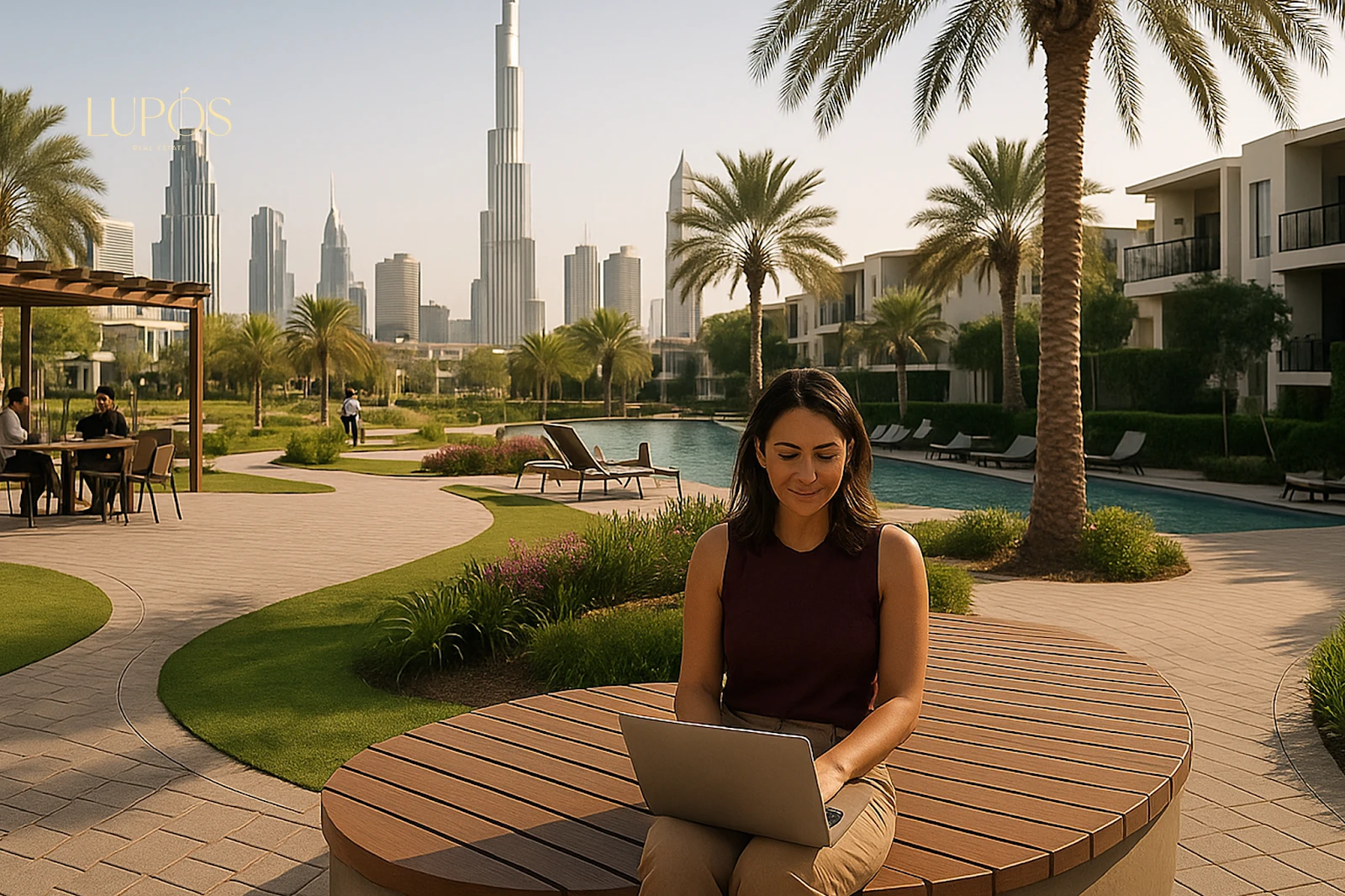
Community Amenities and Work-Life Balance
The importance of community amenities has increased significantly as remote workers seek environments that support both professional productivity and personal lifestyle needs. Properties offering comprehensive amenity packages have become more attractive to buyers and tenants who spend increased time within their residential communities.
Essential community features for remote workers:
- Fitness and Recreation. Gyms, pools, and sports facilities for maintaining physical health during sedentary work.
- Social Spaces. Cafes, lounges, and meeting areas for networking and social interaction.
- Green Areas. Parks, gardens, and outdoor spaces for mental well-being and work breaks.
Communities that successfully integrate work-life balance amenities have experienced stronger demand and property value appreciation. This trend has influenced both existing community management strategies and new development planning across Dubai’s residential sectors.
Impact on Commercial Property Demand
Remote work adoption has significantly impacted Dubai’s commercial property market, with many companies reducing office space requirements or adopting flexible workspace solutions. Traditional long-term office leases have given way to shorter-term arrangements and co-working space preferences as businesses adapt to hybrid work models.
The commercial real estate sector has responded by offering more flexible lease terms, shared workspace options, and technology-enhanced office environments. Some commercial properties have been converted or repurposed to meet changing demand patterns, while new developments focus on flexibility and adaptability.
This shift has created opportunities in the co-working and flexible office space market while challenging traditional commercial property investment strategies. Investors must now consider how remote work trends will continue affecting commercial property demand and rental yields.
Conclusion: The Future of Remote Work in Dubai Real Estate
The influence of remote work on Dubai property preferences represents a permanent shift rather than a temporary trend. The emphasis on larger spaces, home office capability, and lifestyle amenities will continue shaping residential demand patterns and development strategies throughout the emirate.
Successful navigation of this evolving market requires understanding that property value is increasingly defined by functionality, flexibility, and lifestyle integration rather than traditional location metrics alone. Both buyers and investors must adapt their strategies to align with these changing preferences.
The future of Dubai’s real estate market will be characterized by properties and communities that successfully balance professional productivity requirements with lifestyle aspirations. This evolution creates both challenges and opportunities for market participants who understand and respond to remote work’s lasting impact on property preferences and investment decisions.