

Are Floatovoltaics The Next Big Thing In Renewable Energy?
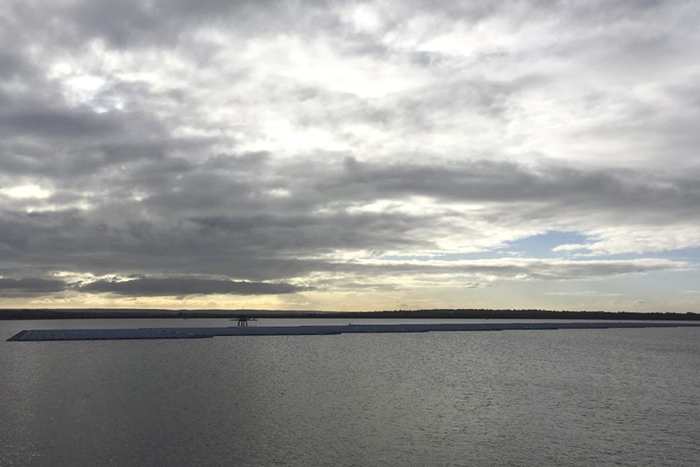
Can Floating Solar on Reservoirs Meet America’s Electricity Demand?
– P.L., via e-mail
Energy usage in the U.S. has surged in recent years, with electric power sector 96 percent of the country’s utility-scale electricity. To address this, floatovoltaics—solar panel systems that float on water—have the potential to combat growing energy demands. “Floatovoltaics are one of the fastest-growing power generation technologies today and a promising low-carbon energy source,” University of Texas aquatic ecosystem ecologist Rafael Almeida told Eos.
Floating solar farms operate similarly to ground-mounted farms. Devices keeping the system buoyant sit on top of the water, cooling the panels, which increases efficiency. Also, using water surfaces frees up land for other uses. Germany, Russia and China are already benefiting from floating solar farms, suggesting that the U.S. could follow suit.
However, implementing floatovoltaics has issues. As the idea is relatively new, long-term durability is uncertain. Harsh weather, declining performance and maintenance needs must be studied as systems age. Connecting from water to land adds more complexity, as scientists must ensure efficient power transmission. With time will come a better understanding of the potential to implement them nationwide.
But floatovoltaics do show great promise, though they are unlikely to meet all of the U.S. energy needs alone. Waterbody availability, environmental and logistical concerns mean that floating solar farms could be a complementary solution rather than a standalone one. More research on renewable energy, along with careful system design, will be need to ensure successful implementation. When combined with other efforts, floatovoltaics could help reduce reliance on fossil fuels and meet a large portion of U.S. energy demands. “On one hand, we can’t put too many barriers to this potentially important sector to advance,” Almeida added. “But on the other hand, we need to understand the trade-offs and fill our prevailing knowledge gaps with more studies.”
Floatovoltaics present a revolutionary approach to addressing the U.S. energy needs. Through more research and design, these systems could become key in future renewable energy solutions. Support the adoption of renewable technologies by engaging with community leaders, advocating for local initiatives, and supporting green energy providers. By staying informed and spreading awareness about innovations like floating solar farms, you can help shape the future of renewable energy in the United States.
CONTACTS
EarthTalk® is produced by Roddy Scheer & Doug Moss for the 501(c)3 nonprofit EarthTalk. See more at https://emagazine.com. To donate, visit https://earthtalk.org. Send questions to: question@earthtalk.org.