

Environmental News: The Latest on Climate, Policy & Conservation

Environmental News: The Latest on Climate, Policy & Conservation
The urgency of addressing environmental issues has never been more pronounced, as climate change continues to impact ecosystems and human societies globally. This article delves into the latest developments in environmental news, focusing on climate change, policy initiatives, conservation efforts, pollution regulation, renewable energy milestones, and biodiversity news. Readers will gain insights into how these elements interconnect and influence sustainability practices. As the world grapples with rising temperatures, biodiversity loss, and increasing pollution, understanding these dynamics is crucial for fostering a sustainable future. This article will explore recent climate policies, conservation strategies, pollution control measures, renewable energy advancements, and the role of biodiversity protection in mitigating environmental challenges.
Recent Developments in Climate Change Policy

Climate change policy is evolving rapidly as governments and organizations recognize the need for immediate action. Recent international agreements aim to limit global warming and promote sustainable practices. These policies often focus on reducing greenhouse gas emissions, transitioning to renewable energy sources, and enhancing climate resilience. The Paris Agreement remains a cornerstone of global climate efforts, with countries committing to specific targets to curb emissions and promote sustainable development. According to the Intergovernmental Panel on Climate Change (IPCC), global carbon dioxide emissions must decline by about 45% from 2010 levels by 2030 to limit warming to 1.5°C.
The Role of International Agreements
International agreements play a pivotal role in shaping climate policy. The Paris Agreement, adopted in 2015, set ambitious goals for limiting global temperature rise to well below 2 degrees Celsius, preferably to 1.5 degrees. Countries are required to submit their Nationally Determined Contributions (NDCs), outlining their plans to reduce emissions. This collaborative approach fosters accountability and encourages nations to share best practices in sustainability. The United Nations Environment Programme (UNEP) regularly assesses progress, highlighting the need for increased ambition and implementation.
National Policies and Local Initiatives
In addition to international agreements, national policies are crucial for implementing climate strategies. Countries are increasingly adopting legislation that promotes renewable energy, energy efficiency, and sustainable land use. For example, the United States Environmental Protection Agency (EPA) has introduced stricter regulations on methane emissions from oil and gas operations, a potent greenhouse gas. Local initiatives, such as community-based conservation projects, also contribute significantly to climate resilience. These grassroots efforts often involve collaboration between governments, NGOs, and local communities, ensuring that policies are tailored to specific environmental contexts.
Conservation Efforts and Biodiversity Protection
Conservation efforts are essential for protecting biodiversity and maintaining ecosystem health. As habitats are threatened by climate change, pollution, and urbanization, proactive measures are needed to safeguard vulnerable species and ecosystems. Conservation strategies often include habitat restoration, species protection programs, and sustainable land management practices. According to the International Union for Conservation of Nature (IUCN), over 28,000 species are currently threatened with extinction, underscoring the urgency of conservation actions.
Conservation Wins and Habitat Restoration Initiatives
Recent conservation wins demonstrate the positive impact of targeted efforts. For instance, the global population of the mountain gorilla has increased by over 25% in the last decade due to anti-poaching measures and habitat protection. Habitat restoration is a critical component of conservation efforts. Projects aimed at restoring degraded ecosystems can enhance biodiversity and improve ecosystem services. For example, reforestation initiatives not only sequester carbon but also provide habitats for wildlife. These projects often involve community engagement, ensuring that local populations benefit from restored ecosystems.
Beyond ecological gains, such restoration efforts also yield significant socioeconomic and cultural advantages for local communities.
Socioeconomic Benefits of Community-Based Restoration
Environmental restoration projects are commonly touted for their ecological positives, but such projects can also provide significant socioeconomic and cultural benefits to local communities. We assessed the social dimensions of a large-scale coral reef restoration project in Maunalua Bay, O‘ahu. Results indicate substantial direct economic benefits, including the creation of more than 60+ jobs, benefiting more than 250 individuals and 81 households. The project helped develop a skilled workforce in a local business dedicated to environmental restoration and increased the capacity of community organizations. Other major benefits include revitalization of Native Hawaiian cultural practices and traditions. Our findings show that restoration projects that explicitly incorporate efforts to build community awareness, involvement, and a shared responsibility for a site may ultimately create the long-term capacity for sustainable stewardship programs. We conclude by discussing lessons learned for engaging productively with communities in environmental restoration and stewardship, which remains a central focus in conservation worldwide.
Restoring ecosystems, restoring community: socioeconomic and cultural dimensions of a community-based coral reef restoration project, JN Kittinger, 2016
Species Protection Programs
Species protection programs focus on safeguarding endangered and threatened species from extinction. These initiatives may include legal protections, breeding programs, and habitat conservation efforts. By addressing the specific needs of vulnerable species, conservationists can help maintain biodiversity and ecosystem stability. For example, the recovery of the bald eagle in North America is a notable success story, attributed to the banning of DDT and habitat protection.
Pollution Regulation and Environmental Health
Pollution regulation is a critical aspect of environmental news, addressing air, water, and soil contamination that threaten ecosystems and human health. Governments worldwide are implementing stricter standards to reduce pollutants such as particulate matter, nitrogen oxides, and plastic waste. The EPA reports that air quality in the United States has improved significantly over the past two decades, yet challenges remain in urban and industrial areas.
Recent milestones include the European Union’s adoption of the Circular Economy Action Plan, aiming to reduce waste and promote sustainable resource use. Additionally, global efforts to reduce single-use plastics have gained momentum, with over 60 countries implementing bans or restrictions.
The Importance of Renewable Energy
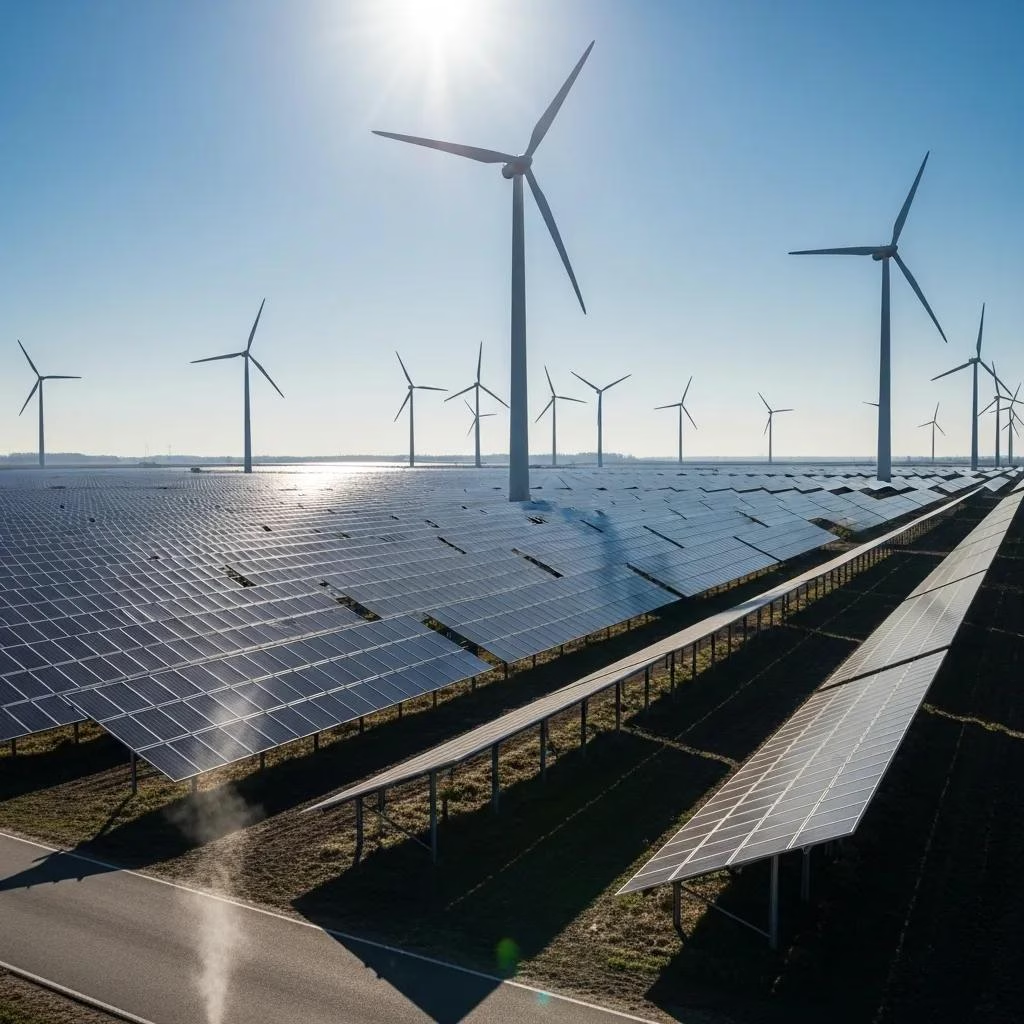
Renewable energy is a key player in the fight against climate change. Transitioning from fossil fuels to renewable sources such as solar, wind, and hydroelectric power can significantly reduce greenhouse gas emissions. This shift not only mitigates climate change but also promotes energy independence and economic growth. According to the International Energy Agency (IEA), renewables accounted for nearly 30% of global electricity generation in 2023, with solar and wind leading the growth.
Advancements in Clean Energy Technology
Recent advancements in clean energy technology have made renewable energy more accessible and efficient. Innovations in solar panel design, wind turbine efficiency, and energy storage solutions are driving down costs and increasing adoption rates. For example, battery storage capacity has doubled globally in the past five years, enabling better integration of intermittent renewable sources. As technology continues to evolve, the potential for renewable energy to meet global energy demands grows.
Economic Benefits of Renewable Energy
Investing in renewable energy can yield significant economic benefits. The renewable energy sector has become a major source of job creation, with millions of jobs in manufacturing, installation, and maintenance. The International Renewable Energy Agency (IRENA) estimates that renewable energy employment reached 13.5 million jobs worldwide in 2023. Additionally, transitioning to renewable energy can reduce reliance on imported fuels, enhancing energy security and stabilizing local economies.
Community Engagement in Environmental Conservation
Community engagement is vital for the success of environmental conservation efforts. Involving local populations in decision-making processes fosters a sense of ownership and responsibility towards natural resources. Effective community engagement strategies can lead to more sustainable outcomes and enhance the resilience of ecosystems.
Education and Awareness Programs
Education and awareness programs play a crucial role in promoting environmental stewardship. By informing communities about the importance of conservation and sustainable practices, these programs can inspire action and foster a culture of sustainability. Workshops, seminars, and outreach initiatives can empower individuals to make informed choices that benefit the environment.
Collaborative Conservation Projects
Collaborative conservation projects bring together various stakeholders, including governments, NGOs, and local communities, to address environmental challenges. These partnerships can leverage resources, knowledge, and expertise to implement effective conservation strategies. By working together, stakeholders can achieve greater impact and foster long-term sustainability.
This collaborative approach is further supported by research highlighting frameworks for community-led regeneration.
Community-Led Landscape Restoration Framework
With growing calls for people-centred and equitable approaches to regeneration and restoration, this review paper contributes to enhancing understanding of the role of communities in restoring landscapes across the world. Addressing the lack of clarity around tangible pathways for equitable and inclusive forms of landscape regeneration, we focus on exploring the practices and forms through which communities engage with landscape regeneration and restoration. We undertake a systematic review of an international selection of community-based landscape regeneration initiatives worldwide to better understand how communities engage with, manage and lead regeneration practices. We map landscape regeneration and restoration initiatives across international contexts based on four themes around community organisation, land ownership, engagement and land values. Borne out of this review, we propose an analytical framework for community-based landscape regeneration in order to support and mobilise more democratic and socially just approaches to ecological regeneration initiatives.
Community-led landscape regeneration: A review of and framework for engagement in restoration initiatives, D Brown, 2026
Key Environmental Milestones Timeline
Understanding the historical context of environmental progress helps frame current challenges and achievements. Below is a timeline highlighting significant milestones in environmental policy, conservation, and renewable energy:
- 1970: First Earth Day celebrated, raising global environmental awareness.
- 1987: Montreal Protocol signed to phase out ozone-depleting substances.
- 1992: United Nations Earth Summit in Rio de Janeiro, establishing Agenda 21.
- 2015: Paris Agreement adopted, setting global climate targets.
- 2020: Global renewable energy capacity surpasses 2,500 GW.
- 2023: IPCC Sixth Assessment Report emphasizes urgent emission reductions.
- 2024: Over 60 countries implement single-use plastic bans or restrictions.
How to Stay Informed on Environmental News
Staying updated on environmental news is essential for informed action and advocacy. Trusted sources provide accurate, timely, and comprehensive coverage. Recommended outlets include:
- United Nations Environment Programme (UNEP) – Global environmental assessments and policy updates.
- Intergovernmental Panel on Climate Change (IPCC) – Authoritative climate science reports.
- Environmental Protection Agency (EPA) – U.S. environmental regulations and research.
- National Oceanic and Atmospheric Administration (NOAA) – Climate and weather data.
- Natural Resources Defense Council (NRDC) – Environmental advocacy and news.
- Nature Environmental Sciences – Peer-reviewed scientific research.
- Reuters Environment News – Up-to-date global environmental news.
Frequently Asked Questions (FAQ) About Environmental News
Conclusion
The intersection of climate change, policy, conservation, pollution regulation, renewable energy, and biodiversity protection is critical for addressing the environmental challenges we face today. As we navigate this complex landscape, it is essential to stay informed about the latest developments and engage in sustainable practices. By understanding the importance of international agreements, national policies, community engagement, and technological advancements, we can contribute to a more sustainable future for our planet.