



Rising Seas and Coastal Impacts Explained
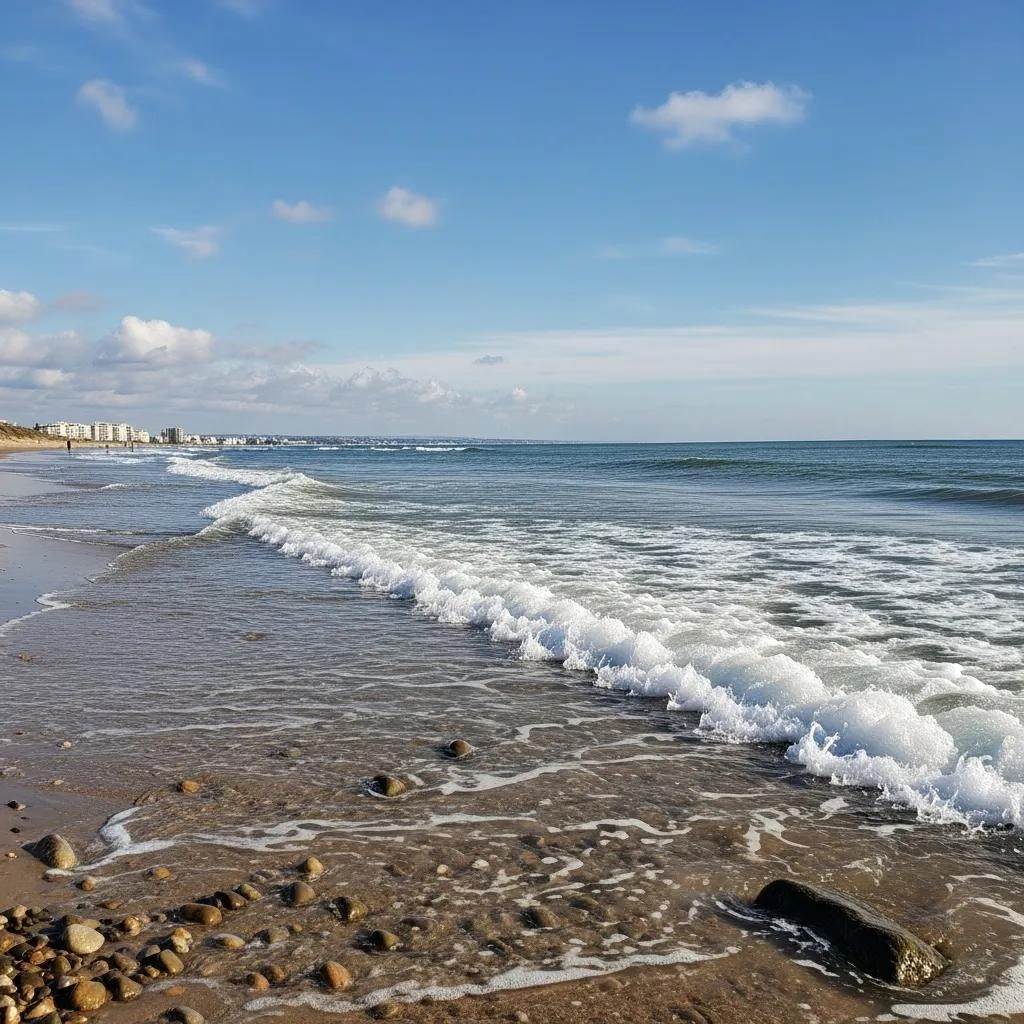
Rising Seas and Coastal Impacts: Causes, Consequences, and Practical Adaptation
Rising sea levels increasingly threaten coastal communities, infrastructure, and ecosystems. The main drivers are human-driven climate change — which warms oceans and melts ice — plus local factors that alter how water moves and accumulates. Knowing the science behind sea level rise and the ways it affects people and habitats helps communities plan smarter, protect assets, and build resilience. This article summarizes the causes of sea level change, the effects of coastal flooding, the risks tied to a warming climate, and practical adaptation strategies. It also covers how individuals can help and highlights recent trends and data.
Beyond the high-level overview, this article aims to help readers translate scientific trends into practical choices: how planners set priorities, how property owners think about risk, and how communities can sequence investments so benefits are delivered now while keeping longer-term options open. The guidance emphasizes flexible, staged responses that account for uncertainty in future change rather than one-time fixes.
Key Takeaways
- Sea level rise is largely driven by climate change and human activity, and it threatens coastal communities and ecosystems.
- Thermal expansion of warming ocean water plus melting glaciers and ice sheets are the main contributors to rising seas.
- Coastal flooding increases risks to people, property, and natural habitats, and can force costly relocations and repairs.
- Adaptation mixes engineered defenses, nature-based solutions, and community planning to reduce impacts and increase resilience.
- Restoring wetlands and other green infrastructure can absorb floodwaters, slow erosion, and deliver co-benefits for biodiversity and water quality.
- Everyday choices — from cleaner transport to energy efficiency — help reduce greenhouse gas emissions and long-term sea level risk.
- Recent projections show substantial sea level rise by 2100 under current emissions pathways, reinforcing the need for planning now.
- Policy and funding shifts are increasingly focused on climate adaptation, resilient design, and sustainable coastal practices.
- Communities strengthen preparedness through flood defenses, land-use planning, and coordinated local response efforts.
What Are the Main Causes of Sea Level Change?
Sea level change results from a mix of global and local factors. Globally, the ocean volume increases when water warms and expands, and when land ice melts into the sea. Local drivers — such as land subsidence, sediment supply changes, and coastal development — can make sea level impacts more severe in some places. Understanding these mechanisms is essential for predicting where and how fast changes will occur.
Local context matters for decisions: a community built on compressible soils is likely to experience faster relative sea level rise than nearby rocky coasts, and altered sediment supply can accelerate shoreline retreat even without large changes in mean sea level. Planners use this localized understanding to prioritize monitoring, protective investments, and zoning measures that reduce long-term exposure.
How Do Greenhouse Gases and Climate Change Drive Sea Level Rise?
Greenhouse gases like carbon dioxide and methane trap heat in the atmosphere, warming air and ocean. Warmer seas expand (thermal expansion), and higher temperatures accelerate glacier and ice sheet melt — both raise global mean sea level. Without steep cuts in emissions, projections show sea levels rising broadly in the range of about 2.5 feet (0.76 meters) to more than 6.5 feet (2 meters) by 2100, creating severe risks for low-lying coastal regions.
The timescale of response matters: some warming-driven changes occur over decades, while ice sheet responses can play out over centuries. That means near-term choices influence long-term risk trajectories. Even small differences in emissions pathways can change the scale and timing of impacts communities will face.
What Roles Do Thermal Expansion and Ice Melt Play in Rising Oceans?
Thermal expansion and ice loss are the two dominant contributors to observed sea level rise. Warmer water takes up more space, while melting from Greenland, Antarctica, and mountain glaciers adds freshwater to the ocean. Greenland’s ice sheet alone was losing mass at an accelerating pace — roughly 279 billion metric tons per year as of 2019 — which is a substantial contributor to global sea level change. Sea level trends also vary regionally due to local ocean circulation, land movement, and gravitational effects.
These contributors combine in different proportions across regions and timeframes. For coastal decision-making, understanding whether a location is more exposed to thermal-driven rise, glacier melt effects, or local subsidence helps tailor adaptation measures and timing.
Recent analyses emphasize how Greenland’s accelerating mass loss, driven by glacier dynamics, is a major ongoing contributor to global sea level rise.
Greenland Ice Sheet Mass Loss & Sea Level Rise Drivers
The Greenland ice sheet has lost mass over recent decades1 and contributed to sea level at a rate of ~ 0.8 mm/yr since 20022,3,4. While surface melting accounts for a large portion of recent mass loss, glacier dynamics (ice flow and discharge) have been responsible for roughly 66% of the total mass loss over the last 46 years1. Ice dynamics are expected to remain a primary driver of Greenland’s contribution to sea level loss over the coming century.
Ice dynamics will remain a primary driver of Greenland ice sheet mass loss over the next century, Y Choi, 2021
How Does Coastal Flooding Affect Communities and Ecosystems?
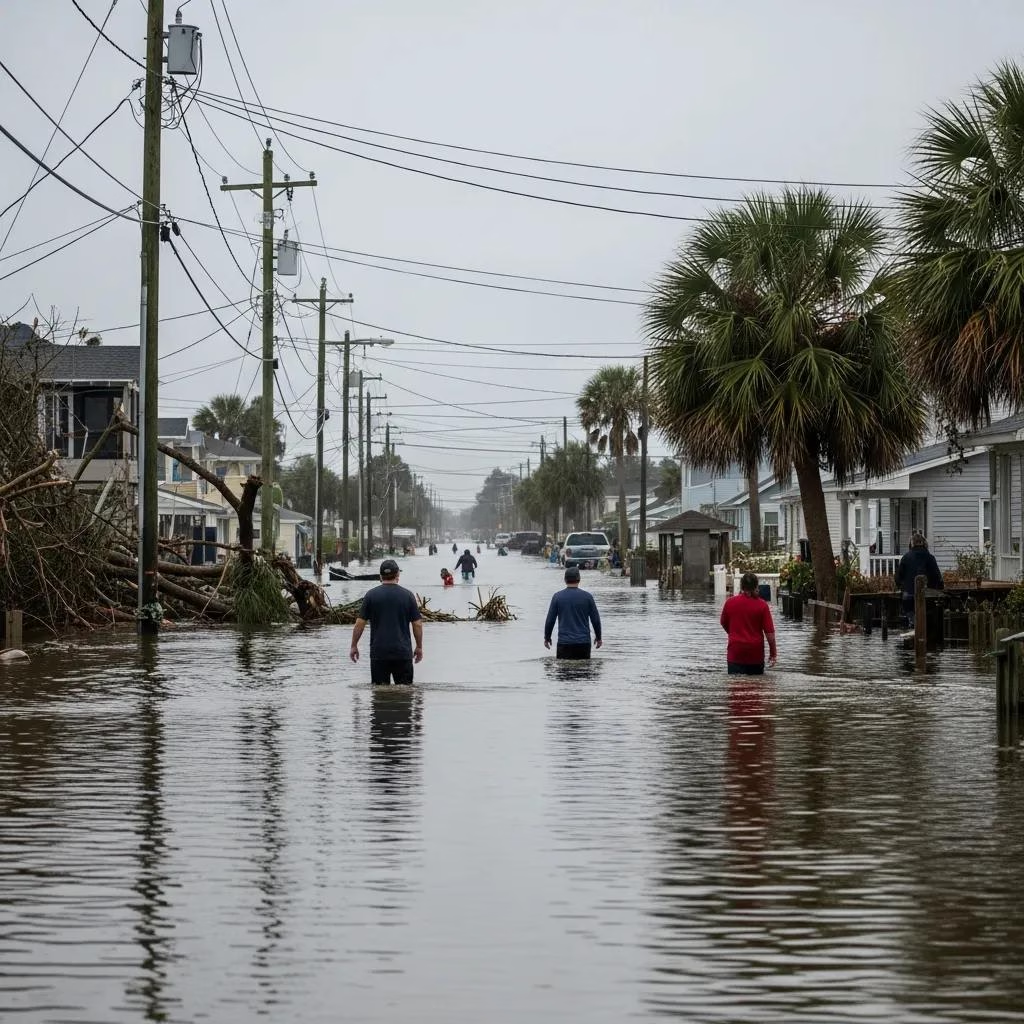
Coastal flooding damages homes and infrastructure, displaces residents, and disrupts livelihoods. Natural systems such as wetlands and mangroves — which provide storm buffering and nursery habitat — suffer from saltwater intrusion and erosion, reducing biodiversity and weakening nature’s defenses. The combined effect is greater social and economic vulnerability, especially in communities with limited resources.
Flood impacts often cascade: road closures can delay emergency response, damaged utilities can interrupt water and power for days or weeks, and repeated loss of productive land can force changes in local economies. Accounting for these knock-on effects is important when estimating the full cost of flood events and planning recovery investments.
What Are the Impacts of Storm Surge and Coastal Erosion?
Storm surges — boosted by higher baseline sea levels — can produce catastrophic flooding during extreme weather. As surge events become more frequent or intense, repair costs and economic disruption rise. Coastal erosion, accelerated by development and altered sediment flows, steadily erodes shorelines and removes protective land that communities and ecosystems depend on. Recent storms have exposed these vulnerabilities and underscored the need for targeted risk-reduction measures.
Managing these hazards involves both reducing exposure (for example, retreating from the most vulnerable shorelines) and strengthening defenses. Where structures are maintained, design standards that consider future sea level scenarios and surge heights reduce the chance of repeated failure and costly rebuilding.
How Are Coastal Ecosystems and Infrastructure Vulnerable to Rising Seas?
Rising seas threaten built and natural systems alike. Roads, bridges, wastewater systems, and buildings can be repeatedly flooded or permanently damaged. Saltwater intrusion can degrade freshwater wells and agricultural land. Meanwhile, habitat loss and shifting conditions reduce species diversity and ecosystem services, with long-term consequences for fisheries, tourism, and local culture.
Healthy ecosystems provide cost-effective protection for many communities; losing that protection forces more reliance on engineered structures, which are often more expensive to build and maintain. Integrating ecosystem health into infrastructure planning can therefore lower lifetime costs and improve resilience.
What Are the Risks of Climate Change to Coastal Regions?
Climate change raises multiple, interacting risks for coastal regions: higher sea levels, stronger storms, shifting shorelines, and population displacement. Low-lying neighborhoods face growing flood frequency and potential permanent inundation. Those risks demand anticipatory planning to protect lives, maintain essential services, and preserve economic stability and natural assets.
Risk is unevenly distributed: younger populations, renters, and lower-income households often live in more exposed areas and have less capacity to adapt or relocate. Equity-focused planning aims to ensure protections and resources are prioritized where vulnerability is highest.
Which Adaptation Strategies Help Mitigate Sea Level Rise Impacts?
Adaptation combines engineered infrastructure, nature-based approaches, policy changes, and community planning. Choices range from seawalls and flood gates to wetland restoration and land-use restrictions. The most effective programs blend technical solutions with social strategies that reflect local needs and knowledge.
Implementation typically follows a portfolio approach: near-term measures that reduce immediate risk, investment in monitoring and data to refine future plans, and longer-term options such as managed retreat where necessary. Cost-benefit analysis and community input guide which options are feasible and socially acceptable.
Comparative studies point to the value of integrated strategies — combining engineered defenses, nature-based approaches, and urban planning — to reduce coastal vulnerability.
Global Adaptation Strategies for Coastal Cities Facing Sea Level Rise
Coastal cities worldwide are increasingly exposed to sea level rise, extreme storms, and development pressures that drive flooding, environmental damage, and socioeconomic inequality. This study compared adaptation approaches and found that combining advanced engineering, nature-based solutions, and integrated urban planning often produces the best outcomes for reducing climate-related risks and protecting communities.
Global strategies for climate adaptation in coastal cities, MM Abdulrahman, 2024
How Does Green Infrastructure Support Coastal Resilience?
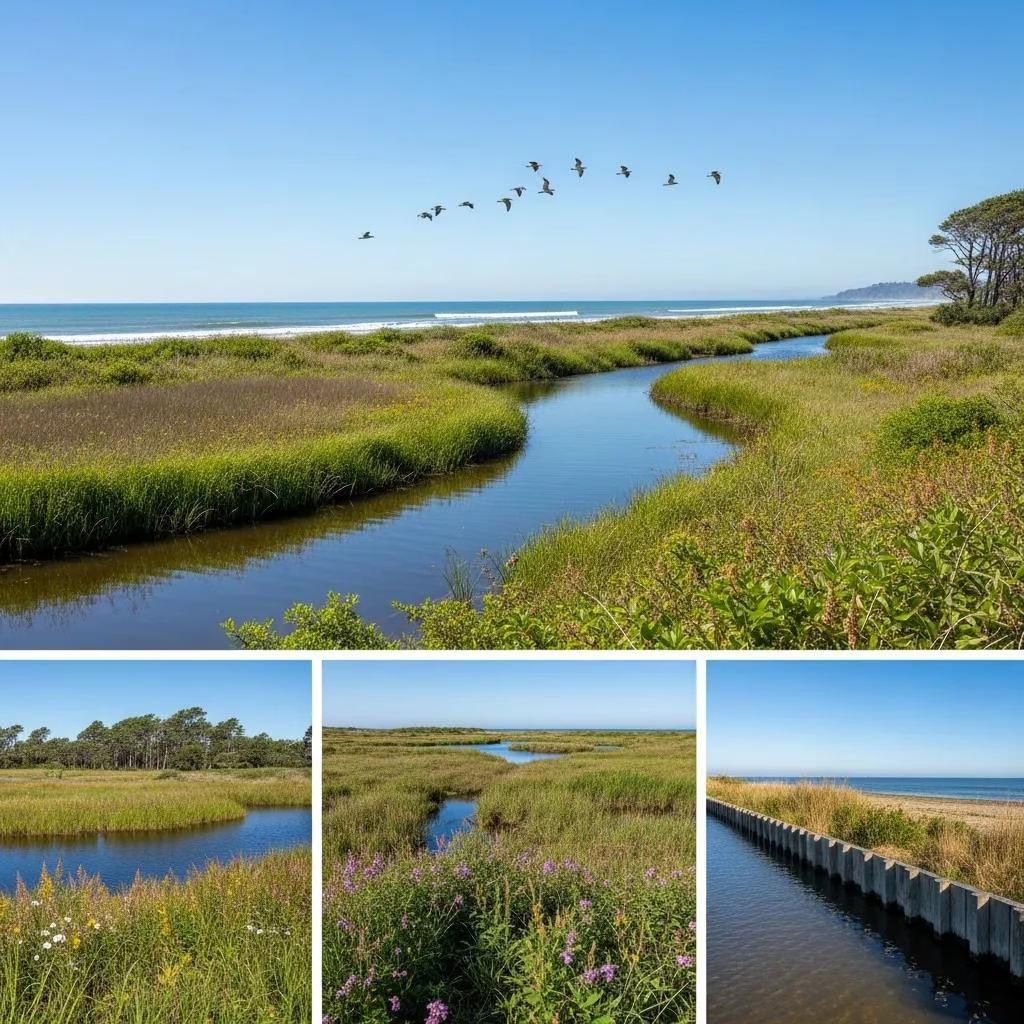
Green infrastructure — like restored wetlands, dunes, and living shorelines — absorbs wave energy, stores floodwater, and stabilizes sediments. These nature-based measures are often more flexible and cost-effective over time than hard structures, and they deliver added benefits, including cleaner water, improved habitat, and better recreation opportunities.
In practice, green infrastructure can be layered with smaller engineered features to achieve protection while maintaining ecological functions. Projects usually require ongoing management and monitoring, but when designed to local conditions they can adapt as coastlines change and provide durable benefits.
What Policy Measures and Community Actions Are Effective?
Policy tools such as zoning limits, updated building codes, and incentives for conservation steer development away from high-risk areas. Funding for resilient infrastructure and habitat restoration accelerates protective work. Equally important is community engagement: local knowledge, public participation, and transparent planning produce solutions that are better accepted and more durable.
Practical policy steps include updating design standards for new construction, creating buyout programs for repeatedly flooded properties, and providing technical support to smaller municipalities to plan and build resilience. Clear regulatory pathways and stable funding sources make it easier for local governments and communities to implement long-term measures.
Evidence shows that community-led adaptation helps vulnerable coastal areas adopt practical, sustainable solutions and increases local ownership of resilience efforts.
Community-Based Climate Adaptation for Vulnerable Coastal Regions
Coastal communities face serious threats from sea level rise, storms, and ecological degradation that harm livelihoods, infrastructure, and well-being—especially where resources are limited. This research examines community-based adaptation (CBA) approaches that prioritize locally driven, sustainable, and flexible solutions to reduce climate impacts and empower residents to manage risks.
Resilience and adaptation to climate change: community-based strategies in coastal regions, Y Niu, 2023
How Can Individuals Support Sustainability and Live Greener Near Coasts?
Individuals can reduce their climate impact through everyday choices and by participating in local resilience efforts. Small changes, when widely adopted, help lower emissions and make communities better prepared for climate-related challenges.
Personal resilience actions include elevating utilities where feasible, securing insurance appropriate for flood risk, and supporting local habitat restoration. Participation in planning processes and voting on local measures also helps ensure community priorities reflect both safety and fairness.
What Lifestyle Changes Reduce Carbon Footprint and Climate Impact?
Choosing low-emission transport (walking, biking, public transit), improving home energy efficiency, and cutting waste (recycling, composting) all reduce greenhouse gas emissions. Conserving water and choosing energy-efficient appliances also lower household impacts and make local systems more robust against climate stresses.
These actions are complementary: reduced energy use lowers the demand on local grids, which in turn reduces pressure on emergency services during extreme events. Community-level programs that make efficient options easier and cheaper to adopt accelerate collective benefits.
How Can People Participate in Local Coastal Protection Efforts?
Local engagement matters: join beach or marsh clean-ups, support habitat restoration projects, attend community planning meetings, and advocate for policies that prioritize resilience. Volunteering and public education help build social networks that are critical when extreme events occur.
Individuals can also contribute by supporting local monitoring programs, reporting erosion or unusual shoreline changes, and helping neighbors prepare emergency plans. Small, sustained volunteer efforts can significantly improve local readiness and ecological health over time.
What Are the Latest Trends and Data on Sea Level Rise and Coastal Flooding?
Observations and models show accelerating sea level rise with important regional differences. Monitoring and updated projections are essential for timely planning, infrastructure design, and emergency preparedness.
Advances in remote sensing, improved tide-gauge networks, and greater data sharing are helping planners convert scientific projections into practical design thresholds for roads, utilities, and buildings. Regularly updating local risk assessments ensures investments remain aligned with changing conditions.
What Do Recent IPCC and NOAA Reports Reveal About Future Projections?
Recent IPCC and NOAA assessments project substantial sea level rise by 2100 under high-emission scenarios — in some cases exceeding six feet (1.8 meters) in global average when including high-end uncertainties and ice sheet responses. Regional differences mean some locations will see higher or lower local change, but the overall message is clear: planning and adaptation are urgent.
These reports also emphasize uncertainty and scenario planning: rather than treating a single estimate as destiny, planners use a range of plausible outcomes to identify actions that are robust across futures. Threshold-based triggers — actions that begin when monitored variables reach preset levels — are one practical way to manage this uncertainty.
How Are Policy Developments Shaping Climate Adaptation in 2025-2026?
Policy trends in 2025–2026 increasingly emphasize resilience planning, updated coastal development rules, and directed funding for adaptation projects. Governments are prioritizing risk-informed land use, stronger building standards, and investments in both engineered and nature-based solutions to reduce future damages.
Funding mechanisms now more often combine federal, state, and local sources with private investment and philanthropic support. Grant programs and technical assistance help smaller communities access the expertise and capital needed to implement effective projects.
What Common Questions Do People Have About Rising Seas and Coastal Impacts?
As concern grows, people ask practical questions about causes, measurements, and what communities can do. Clear, accessible answers help guide local decisions and personal actions.
What Causes Sea Level Rise and How Is It Measured?
Sea level rise is mainly caused by the thermal expansion of warming ocean water and the addition of meltwater from glaciers and ice sheets. Scientists measure sea level using satellite altimetry and tide gauges; together these tools track global trends and local variations that inform planning and adaptation.
Combining satellite records with ground-based tide gauges provides both broad coverage and local context, allowing practitioners to translate global trends into local hazards and design criteria for coastal projects.
How Can Communities Prepare for Increased Coastal Flooding?
Communities prepare by combining physical defenses (levees, seawalls), nature-based buffers (wetlands, dunes), smart land-use planning, and emergency response systems. Collaborative planning that includes residents, businesses, and local governments produces more equitable and effective outcomes.
Preparedness also includes updating evacuation routes, ensuring critical infrastructure is elevated or hardened, and maintaining clear communication channels before, during, and after events. Drills and community education build confidence and reduce response times when flooding occurs.
Frequently Asked Questions
What are the long-term effects of rising sea levels on coastal economies?
Long-term impacts include repeated or permanent flooding of infrastructure, reduced property values in high-risk areas, and pressure on local budgets for repairs and relocation. Sectors like tourism, fishing, and transportation can suffer from habitat loss and reduced access. To protect economic health, communities may need to shift investment toward resilient infrastructure, managed retreat, and diversified local economies.
Economic responses frequently combine short-term recovery funds with long-term planning grants that support business diversification, workforce retraining, and investments in protected infrastructure that sustain critical services and livelihoods.
How does rising sea level affect freshwater resources?
Rising seas can push saltwater into coastal aquifers and wells, contaminating drinking water and irrigation supplies. That saltwater intrusion can reduce agricultural productivity and increase the cost of water treatment or sourcing alternative supplies. Measures such as engineered barriers, managed aquifer recharge, and wetland restoration can help protect freshwater resources.
Local water managers often combine monitoring of groundwater salinity with adaptive water supply strategies — such as temporary use restrictions, diversifying sources, and investing in desalination or treatment only where cost-effective and sustainable.
What role do local governments play in addressing sea level rise?
Local governments set zoning and building rules, fund and build infrastructure, lead community planning, and coordinate emergency response. They can restrict risky development, invest in protective projects, and work with state and federal partners to secure funding. Public outreach and inclusive planning are key to ensuring solutions serve all residents.
Effective local action typically pairs technical planning with community engagement and financial strategies that phase projects over time, enabling governments to balance near-term needs with long-term commitments.
How can technology help in monitoring sea level rise?
Technology — from satellite altimetry to GPS, remote sensing, and tide gauges — provides precise measurements of sea level change. GIS and modeling tools let planners visualize flood risk and test adaptation options. Real-time monitoring systems improve early warning and response during storms and high-tide events.
These systems also support scenario planning by allowing managers to run simulations of different sea level and storm conditions, test the effectiveness of proposed interventions, and communicate risk maps to the public and decision-makers.
What are the psychological impacts of climate change on coastal communities?
Climate-related events can cause anxiety, stress, grief, and a sense of loss, especially after displacement or repeated disasters. Building social support networks, providing mental health services, and involving communities in resilient planning can reduce trauma and strengthen agency and hope.
Mental health interventions are most effective when integrated with recovery and planning processes so people receive practical support alongside counseling and community rebuilding opportunities.
What educational resources are available for understanding sea level rise?
Trusted resources include NOAA, the IPCC, academic institutions, and regional coastal programs that publish data, maps, and guidance. Local universities and NGOs often run workshops and outreach programs. Interactive tools and simulations online help people visualize impacts and explore adaptation options.
Many regional programs provide networked resources tailored to local conditions, including mapping tools, guidance for homeowners, and templates for community resilience plans that translate science into actionable steps.
Conclusion
Understanding why seas are rising and how that affects coasts is the first step toward meaningful action. Effective adaptation combines technical measures, nature-based solutions, supportive policy, and engaged communities. Individuals and local leaders both have roles to play — from reducing emissions to supporting resilient planning — to protect coastlines and communities for the future. Explore local resources and get involved to help safeguard coastal places for generations to come.
Action that starts now, guided by monitoring and inclusive planning, can reduce future costs, protect livelihoods, and preserve natural systems that many communities depend on. Small steps and coordinated investments together make coastal regions safer and more sustainable over the long term.