



Solar vs Wind Energy: Comparison Guide
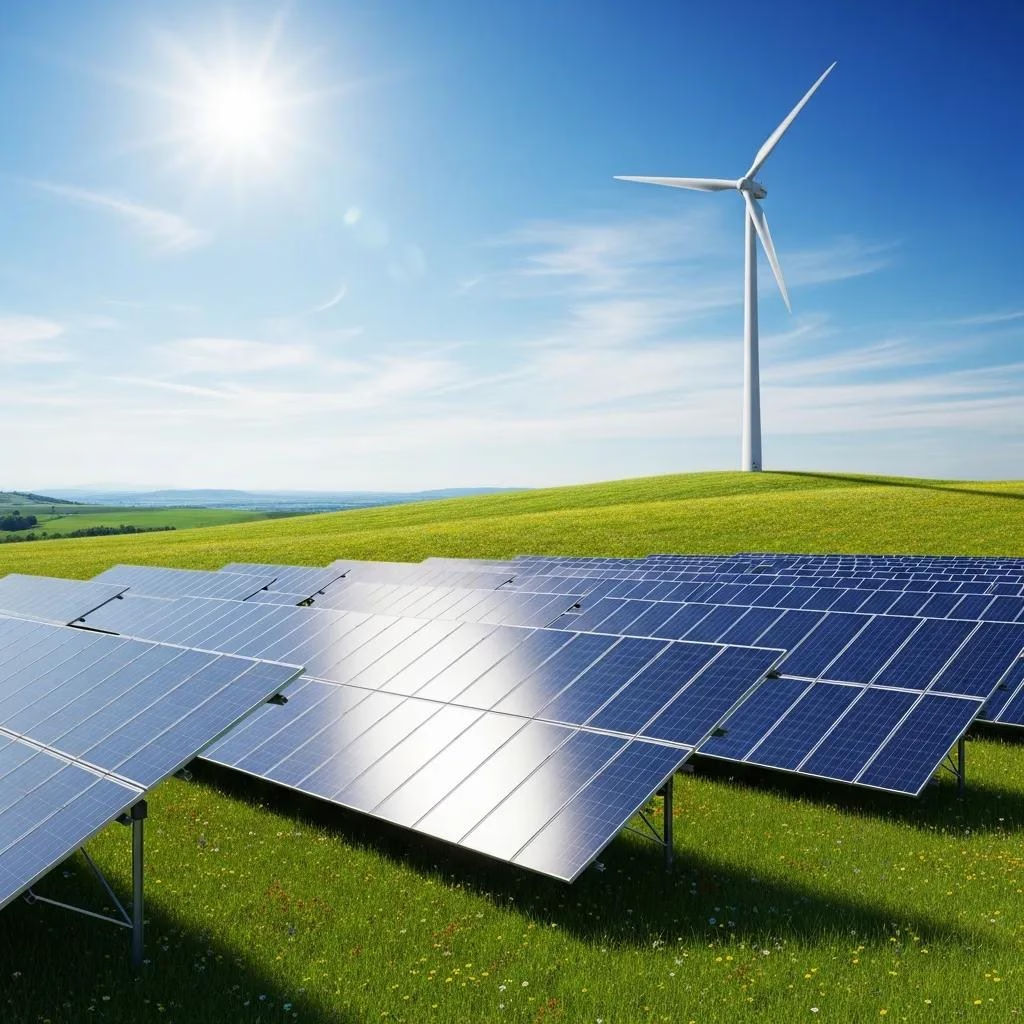
Solar vs Wind Energy: Performance, Costs & Environmental Impact
As renewables become central to energy planning, knowing how solar and wind stack up helps you make better choices. This guide breaks down the core differences in technology, performance, environmental effects, and costs so you can weigh the trade-offs clearly. Whether you’re evaluating options for a home, a business, or a larger project, the comparison below gives practical, evidence-based insight into how each source performs and what to expect in real-world use. It also flags the common trade-offs project owners face—space, intermittency, permitting, and lifecycle impacts—so you can prioritize what matters for your situation.
Key Takeaways
- Solar converts sunlight to electricity with photovoltaic cells; wind captures kinetic energy with turbines, and each has unique installation and operational considerations.
- Typical solar panel efficiencies range from 15%–22%; wind turbines commonly show capacity factors around 35%–50%, but site quality strongly influences both.
- Solar systems emit no pollution while operating, though manufacturing and end-of-life handling have environmental footprints that are improving with better recycling and design.
- Wind power cuts carbon emissions but can pose risks to birds and bats if siting and mitigation aren’t managed; careful assessment and design reduce most risks.
- Solar installations generally have lower upfront costs for small-to-medium projects; wind can deliver higher long-term energy yield per unit capacity in prime locations.
- Solar systems scale easily from rooftop arrays to utility farms; wind needs suitable land or offshore sites with steady winds and additional infrastructure.
- Both technologies reduce carbon footprints and support sustainability when deployed appropriately and paired with storage or grid improvements.
- Ongoing technology improvements—higher-efficiency panels, larger rotors, smarter inverters—are boosting efficiency and lowering costs across both sectors.
- Incentives, net metering, and tax credits can substantially lower installation costs and speed payback; check local programs to maximize value.
Comparison Guide: Solar vs. Wind Energy
Solar and wind are the dominant renewable choices today, each converting natural forces into electricity using different methods. Solar panels capture photons and generate direct current via the photovoltaic effect; wind turbines turn moving air into mechanical energy and then electricity. Both reduce reliance on fossil fuels and cut greenhouse gases, but their strengths and limitations differ depending on location, scale, and project goals. In practice, the best deployments often combine both sources plus storage and demand-side measures to create a more reliable and resilient energy supply.
1. Technology Overview
Solar and wind technologies use different physics but share the same objective: clean electricity. Photovoltaic panels convert sunlight into an electrical current when photons knock electrons free in semiconductor cells. Wind turbines capture airflow with blades, drive a rotor and gearbox (or direct-drive generator), and produce alternating current. Advances in materials, controls, and manufacturing have raised output and driven costs down in both fields. Beyond the core generation components, each system includes balance-of-system equipment: inverters, mounting and racking, wiring, and monitoring for solar; foundations, access roads, transformers, and grid interconnection gear for wind. These supporting elements influence installation complexity, timeline, and maintenance needs.
2. Efficiency and Performance
Efficiency and real-world performance depend heavily on context. Modern solar panels commonly deliver 15%–22% module efficiency, with high-end cells exceeding that range. Wind turbines are often measured by capacity factor — how much energy they produce relative to potential maximum output — and frequently hit 35%–50% depending on site and turbine size. Site selection, weather patterns, and system design are decisive for both technologies. For example, rooftop solar on a shaded roof will underperform compared with a well-oriented, unshaded array, while a small turbine in a sheltered valley will seldom reach the production of one placed on an open ridge or offshore location. Operational practices and monitoring also help maintain performance over the asset’s lifetime.
3. Environmental Impact
Both sources dramatically reduce operating emissions compared with fossil fuel generation. Solar panels run clean during use, but their manufacture and disposal involve mining, energy inputs, and recycling challenges. Wind farms produce little operational pollution, yet turbines can affect birds, bats, and local habitats if not carefully sited. Comparing lifecycle impacts and applying mitigation measures helps minimize ecological trade-offs. Environmental assessments typically look at habitat disruption, material sourcing, transportation emissions, and end-of-life options; effective planning and community engagement often address most concerns early in project design.
4. Cost-Effectiveness
Cost dynamics vary by project scale and region. Residential solar costs have fallen sharply over the past decade, making rooftop systems more accessible — typical residential installs range from about $15,000 to $30,000, with many systems paying back over time through lower bills. Wind setups often have higher upfront costs but can deliver stronger long-term yield thanks to higher capacity factors. Calculating payback requires considering incentives, local energy prices, and maintenance. For commercial and utility projects, economies of scale, financing structure, and operational contracts influence levelized cost of energy (LCOE) and investment decisions. Including expected operations and maintenance (O&M), insurance, and decommissioning costs in financial models gives a clearer picture of lifecycle value.
5. Energy Production Capabilities
Production scales with system size and site quality. Solar works from small home arrays to sprawling utility farms and adapts to many rooftops and lands. Wind turbines — onshore or offshore — can generate large amounts of power but generally need open, windy sites and more infrastructure. The right choice depends on available space, local wind and sun resources, and grid access. For example, community solar or distributed rooftop installations can serve neighborhoods with limited land, while large-scale wind farms typically require consolidated land or offshore leases and significant transmission upgrades to bring power to load centers.
6. Practical Considerations
Practical factors include how often the sun shines, how steady the wind is, and local rules and incentives. Solar tends to require less space and simpler siting; wind needs consistent wind speeds and often more permitting and grid connection work. Consider shading, roof angle, proximity to neighbors, and local permitting when planning an installation. Also account for insurance, expected maintenance windows, and potential impacts on property aesthetics or use. Community engagement, early environmental review, and transparent economic modeling help smooth permitting and acceptance for larger projects.
7. Long-term Benefits
Both technologies offer clear long-term advantages: lower energy bills, reduced exposure to volatile fuel markets, and smaller carbon footprints. Owners gain energy independence and potential increases in property value, while communities benefit from cleaner air and local economic activity tied to installations and maintenance. Over time, predictable energy costs, job creation in installation and O&M, and opportunities for local supply chains add broader societal benefits. Properly financed, renewables can be an attractive long-term asset for utilities, businesses, and homeowners alike.
What Are the Key Advantages of Solar Energy?
Solar stands out for its accessibility and scalability. It’s plentiful and widely deployable, from small residential rooftops to massive solar farms. Homeowners often see meaningful reductions in monthly bills — many report cuts of 50% or more depending on system size and local rates — and systems can add resale value. Ongoing improvements in panel efficiency and lower manufacturing costs keep strengthening solar’s case. Solar also pairs well with rooftop storage for backup power and peak-shifting, and community solar models enable renters or shaded properties to benefit from shared arrays.
How Does Solar Energy Reduce Carbon Emissions and Support Sustainability?
By producing electricity without burning fossil fuels, solar panels meaningfully lower greenhouse gas emissions during operation. This shift reduces air pollution and lessens demand for nonrenewable resources. Over a full lifecycle, careful manufacturing and recycling practices further improve solar’s sustainability profile. Manufacturers and industry groups are expanding take-back programs and improving material choices to reduce embodied carbon and facilitate component recovery at end of life.
What Are the Cost Benefits and Installation Considerations of Solar Panels?
Solar panels can deliver strong financial returns, often paying back the initial investment within 5 to 10 years depending on incentives and electricity prices. Federal and local incentives, net metering, and rebates can cut upfront costs significantly. Before installing, evaluate roof orientation, shading, structural condition, and local permitting — these affect system output and eligibility for certain incentives. For ground-mounted or community systems, consider land lease agreements, access, and interconnection costs; for commercial projects, tax-equity financing and power purchase agreements (PPAs) are common ways to structure upfront costs and long-term revenue.
What Are the Main Disadvantages and Challenges of Wind Energy?
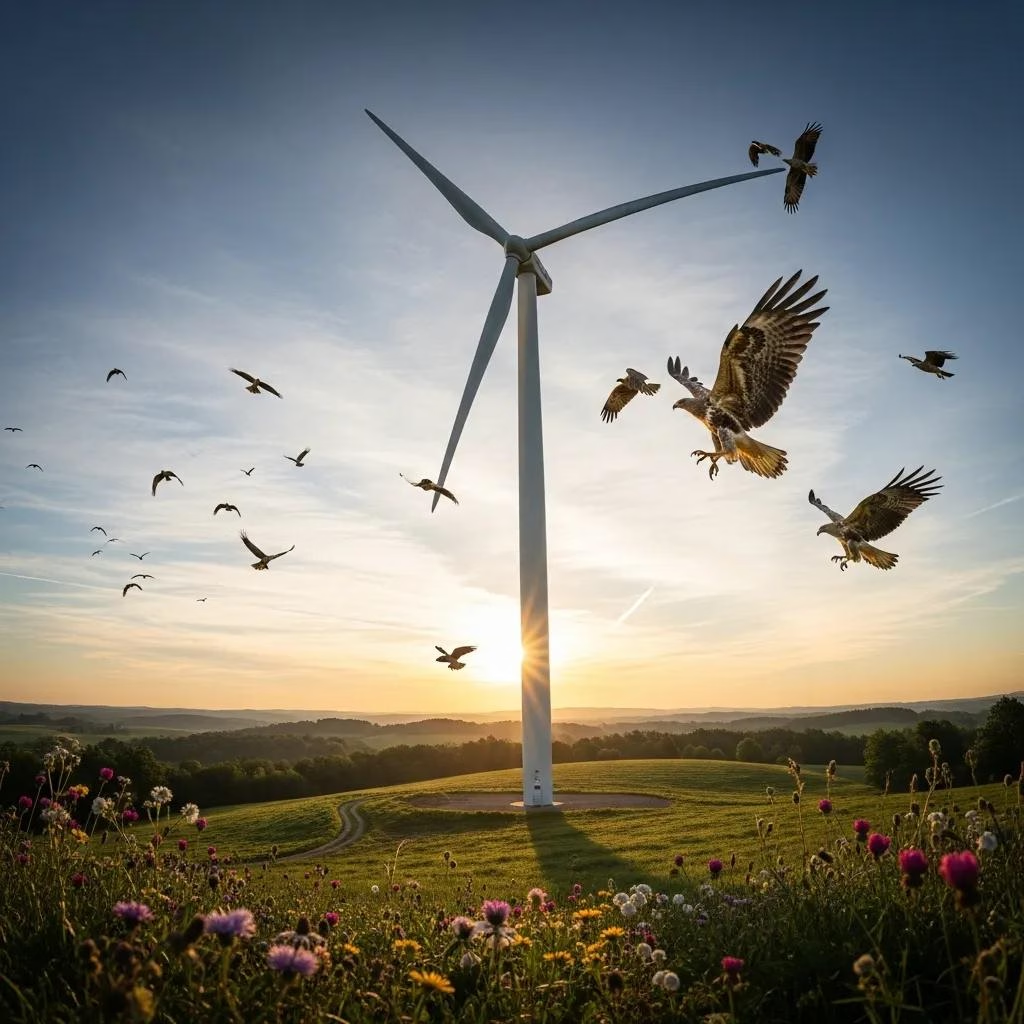
Wind’s chief challenges are intermittency and ecological impacts. Wind speeds vary, so production fluctuates and often requires storage or backup to smooth supply. Poorly sited turbines can harm birds and bats, and community acceptance can vary because of noise and visual concerns. Thoughtful siting and mitigation planning reduce many of these issues. Developers increasingly use pre-construction wildlife surveys, turbine curtailment during high-risk periods, and technological deterrents to reduce collisions, while careful siting limits noise and visual impacts for nearby residents.
Mitigating wildlife impacts depends on careful site assessment and species-aware design strategies.
Wind Farm Wildlife Impact Mitigation Strategies
The effects of wind farms on wildlife differ by site, species, and season, so mitigation approaches must be tailored to each project. Understanding animal movement patterns and local ecology helps predict risks and design effective measures. Building a cohesive picture of why and how animals interact with turbines is essential for reducing impacts at the project level.
Future research directions to reconcile wind turbine–wildlife interactions, R May, 2010
How Does Wind Energy Intermittency Affect Energy Efficiency?
Intermittency affects how predictably wind turbines produce power. Variable wind speeds lead to fluctuating output, which can reduce average efficiency unless complemented by energy storage, demand response, or other generation sources. Proper system planning and grid integration strategies are key to maximizing the value of wind energy. Grid operators and project planners often combine forecasts, short-term storage, and flexible dispatchable resources to capture wind energy when available and maintain reliability when it is not.
That variability illustrates broader challenges when adding intermittent renewables to a grid designed for steady, dispatchable plants.
Renewable Energy Grid Integration Challenges
Integrating intermittent renewables into existing grids presents technical and operational challenges. Variability in generation requires upgrades in grid flexibility, forecasting, and balancing resources to maintain reliable supply. Addressing these issues involves both technology solutions and changes in grid management practices.Grid integration of renewable energy sources: Challenges, issues and possible solutions, AS Anees, 2012
What Are the Environmental and Installation Impacts of Wind Turbines?
Wind turbine installation can change land use and affect habitats during construction and operation. Proper siting minimizes disruption; placing turbines away from migration routes and sensitive habitats, and using best construction practices, reduces ecological footprint. Maintenance and infrastructure needs also factor into the overall environmental cost. In some cases, multi-use landscapes allow agricultural activities to continue around turbines, reducing net land-use conflict and supporting local economies while producing clean energy.
How Do Solar and Wind Energy Compare in Terms of Cost and Efficiency?
Solar typically has lower upfront costs and wider siting flexibility, while wind can produce more energy per installed capacity in the right locations. Which is more cost-effective depends on local wind and solar resources, incentives, grid connection costs, and expected maintenance. A site-specific analysis is the best way to determine value. For utilities and large developers, modeling production profiles, transmission requirements, and contract structures such as PPAs provides a clearer comparison than simple per-kilowatt costs.
Which Renewable Energy Source Offers Better Energy Efficiency Metrics?
Wind generally shows stronger efficiency in capacity-factor terms, meaning turbines often generate closer to their rated output over time compared with solar panels limited by daylight. Still, both technologies’ effective efficiency hinges on local conditions and system design, so neither is universally superior. When combined — for example, co-locating solar and wind where each resource peaks at different times — the pair can deliver a more balanced production profile than either alone.
What Are the Lifecycle Costs and Maintenance Requirements of Solar vs Wind?
Solar panels need relatively little upkeep — periodic cleaning and inspections — and typically have long warranties. Wind turbines include moving parts and may require more frequent mechanical maintenance and occasional component replacement. Lifecycle cost comparisons should include projected maintenance, expected lifetime, and decommissioning or recycling expenses. Both industries are improving service models, predictive maintenance, and recycling pathways to reduce lifetime costs and environmental impact.
What Are the Environmental Impacts of Solar and Wind Energy?
Operationally, both systems are low-carbon. Manufacturing, transport, installation, and end-of-life handling create the main environmental costs: material extraction for panels, land use for farms, and construction impacts for turbines. Good manufacturing practices, recycling programs, and responsible siting help minimize those impacts. Additionally, techniques such as using reclaimed land, agrivoltaics (combining solar with agriculture), and habitat-friendly turbine layouts can further reduce ecological footprints while providing community benefits.
How Do Solar Panels and Wind Turbines Affect Carbon Footprint Reduction?
Both technologies reduce carbon emissions by displacing fossil-fuel generation. Deployed at scale, combined solar and wind capacity can dramatically lower a region’s carbon intensity. Pairing renewables with storage and efficiency measures multiplies the benefits for decarbonization. Strategic deployment—placing resources near demand centers and upgrading transmission—also reduces losses and maximizes emissions reductions per unit of generation.
What Are the Lifecycle Environmental Considerations for Both Technologies?
Consider the full lifecycle: raw material extraction, manufacturing energy use, transportation, installation, operation, maintenance, and disposal or recycling. Advances in material efficiency, reuse, and recycling are improving lifecycle impacts for both solar and wind systems. Policymakers and manufacturers increasingly emphasize circular economy approaches—designing components for disassembly and recovery—to limit waste and reduce embodied carbon over successive project cycles.
What Recent Technological Advances Are Shaping Solar and Wind Energy?
Solar improvements include higher-efficiency cells, bifacial modules that capture reflected light, and smarter inverters. Wind innovations focus on larger rotors, lighter materials, and improved control systems that increase energy capture and reliability. Grid-edge technologies and better forecasting are also enhancing integration. Advances in data analytics and remote monitoring help operators optimize output and schedule maintenance more efficiently, reducing downtime and improving lifetime yields.
How Have Solar Panel Costs Declined and Efficiency Improved from 2024 to 2026?
Between 2024 and 2026, industry trends show continued cost declines driven by manufacturing scale and improved cell designs, along with incremental efficiency gains in new panel models. These trends make solar increasingly attractive for more consumers and projects. As module prices fall, balance-of-system and soft costs (permitting, labor, interconnection) become larger shares of total system cost, which is encouraging efforts to streamline installation and regulatory processes.
What Innovations Are Increasing Wind Turbine Efficiency and Grid Integration?
Wind improvements include larger rotor diameters, optimized blade shapes, and advanced control algorithms that capture more energy at lower wind speeds. Paired with better forecasting and grid-management tools, these innovations smooth output and improve how wind contributes to the broader energy mix. Offshore wind is also benefiting from larger turbines and floating foundations that open new, higher-quality wind sites, while shore-based projects are adopting modular construction and improved logistics to lower costs.
How Can Individuals and Businesses Choose and Implement Solar or Wind Energy Solutions?
Start by assessing energy needs, available space, and local resource availability (sunlight vs. wind). Review permitting rules and incentives, and compare quotes from reputable installers. For larger projects, consult energy planners or engineers to model performance and payback. Don’t forget to factor in storage and grid interconnection requirements. Small steps—like conducting an energy audit, improving building efficiency, and prioritizing high-use loads for renewable integration—can improve project economics and reduce required system size.
What Factors Should Influence the Choice Between Solar and Wind Energy?
Key factors include local climate, land or roof availability, budget, and whether steady output or peak generation matters more for your use case. Solar fits many rooftops and urban sites; wind is stronger where open land or offshore winds are reliable. Evaluate incentives and local energy prices to identify the best economic fit. Also consider project timelines, community preferences, and potential co-benefits such as job creation or agricultural compatibility when choosing a technology.
What Are Effective Strategies for Integrating Renewable Energy with Smart Grids?
Successful integration uses advanced metering, demand-response programs, flexible dispatchable resources, and energy storage to balance variability. Improved forecasting, grid-scale batteries, and adaptive grid management increase reliability and let utilities incorporate more renewables without sacrificing stability. Policies that enable flexible markets, time-of-use pricing, and distributed energy resource management systems (DERMS) help align consumer behavior with renewable availability and reduce curtailment.
What Are the Financial Incentives and Support Available for Renewable Energy Adoption?
Governments and utilities offer a range of incentives: tax credits, rebates, grants, and performance-based programs. These can significantly lower upfront costs and shorten payback periods. Check federal, state, and local programs to maximize savings before committing to a purchase. For businesses, performance contracts, green tariffs, and corporate procurement programs may also provide pathways to lower-cost renewable power and predictable long-term pricing.
Which Renewable Energy Incentives Reduce Installation Costs for Solar and Wind?
Federal incentives like the Investment Tax Credit (ITC) for solar and various state or local rebates can reduce installation expenses substantially. Some regions also offer production-based payments or accelerated depreciation for commercial projects. Combining incentives often yields the best financial outcome. Work with qualified installers or financial advisors to identify applicable programs and structure incentives into your financing plan.
How Do Energy Storage Solutions Complement Solar and Wind Systems?
Storage captures excess energy when production exceeds demand and releases it during lulls, smoothing variability and improving reliability. Batteries, pumped hydro, and other storage options make renewables more dispatchable and support grid stability, enabling higher renewable penetration. When paired with intelligent controls and forecasting, storage can shift peak generation to match demand, reduce peak charges for commercial customers, and provide ancillary services that improve grid resilience.
What Common Questions Do People Ask About Solar vs Wind Energy?
People often want to know which technology is more effective, how much they’ll save, and what environmental trade-offs exist. Clear answers depend on local conditions, which is why site-specific analysis and professional advice are valuable. It’s also common to ask about maintenance, warranty expectations, how systems perform in cloudy or low-wind conditions, and the steps required to connect a system to the local grid.
What Are the Advantages and Disadvantages of Solar Energy?
Solar’s advantages include low operating costs, broad deployability, and potential energy bill reductions. Downsides include upfront costs, dependence on daylight, and siting considerations like roof angle and shading. For many homeowners, incentives and falling prices make solar a practical choice. Consider technical factors such as inverter sizing, potential battery add-ons, and whether you want to island from the grid during outages—these influence system design and cost.
Which Renewable Energy Source Is More Cost-Effective?
Cost-effectiveness depends on where you are. Solar usually has lower initial costs for small-scale installs, while wind can be more productive long-term in windy locations. Compare lifetime costs, incentives, and local energy prices to decide which fits your situation. For community or utility planners, combining both technologies with storage and demand management often yields the most resilient and cost-effective outcomes over multi-decade planning horizons.
Frequently Asked Questions
What are the key factors to consider when choosing between solar and wind energy?
Evaluate your location’s sunlight and wind potential, available space, budget, and local permitting. Also check incentives and how the system will connect to the grid. These factors together determine which option is most practical and economical. Additional considerations include noise tolerance, visual impact, and the possibility of shared community or utility-scale projects that distribute costs and benefits.
How do energy storage solutions enhance the effectiveness of solar and wind energy?
Storage smooths output by saving excess generation for use when the sun isn’t shining or the wind is calm. That reduces reliance on backup power, improves reliability, and increases the value of the renewable system. Storage can also provide grid services such as frequency regulation and peak shaving that improve overall system economics.
What are the long-term financial benefits of investing in solar or wind energy?
Both can cut electricity bills, hedge against rising energy prices, and increase property value. Many systems pay back their cost within a few years depending on incentives and usage. Over their lifetimes, renewables typically deliver substantial net savings. For businesses, predictable energy costs and potential revenue from renewable energy credits or selling excess generation can strengthen balance sheets.
How do solar and wind energy systems impact local ecosystems?
Solar installations have limited operational impacts, but manufacturing and disposal must be managed responsibly. Wind turbines can affect wildlife if poorly sited. Thoughtful placement, monitoring, and mitigation steps greatly reduce ecological risks. Early ecological studies and stakeholder collaboration often identify avoidance measures that protect sensitive species and habitats while enabling clean energy development.
What role do government incentives play in the adoption of renewable energy?
Incentives lower upfront costs, speed payback, and make projects financially viable. Tax credits, rebates, and grants can be decisive for homeowners and businesses choosing between renewable options. Public programs also support research, workforce training, and transmission upgrades that expand the range of feasible projects.
What are the common misconceptions about solar and wind energy?
Common myths include that renewables are always unreliable or only fit specific climates. In truth, both can be efficient and cost-effective when matched to the right sites and supported by storage and grid upgrades. Another misconception is that renewables always take away local jobs; in fact, installations can create local employment in construction, maintenance, and manufacturing.
How can individuals and businesses effectively implement renewable energy solutions?
Begin with an energy audit and site assessment. Research incentives, get multiple quotes, and consult installers or engineers. Include storage or grid-integration plans if you need steady power. A phased approach can reduce risk and spread costs. Document expected performance, maintenance schedules, and financing terms so you can compare proposals on an apples-to-apples basis.
Solar vs. Wind Energy: Which Is Right for You?
If you’re a homeowner, renter, or small property owner considering renewable energy, choosing between solar and wind can feel overwhelming. This practical guide helps you evaluate which option fits your specific circumstances, so you can make an informed decision that aligns with your energy needs, property characteristics, and local conditions.
Choose Solar If…
- You live in a sunny region with limited wind exposure
- You have a south-facing roof with minimal shading
- You want a low-maintenance, silent system
- You’re in an urban or suburban area with HOA or zoning restrictions on turbines
- You want to pair with battery storage for energy independence
- Your primary goal is reducing electricity bills
Choose Wind If…
- You live in a rural area with consistent wind speeds above 10 mph
- You have open land (at least half an acre) for turbine placement
- You experience long cloudy seasons that reduce solar output
- You want to generate power around the clock, including at night
- You’re open to a larger upfront installation project
- Your local zoning permits small wind turbines
Can You Use Both?
Hybrid solar-wind systems combine the strengths of both technologies, with solar typically peaking during midday and wind often stronger at night or in winter months. This complementary production can provide a more balanced and reliable energy supply. While hybrid setups may involve higher initial costs and more complex installation, they can be worthwhile where space and budget allow, especially for off-grid or resilient power goals.
Questions to Ask Before You Decide
- What is my average annual wind speed? (Check NREL Wind Resource Map)
- How many peak sun hours does my location receive?
- What are my local zoning and HOA rules?
- What is my available budget and payback timeline expectation?
- Do I want to go fully off-grid or stay grid-tied?
Consult a certified renewable energy installer for a site-specific assessment to ensure your choice matches your property and goals.
Conclusion
Solar and wind each bring clear strengths: solar for broad accessibility and falling costs, wind for high capacity factors in suitable locations. The best choice depends on local resources, project scale, and financial goals. Combining technologies, using storage, and applying careful siting and design often delivers the best outcomes for reliability, cost, and environmental impact. Explore local incentives and consult experts to find the right path for your energy needs. A thoughtful, site-specific plan that includes community engagement and lifecycle thinking will produce the most durable and beneficial projects.