



Wildfire & Contaminated Drinking Water
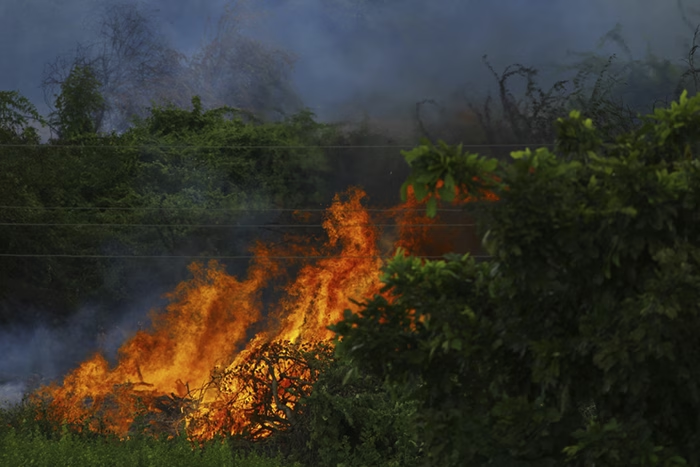
Dear EarthTalk: What’s the connection between wildfire and contamination of drinking water? How can affected residents make sure they are not being poisoned?
—Peter B., Sacramento, CA
Wildfires are escalating globally, and the threat extends beyond destruction by flames. NASA warns that “Earth’s warming climate is amplifying wildland fire activity,” citing that “extreme wildfire activity has more than doubled worldwide.” The severity of these fires degrades water quality in the surrounding forested watersheds, which supply water to almost two-thirds of U.S. municipalities.
Wildfire impacts on drinking water occur via direct contamination and infrastructure damage. After a burn, water is immediately affected by suspended solids, nutrients, organic carbon and heavy metals. The University of British Columbia found levels of heavy metals exceeded U.S. EPA safe standards by 66,000 times. This is not limited to the immediate aftermath. Smoke and ash can deposit contaminants into snowpack and soils, which then release over time into the system via snowmelt and runoff respectively.
Infrastructure damage is another issue for drinking water safety in the face of fires. Many water pipes and storage tanks use PVC plastics, which break down at 482 degrees Fahrenheit, while extreme wildfires can reach 2,192 degrees. Exposure to this intense heat releases volatile organic compounds (VOCs) into the water. A study by Kristofer Isaacson published in the journal “Environmental Science: Water research & Technology” notes that when superheated, the plastic not only releases contaminants but will also act as a sponge that absorbs additional toxic chemicals that can re-contaminate the water supply for months.
For impacted residents, ensuring water safety after a fire is crucial. Municipal treatment facilities are not equipped to handle the extreme contamination, and standard in-home filters are insufficient. The first step is to check for advisories from the local water authority, which will clarify whether water is safe, safe if boiled, or completely unsafe.
Beyond preparation and immediate response, long-term solutions are needed. The EPA and the International Association of Fire Fighters both urge builders to reduce the use of plastic in favor of fire-resistant materials like metals. Also, addressing the severity of wildfires through land management is vital. Encouraging controlled burns helps maintain ecosystem health by reducing the accumulation of plant materials that fuel extreme fires. Most important, as the climate changes, NASA scientists are observing environmental shifts like extending wildfire seasons and decreasing summer rainfall. These shifts serve as clear indicators that a warming planet is amplifying the frequency and intensity of extreme wildfires. Ultimately, the most powerful protection against extreme wildfires and associated water contamination is taking action on climate change.
CONTACT
EarthTalk® is produced by Roddy Scheer & Doug Moss for the 501(c)3 nonprofit EarthTalk. See more at https://emagazine.com. To donate, visit https://earthtalk.org. Send questions to: question@earthtalk.org.t