



Biodiversity Shifts As The World Warms
Dear EarthTalk: Are we already noticing significant biodiversity shifts or losses as a result of climate change in recent decades?
—J.D., Loveland, CO
Climate change is not the only reason we have suffered huge biodiversity losses in recent years, but it has played a part in the shifts and declines of species that many ecosystems have faced. Other human activity like habitat destruction, overexploitation of resources, and invasive species introduction have also had an impact. But climate change has become a more significant cause of biodiversity loss in recent years.
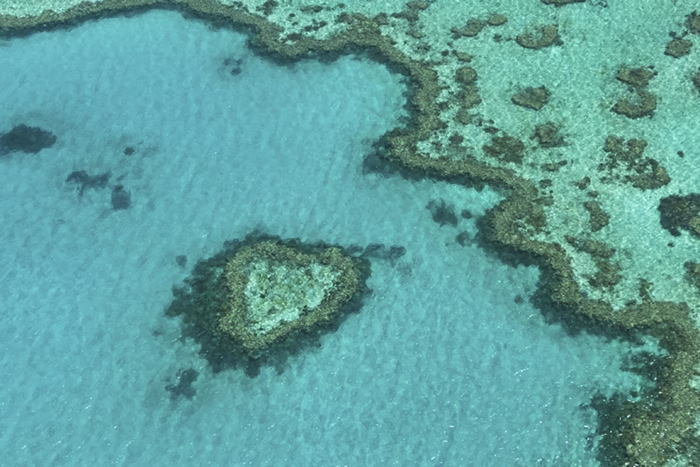
The Great Barrier Reef, which is especially vulnerable to rising temperatures, has already suffered biodiversity losses from climate change. The northern parts of the reef—often regarded as one of the most biodiverse habitats on the planet—have changed in the last three decades, with many fish going extinct. The reef depends on its diversity of coral to attract a wide variety of fish, but higher ocean temperatures have killed many types of coral already in a process called bleaching. “Bleaching is a stress response by coral, which have tiny microscope algae inside their tissue,” said Coral scientist Terry Hughes in a TED Talk. “Those algae give the coral its color and they are important for the nutrition of the coral. When bleaching occurs, the algae are depleted and the coral itself becomes nutritionally compromised.”
On land, some animals have been driven north or to higher altitudes to escape the heat. As a result, plant species left behind have fewer animals to disperse their seeds and sustain their native habitats. Climate change has also thrown off species’ seasonal clocks, which help them time their behaviors with the cyclical nature of the seasons. “Since every organism’s seasonal clock is affected differently by different phenological cues, such as precipitation, temperature or sunlight, it’s very difficult to predict how each organism is going to respond to climate change,” said botanist and ecologist Liana May in an educational YouTube video by Nature Change. Because of their differing cues, some flowers may bloom before their pollinators come out of hibernation and birds may migrate at the wrong time.
Scientists have identified the links between climate change and biodiversity loss, and recognize that addressing one will help the other, and vice versa. Specifically, reducing the effects of climate change allows for the restoration of natural habitats and the reintroduction of native species, and preventing biodiversity loss can keep natural habitats healthier and more capable of absorbing carbon emissions. Focusing on both biodiversity loss and climate change together may be the key to saving thousands of species, and to keeping our natural habitats healthy.
CONTACTS
- Biodiversity Shifts In The Great Barrier Reef
- The Effects Of Climate Change On Biodiversity
- The UN’s Action Items Regarding Biodiversity and Climate Change
EarthTalk® is produced by Roddy Scheer & Doug Moss for the 501(c)3 nonprofit EarthTalk. See more at https://emagazine.com To donate, visit https://earthtalk.org. Send questions to: question@earthtalk.org.