






How Warmer Nights Are Changing Wildfire Behavior
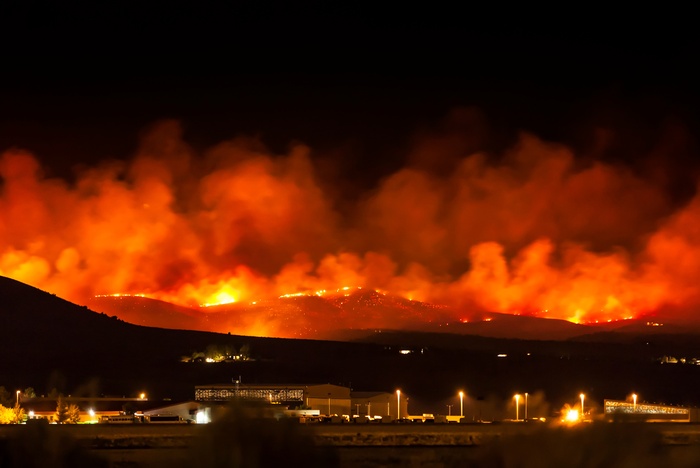
For decades, nighttime offered firefighters and fire-prone communities at least some relief. As temperatures dropped and the humidity rose after sunset, many wildfires slowed down. Flames often lost intensity, vegetation could absorb a little moisture from the air, and crews could use the cooler hours to regroup and strengthen containment lines.
That familiar rhythm is becoming less dependable.
As climate change raises overnight temperatures and keeps landscapes drier after dark, fires are increasingly able to stay active during the hours when they once tended to ease. In other words, warmer nights are changing wildfire behavior in ways that matter for forests, communities, air quality, and the people working on the fireline.
Fire seasons are not just getting longer in many regions. In some places, the daily cycle of fire itself is beginning to shift.
How Nights Once Slowed Wildfires
Wildfires are shaped by heat, wind, humidity, terrain, and the amount of dry vegetation available to burn. During the day, sunlight warms the ground and air, and the relative humidity often drops. Grass, leaves, needles, shrubs, and fallen branches can all become more flammable under those conditions.
Night usually changes that equation. Cooler air, weaker winds, and higher relative humidity can help slow fire activity. Fine fuels, such as grasses and pine needles, may absorb moisture from the air, making them less likely to ignite or carry flames as quickly.
This does not mean wildfires have ever stopped automatically at sunset. Large fires can burn through the night, especially under extreme conditions. But historically, the overnight period often served as a natural brake. It could reduce flame intensity and give firefighters a more manageable window to work.
That brake is weakening in some fire-prone regions. Dry-fuel nights have become more common in the Western United States, making nightfall a less reliable reprieve for firefighters than it once was.
How Climate Change Is Drying Out the Dark
The reason warmer nights matter so much is that fire danger is not driven by daytime heat alone. What happens after sunset affects whether vegetation has a chance to recover moisture before the next day begins.
One useful measure is vapor pressure deficit, often shortened to VPD. Put simply, it describes how “thirsty” the air is. When VPD is high, the atmosphere pulls more moisture from plants and soils. If nighttime VPD stays elevated, vegetation may remain dry even after the sun goes down.
A 2022 study published in Nature found that nighttime fire intensity has increased globally and linked that trend to hotter, drier nights. The study also found that global daily minimum VPD increased from 1979 to 2020, while flammable nighttime hours increased across burnable lands.
That finding points to a climate signal that can be easy to miss. Climate change is often discussed in terms of longer droughts, earlier snowmelt, record heat, or more destructive fire seasons. Those are all important. But the overnight hours matter, too. Landscapes need time to cool and reset. When that recovery window shrinks, fire behavior can change from one day to the next.
How Overnight Burning Changes the Morning
When a fire stays active through the night, the next morning can begin from a more dangerous position. A fire that might once have slowed or cooled overnight may instead continue moving into new fuels or shifting along a slope before daylight operations resume.
That can complicate emergency planning. Communities may face changing conditions while many residents are asleep. Fire managers may have less time to evaluate perimeter growth. Crews may encounter more variable fire behavior during hours that previously offered somewhat more predictable conditions.
Recent reporting on wildfire-weather research found that North America now has more hours when weather is favorable for wildfires than it did 50 years ago, with fires lasting later into the night and starting earlier in the morning as hot, dry conditions stretch across more of the day.
For ecosystems, that shift can also be significant. Fire is a natural part of many landscapes, and some forests and grasslands depend on periodic burning. But climate-amplified fire behavior can push burns outside their historic range. Fires that burn hotter and with fewer overnight breaks can increase stress on soils, vegetation, and wildlife habitats, making recovery more difficult in already vulnerable areas.
How Nighttime Fire Activity Affects Air Quality
Nighttime fire activity also has consequences for air quality. Wildfire smoke can travel far beyond the burn area, carrying fine particulate matter and other pollutants into communities hundreds or even thousands of miles away.
When fires remain active for longer daily windows, smoke production can extend across more hours. Overnight smoke may also settle into valleys and low-lying communities, especially when atmospheric conditions trap pollutants near the surface. That can increase exposure for people with asthma, heart disease, and other respiratory or cardiovascular vulnerabilities.
The environmental impact does not end when flames are contained. Smoke, ash, soil damage, habitat loss, and post-fire erosion can all affect surrounding ecosystems. If warmer nights allow fires to burn more intensely or for longer stretches, those ripple effects can become harder to manage.
This is why the issue is bigger than firefighting strategy. It is a public health issue, a land-management issue, and a climate-adaptation issue.
How Communities Can Adapt to a 24-Hour Fire Cycle
As warmer nights are changing wildfire behavior, adaptation strategies need to account for that shift. Forecasting systems should consider nighttime humidity recovery, overnight wind patterns, and fuel moisture, not just afternoon heat. Public alerts may also need to reflect the reality that dangerous fire growth can happen after dark.
Communities can prepare by improving evacuation planning, maintaining defensible space, supporting responsible forest management, and investing in early detection systems. Land managers can use better weather and fuel data to identify where fires may continue spreading overnight. Policymakers can support climate resilience by funding forest restoration, community hardening, and emergency-response capacity in regions facing longer, more volatile fire seasons.
Fire crews are part of that adaptation picture, too. As overnight conditions become less predictable, planning has to account for the practical realities of longer assignments in remote terrain. For crews working after dark, packing for the fireline can mean preparing for colder temperature swings, limited visibility, fatigue, and fast-changing fire behavior.
How Warmer Nights Reframe Wildfire Risk
Warmer nights are one of climate change’s quieter signals. They do not always make headlines in the same way as record-breaking daytime heat or fast-moving flame fronts. But for wildfires, the overnight hours matter.
When nights no longer cool and moisten landscapes the way they once did, fires can burn longer, behave less predictably, and place greater strain on ecosystems and emergency responders. That shift should sharpen the urgency of both wildfire adaptation and climate action.
Wildfire will always be part of many landscapes. The question is what kind of fire those landscapes will face in a warming world. The loss of the nighttime slowdown is a reminder that climate change is not only altering seasons and averages. It is changing the daily rhythms that ecosystems and people have long depended on.