



Thank You
Thanks for contacting us.Earth Action Network 28 Knight Street Norwalk,
Thanks for contacting us.Earth Action Network 28 Knight Street Norwalk,
Just when you thought it was safe to play soccer on that brand new synthetic turf field, it may be time to think again. Those little black dirt-like granules that fill up the space between synthetic blades of grass and make up some 90 percent of today’s artificial turf fields are actually ground-up car and truck tires. As such they contain a host of potentially noxious chemicals that can lead to a wide range of health problems.
The People’s Climate March on September 21 put increasing pressure on world leaders meeting at the UN Climate Summit to make policy changes that will drive down greenhouse gas emissions sooner rather than too late.
Rhea Suh brings decades of experience with environmental campaigns and organizational management to her new role as president of the Natural Resources Defense Council (NRDC), one of the nation’s leading environmental groups.
Each year tens of million of migratory birds “overwinter” in the Canadian Boreal forest, a vast tract of mostly uninhabited coniferous woodlands and wetlands stretching from Newfoundland to the Yukon. The area makes up some 60 percent of Canada’s total land mass, and serves as the winter home for more than half of America’s avian population. But environmentalists are worried about the impact of increasing “tar sands” oil development there and the impact it might have on wildlife populations continent-wide.
Rundown of the benefits and drawbacks of compact fluorescent (CFL) bulbs now that the U.S. government has banned the manufacture of new incandescent bulbs.
Has the time finally come to reconsider geothermal power as a replacement for fracked natural gas?
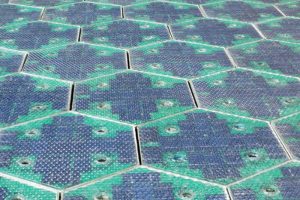
Solar roadways used to be just a concept, but Scott and Julie Brusaw have built them to withstand the weight and wear of trucks and heavy traffic, while producing electricity. Now the question is whether they can raise enough money to set up mass production…
While the tests 23andMe and other companies like them offer an overall snapshot of your future disease risk, much of what those screenings look for in the genetic code is not well known yet. The 23andMe test looks at only small segments of the DNA, called SNPs, and the test is limited to looking at less than a million SNPs (whereas the human genome has around 10 billion SNPs identified so far). To have your entire genome decoded would cost around $3,000 with current technology. The 23andMe test is different from looking at a specific gene, like BRCA1 or the gene that causes HD. It is important to know the differences between various types of genetic screenings, and understand the implications of the results.
On Sunday, September 21, 400,000 environmentalists took to the streets of NYC to rally world leaders meeting at the United Nations later this week to agree on significant cuts to greenhouse gas emissions.