



Dehorning Rhinos For The Sake Of The Species Survival
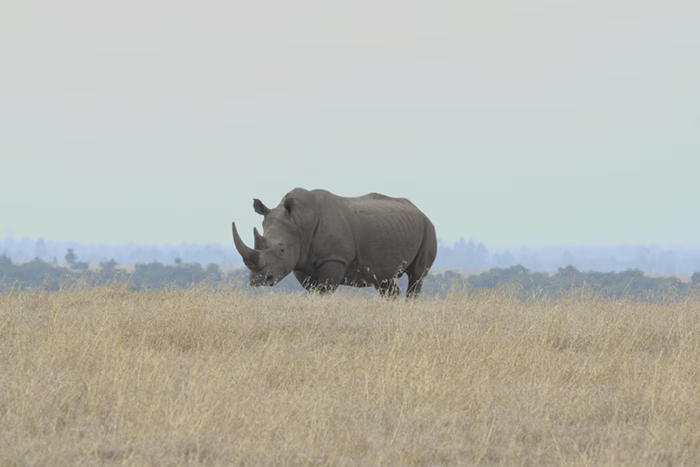
Dear EarthTalk: Why are wildlife conservation officers in Africa cutting the horns off wild rhinos?
—Jim Seamans, Chicago, IL
In the protected habitats of rhinos, a surprising conservation technique is underway. Wildlife officers are cutting the horns off rhinos in a practice known as dehorning. Dehorning is a measure to protect rhinos from poaching. Rhino horns are considered to be highly valuable on the black market, with horns having been sold for up to $400,000. Since the rhino poaching crisis began, over 10,000 rhinos have been killed. Rhino poaching has catastrophic effects on their whole environment because they are keystone species. This means they play a vital role in the well-being of other species in their environments.
The high value of rhino horns on the black market makes them a heavily targeted species. Rhino horns are especially valuable in Asia, where it is believed they have medicinal properties and are a symbol of wealth. Smuggling networks are international, with many delivering horns to Asian countries like China and Vietnam. Rhino populations have declined due to poaching, with the peak number of rhinos poached in Africa hitting 1,349 in 2015.
That is where dehorning helps. Nina Fascione, executive director of the International Rhino Foundation, said, “A live rhino without a horn… is a lot better than a dead rhino without a horn.” Dehorning is often done under sedation to minimize pain to the rhino. A study conducted in the Kruger area of South Africa confirmed that dehorning was indeed an effective practice. The results showed that dehorning more than 2,000 rhinos in the region led to a 78 percent decrease in poaching. Tim Kuiper, a biodiversity scientist at Nelson Mandela University, said, “having to remove [the horn] is kind of a necessary evil.”
However, dehorning is still controversial. One reason is the potential long-term behavioral changes that can result. Another is that the horn is important for the rhino’s defense mechanisms. Also, despite sedatives and anesthesia, dehorning can still cause a lot of distress for the animal both during and after. It is also costly, as it has to be done multiple times because the horn grows back. Furthermore, even though it is less likely, dehorned rhinos may still be poached since a bit of horn is always left behind.
Dehorning is an effective measure, but long-term conservation must goes beyond that. Stricter regulations are needed, and the public should also support community-based conservation initiatives. Finally, there are multiple organizations that we can support, such as Save the Rhino International, the International Rhino Foundation, and the Rhino Recovery Fund. The urgency of this situation continues to grow, and while dehorning buys time, lasting change must come from addressing the root cause of poaching.
CONTACTS
EarthTalk® is produced by Roddy Scheer & Doug Moss for the 501(c)3 nonprofit EarthTalk. See more at https://emagazine.com. To donate, visit https://earthtalk.org. Send questions to: question@earthtalk.org.