



The Challenge of Powering a Renewable Grid
Wind and solar energy now represent the fastest-growing sources of new electricity generation worldwide. Costs have fallen dramatically, making renewables competitive—or cheaper—than fossil fuels in many markets. But as renewable penetration increases, a new challenge comes into focus: how to integrate variable, weather-dependent power into electric grids designed for a very different era.
Most power grids were built around large, centralized fossil fuel plants that could be turned up or down as demand changed. Renewable energy does not work that way. Solar output peaks during daylight hours and drops to zero at night. Wind generation fluctuates with weather conditions, sometimes changing rapidly. Managing these variations without sacrificing reliability is now a defining task of the energy transition.
From Centralized to Flexible Systems
Grid integration is less about replacing one power source with another and more about redesigning how electricity systems operate. Flexibility has become the new currency of reliability.
One approach is diversification. When renewable projects are spread across wide geographic areas, local weather patterns matter less. A calm day in one region may coincide with strong winds elsewhere. Combining solar, wind, and hydropower further smooths overall generation, reducing volatility at the system level.
Forecasting has also improved dramatically. Grid operators now rely on advanced weather models, real-time sensors, and machine learning to predict renewable output hours or days in advance. Better forecasting allows operators to plan ahead, reducing the need for expensive backup generation.
Transmission: The Missing Link
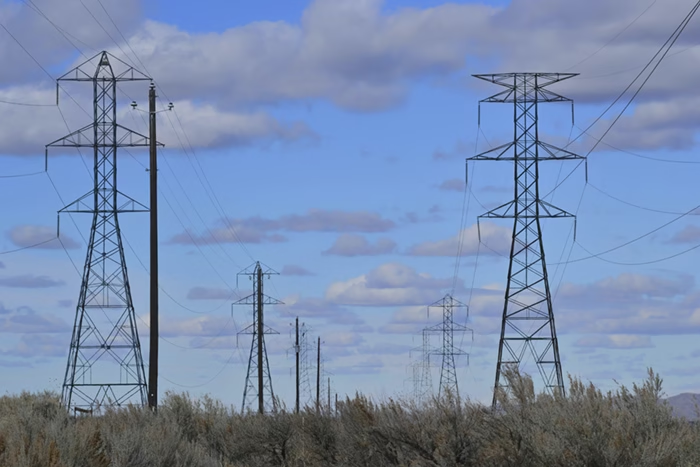
Transmission infrastructure remains one of the biggest bottlenecks to renewable integration. Many of the best wind and solar resources are located far from population centers—plains, deserts, offshore areas. Without sufficient transmission capacity, clean energy can be stranded or curtailed even when demand exists elsewhere.
In many regions, renewable projects are delayed not by lack of financing or technology, but by long permitting timelines and limited grid capacity. Expanding and modernizing transmission networks is essential to unlock existing clean energy potential and keep electricity prices affordable.
The Role of Digital Grids
Digital technologies are transforming how grids operate. Smart inverters, automated substations, and advanced grid management software allow operators to monitor and control electricity flows in real time. Distributed energy resources—such as rooftop solar, home batteries, and electric vehicles—can now be coordinated to support grid stability rather than undermine it.
When properly managed, distributed generation improves resilience. Instead of relying on a small number of large power plants, the grid becomes a network of interconnected assets capable of adapting to disruptions.
Why Grid Integration Matters
Renewable energy integration is not a technical footnote—it is a prerequisite for decarbonization. Without flexible grids, expanded transmission, and modern control systems, clean energy cannot scale fast enough to replace fossil fuels.
Read more…