

Green Technology News: The Innovations Changing Our World

Green Technology News: The Innovations Changing Our World
The landscape of green technology is rapidly evolving, driven by innovations that promise to reshape our world and combat climate change. This article delves into the latest advancements in renewable energy, sustainable materials, electric vehicles, and carbon capture technologies. Readers will gain insights into how these innovations work, their benefits, and their potential impact on environmental sustainability. As the urgency to address climate change intensifies, understanding these technologies becomes crucial for individuals and businesses alike. We will explore the latest green technology innovations, advancements in renewable energy, and the role of sustainable materials in creating a greener future.
Renewable Energy Advances
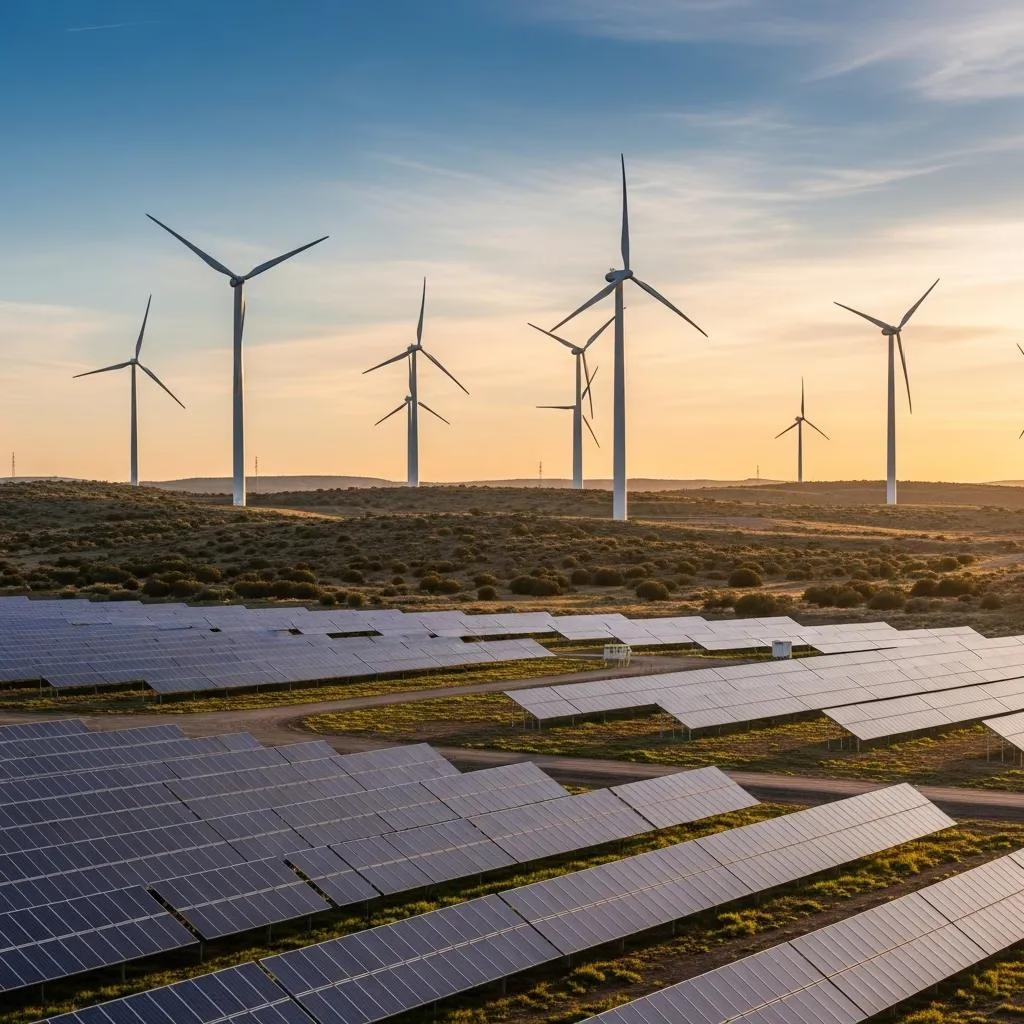
Renewable energy technologies are at the forefront of the green technology revolution, providing sustainable alternatives to fossil fuels. These technologies harness natural resources such as sunlight, wind, and water to generate clean energy. The benefits of renewable energy include reduced greenhouse gas emissions, lower energy costs, and enhanced energy security. As the world shifts towards a more sustainable energy future, innovations in solar energy, “wind energy”, and battery storage are leading the charge.
Solar Energy Innovations
Solar energy has seen remarkable advancements in efficiency and affordability. New photovoltaic materials, such as perovskite solar cells, are being developed to enhance energy conversion rates while reducing production costs. These innovations make solar power more accessible to a broader audience, contributing to a significant increase in solar installations worldwide. Additionally, solar energy systems are becoming more integrated with smart grid technologies, allowing for better energy management and distribution.
Further research highlights the significant progress and potential of perovskite solar cells in revolutionizing solar energy conversion.
Advancements in Perovskite Solar Cell Technology
Perovskite solar cells (PSCs) have emerged as revolutionary technology in the field of photovoltaics, offering a promising avenue for efficient and cost-effective solar energy conversion. This review provides a comprehensive overview of the progress and developments in PSCs, beginning with an introduction to their fundamental properties and significance. Herein, we discuss the various types of PSCs, including lead-based, tin-based, mixed Sn–Pb, germanium-based, and polymer-based PSCs, highlighting their unique attributes and performance metrics. Special emphasis is given to halide double PSCs and their potential in enhancing the stability of PSCs. Charge transport layers and their significance in influencing the overall efficiency of solar cells are discussed in detail. The review also explores the role of tandem solar cells as a solution to overcome the limitations of single-junction solar cells, offering an integrated approach to harness a broader spectrum of sunlight.
A comprehensive review on the advancements and challenges in perovskite solar cell technology, M Noman, 2024
Wind Energy Developments
Wind energy is another critical component of the renewable energy landscape. Recent innovations in turbine design and materials have led to larger, more efficient wind turbines capable of generating more power at lower wind speeds. Offshore wind farms are also gaining traction, utilizing the vast potential of ocean winds to produce clean energy. These advancements not only increase energy output but also reduce the environmental impact of wind energy production.
Battery Storage Solutions
As renewable energy sources like solar and wind are intermittent, advancements in battery storage technology are essential for ensuring a reliable energy supply. Innovations in lithium-ion batteries and the development of solid-state batteries promise to enhance energy storage capacity and efficiency. These technologies enable better integration of renewable energy into the grid, allowing for a more stable and resilient energy system.
Sustainable Materials in Green Technology
The use of sustainable materials is crucial in reducing the environmental impact of various industries. Innovations in sustainable materials focus on creating products that are not only eco-friendly but also economically viable. This section explores the latest developments in sustainable building materials, biodegradable plastics, and recycled materials.
Sustainable Building Materials
Sustainable building materials, such as bamboo, reclaimed wood, and recycled steel, are gaining popularity in construction. These materials offer durability and aesthetic appeal while minimizing environmental impact. Innovations in prefabrication and modular construction techniques further enhance the sustainability of building projects, reducing waste and energy consumption during construction.
Biodegradable Plastics
The rise of biodegradable plastics represents a significant advancement in reducing plastic pollution. Made from renewable resources, these materials break down more quickly than traditional plastics, minimizing their impact on the environment. Innovations in “bioplastics” are paving the way for a circular economy, where materials are reused and recycled, reducing the need for new plastic production.
The development of bio-based and biodegradable plastics is crucial for fostering a circular economy and addressing plastic waste.
Bio-based & Biodegradable Plastics for a Circular Economy
Bio-based and biodegradable plastics (BBPs) are innovative materials, wholly or partially produced from biomass, with the potential to enhance the circulation of resources in the biological cycle of the Ellen MacArthur Foundation’s butterfly diagram. Although BBPs are generally considered more environmental-friendly than conventional plastics, robust scientific evidence is still missing. The lack of tools and metrics to assess the circularity and sustainability of the BBPs industry poses relevant challenges for its upscaling and contribution to climate neutrality goals in Europe.
… , circular economy, and sustainability: Trends, gaps and future orientation in the bio-based and biodegradable plastics industry: Linking bioeconomy, circular economy …, E Foschi, 2023
Recycled Materials
Recycling technologies have advanced significantly, allowing for the efficient processing of various materials, including metals, glass, and plastics. Innovations in sorting and processing technologies enable higher recycling rates and the production of high-quality recycled materials. This not only conserves natural resources but also reduces energy consumption and greenhouse gas emissions associated with material production.
Electric Vehicles and Their Impact

Electric vehicles (EVs) are transforming the transportation sector, offering a cleaner alternative to traditional gasoline-powered vehicles. The shift towards electric mobility is driven by advancements in battery technology, charging infrastructure, and government incentives. This section examines the latest developments in electric vehicles and their potential to reduce carbon emissions.
Advancements in EV Technology
Recent innovations in electric vehicle technology include improvements in battery efficiency, range, and charging speed. New battery chemistries, such as lithium-sulfur and solid-state batteries, promise to extend the range of EVs while reducing charging times. These advancements make electric vehicles more appealing to consumers, contributing to their growing adoption worldwide.
Specifically, solid-state batteries are emerging as a key technology to meet the growing energy storage demands of electric vehicles.
Solid-State Batteries for Electric Vehicles
In recent years solid-state batteries, have emerged leading research focus, due to their distinct advantages over conventional batteries. Solid-state batteries, having solid electrolytes, offer higher energy and power density, enhanced safety features and longer lifespan. This makes them ideal in fulfilling demand for energy storage in electric vehicle, and smart grid applications. This study aims to evaluate various types of solid-state batteries, analysing their properties, advantages, and disadvantages, assessing their viability in EV applications.
Performance analysis of solid-state batteries in Electric vehicle applications, PB Bobba, 2024
Charging Infrastructure Expansion
The expansion of charging infrastructure is critical for supporting the widespread adoption of electric vehicles. Innovations in fast-charging technology and the development of charging networks are making it easier for EV owners to charge their vehicles conveniently. Additionally, the integration of renewable energy sources into charging stations enhances the sustainability of electric mobility.
Government Incentives and Policies
Government incentives and policies play a significant role in promoting electric vehicle adoption. Many countries are implementing tax credits, rebates, and subsidies to encourage consumers to switch to electric vehicles. These initiatives not only support the growth of the EV market but also contribute to reducing greenhouse gas emissions and improving air quality.
Carbon Capture Technologies
Carbon capture technologies are emerging as a vital tool in the fight against climate change. These innovations aim to capture carbon dioxide emissions from industrial processes and power generation, preventing them from entering the atmosphere. This section explores the latest advancements in carbon capture and their potential impact on reducing global carbon emissions.
Direct Air Capture
Direct air capture (DAC) technologies are designed to remove carbon dioxide directly from the atmosphere. Innovations in DAC systems are making these technologies more efficient and cost-effective. By capturing CO2 from the air, DAC can play a crucial role in achieving net-zero emissions and mitigating climate change.
Carbon Capture Utilization
Carbon capture utilization (CCU) involves converting captured carbon dioxide into valuable products, such as fuels, chemicals, and building materials. Innovations in CCU technologies are creating new markets for captured CO2, turning a waste product into a resource. This approach not only reduces emissions but also contributes to a circular economy.
Industrial Carbon Capture
Industrial carbon capture technologies focus on capturing emissions from large industrial sources, such as cement and steel production. Recent advancements in capture technologies and processes are improving the efficiency and effectiveness of carbon capture in these sectors. By reducing emissions from heavy industries, carbon capture can significantly contribute to global climate goals.
The innovations in green technology discussed in this article highlight the potential for a sustainable future. By embracing renewable energy, sustainable materials, electric vehicles, and “carbon capture technologies”, we can work towards a greener planet and combat the pressing challenges of climate change.