

Why Metal Roofing Is a Sustainable Choice for Your Home
Why Metal Roofing Is One of the Most Sustainable Home Upgrades You Can Make
Most homeowners choose roofing material the same way they choose paint: price first, appearance second, everything else not at all. It’s an understandable approach. But the environmental cost of that decision is enormous and almost entirely invisible. The US generates approximately 11 million tons of asphalt shingle waste every year. That material is largely non-recyclable; it goes directly to landfill, and it stays there. Every re-roof with conventional asphalt adds to that number. The roof above you isn’t just a weather barrier. It’s an environmental choice, whether you make it consciously or not.
Why the Material You Choose Matters More Than You Think
Not all roofing materials carry the same ecological weight. The gap between the best and worst options, measured across a full lifecycle, is significant. As awareness of sustainable building grows, experienced metal roofing contractors are seeing more homeowners actively choosing metal not just for its durability, but specifically because of its environmental credentials — recycled content, zero landfill at end of life, and a lifespan that outlasts two or three asphalt roofs. That shift in consumer reasoning matters. It means the conversation around roofing has finally moved beyond cost per square foot.
What Makes Metal Roofing Genuinely Recyclable
Asphalt shingles are technically recyclable in limited applications, mostly as aggregate in road construction. In practice, less than 10 percent are diverted from landfill. Metal is different at a fundamental level. Steel roofing typically contains 25 to 95 percent recycled content, depending on the product. Aluminium runs even higher. At the end of life, every panel is fully recyclable with no degradation in material quality. The recyclability rate for steel globally sits above 85 percent. For aluminium, it’s higher still. No other common roofing material comes close to those numbers.
Steel vs. Aluminium vs. Copper — Which Metal Has the Smallest Footprint
Steel has the highest recycled content of the three and the lowest raw material cost, but its production is energy-intensive. Recycled steel, however, requires roughly 75 percent less energy to produce than virgin steel, which changes the calculation significantly. Aluminium is lighter, naturally corrosion-resistant, and extraordinarily recyclable, but primary aluminium production carries a heavy carbon burden. Recycled aluminium uses about 95 percent less energy than new production. Copper has the longest lifespan of any metal roofing material, often exceeding 100 years, but it’s expensive and its mining footprint is substantial. For most homeowners weighing sustainability against cost, recycled steel is the most balanced choice.
Longevity as a Sustainability Argument
A quality metal roof lasts 40 to 70 years. A standard asphalt roof lasts 15 to 20 years. Over a 50-year period, a homeowner with asphalt will go through two full replacements, each generating waste, consuming raw materials, and requiring manufacturing energy. The metal roof installed once at the start of that same period is still performing at year 50. The sustainability argument for metal isn’t just about what it’s made of. It’s about how rarely it needs to be made again.
That compounding effect is real. Fewer replacements mean less extraction, less manufacturing, less transport, less waste. The roof that costs more upfront often costs the planet considerably less over time.
How Metal Roofing Reduces Your Home’s Energy Consumption
Conventional dark asphalt absorbs solar radiation aggressively, reflecting only around 20 percent of incoming sunlight and transferring the rest as heat into the building below. Metal roofing with a reflective coating can reflect up to 70 percent of solar radiation. That difference translates directly into reduced air conditioning demand during the summer months. Studies from the Oak Ridge National Laboratory found that cool metal roofing can cut residential cooling energy use by 10 to 25 percent in warm climates.
In a country where residential cooling accounts for roughly 6 percent of total electricity consumption, that’s not a marginal gain.
The Role of Roof Coatings and Finishes in Energy Performance
The base metal alone doesn’t deliver peak thermal performance. Specialised pigmented coatings — particularly those using near-infrared reflective technology — dramatically improve solar reflectance even in darker colours. A dark brown metal roof with the right coating can outperform a light grey asphalt shingle on thermal performance. Ventilated roof assemblies that create an air gap between the metal panel and the decking below add another layer of thermal benefit, reducing heat transfer into the attic regardless of external temperature.
Metal Roofing and Solar Panel Compatibility
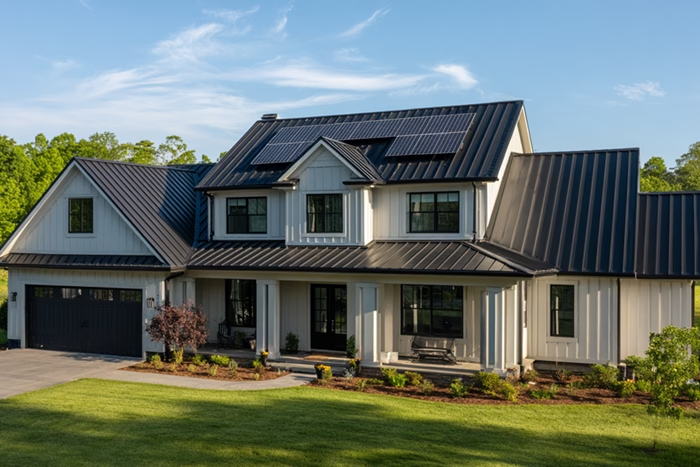
Metal roofing and solar panels are a natural pairing that most sustainable building guides undervalue. Standing seam metal roofs allow solar panels to be mounted with clip-based systems that attach to the seams without penetrating the metal surface. No drilling, no sealant, no potential leak points. The roof maintains its weatherproofing integrity while the solar array sits cleanly above it. For homeowners planning both upgrades, doing them together eliminates the need to remove panels if the roof ever needs attention — because with a metal roof, it almost certainly won’t.
Rainwater Harvesting and Reduced Runoff
This is one of the less-discussed environmental advantages of metal roofing, and it deserves more attention. Asphalt shingles leach chemicals into rainwater as they age — including zinc, copper compounds from algae-resistant treatments, and various organic compounds from the asphalt binder itself. That runoff enters soil and waterways. Metal roofing, particularly properly coated steel and aluminium, doesn’t have the same leaching problem. The surface stays chemically stable over decades.
That stability makes metal roofing directly compatible with rainwater harvesting systems. If you’re collecting roof runoff for garden irrigation or grey water use, the material above you matters. Clean metal surfaces produce cleaner water. For homeowners pursuing a genuinely integrated approach to sustainable living, that compatibility is worth factoring into the material decision from the start.
The Full Lifecycle Calculation — From Production to End of Life
Metal roofing does have one honest weakness in the sustainability comparison: upfront production energy. Smelting and forming metal requires more energy than manufacturing asphalt shingles, and a rigorous Life Cycle Assessment reflects that. On a 10-year horizon, asphalt can actually look more efficient on a per-unit-of-energy basis simply because it costs less to produce.
The picture changes completely at 30 years. And by 50 years it isn’t close. When LCA accounts for multiple asphalt replacement cycles, the cumulative energy input, raw material extraction, transportation and landfill impact of conventional roofing far exceeds the initial production cost of a single metal installation. The upfront carbon debt of metal roofing is real. It’s also paid off well within the product’s lifespan, usually within 20 to 30 years, depending on climate and energy grid mix.
Sustainability calculations that only look at manufacturing are incomplete. The honest number is a lifetime number.
Making the Switch — What the Installation Process Actually Involves
One practical advantage that often surprises homeowners: metal roofing can frequently be installed directly over existing asphalt shingles. That eliminates a full tear-off, reduces labor cost, and keeps the old material out of the landfill for the time being. Not every roof qualifies — the structure needs to be assessed for load capacity and the existing surface needs to be reasonably flat — but when it works, it simplifies the project significantly.
The installation timeline for a standard residential metal roof runs two to five days, depending on complexity. The critical variables are flashing detail at penetrations and edges, fastener type and pattern, and whether the assembly includes proper underlayment and ventilation. These aren’t areas where shortcuts pay off. A metal roof that leaks at a flashing joint or traps moisture in the assembly fails to deliver the lifespan that makes it sustainable in the first place. Choosing the right contractor matters as much as choosing the right material.
A Sustainable Choice That Starts With the Right Team
The environmental case for metal roofing is genuinely strong. Recycled content, full recyclability, reflective performance, rainwater compatibility, solar panel synergy, and a lifespan that makes every other option look short-term. But those benefits are only realised in full when the installation is done correctly. Improper ventilation shortens lifespan. Poor flashing creates moisture pathways that damage the structure. The wrong fastener system allows panels to move over time. None of those failures is about the material. They’re about execution.
For homeowners in New Jersey and Pennsylvania looking to make this upgrade, American Quality Remodeling installs metal roofing as part of a full exterior remodeling service that also covers siding, windows, gutters and skylights — so the sustainability gains of a new roof can be part of a broader, coordinated improvement to your home’s envelope. Free estimates are available, and approaching the project as a whole exterior decision rather than an isolated roof replacement tends to produce better outcomes on every front.
The most sustainable upgrade is the one done once, done right, and still performing forty years from now.