



Native Plants: Adapt Or Perish As Climate Changes
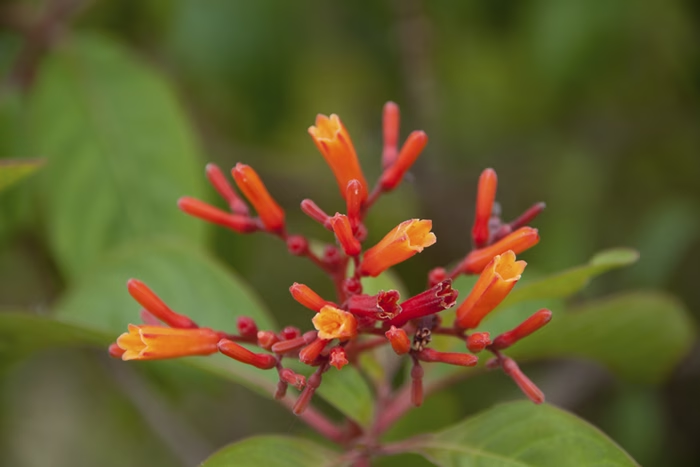
Dear EarthTalk: How can we help native plant species survive in a warmer world where their terrain is heating up as a result of climate change?
—Robert Billings, Seattle, WA
Native plants are very vulnerable to climate change. High temperatures mean they have to adjust to increased droughts and higher CO2 levels. Three options for native plants are available when presented with temperatures outside of their natural range of temperatures: they can adapt, migrate, or go extinct.
“We know that, because of climate, native species need to move,” says Thomas Nuhlfer, a researcher in organic and evolutionary biology at the University of Massachusetts at Amherst. Migration works slowly which means they won’t be able to keep up with the rapid nature of climate change. Therefore, it’s necessary for human assistance in moving plants into suitable environments. Climate change also encourages the growth of invasive species, which is happening right now and causing the population to increase exponentially. An increase in invasive species can lead to a rapid decrease in native plants, reducing biodiversity and making environments more prone to natural disasters.
Managed relocation is the process of helping plants move into new areas with better climate conditions. Although the extent to which humans should intervene is debated, assisted migration is increasingly accepted as a necessary conservation strategy. Choosing which plants to relocate and where to move them involves several factors. Scientists have found there is an overlap between invasive traits and restoration. Therefore, choosing plants that have traits associated with invasive species is necessary as they often provide the tools necessary to create a plan for survival in a foreign environment. Apart from those, it’s important to focus on traits that are helpful, such as high metabolic rate and large size.
Today, there are many types of ongoing conservation efforts. Seed banking includes gathering seeds from multiple plants to ensure the possibility of future reintroduction. Habitat protection involves preserving natural environments from destruction, helping to maintain biodiversity and providing a safe refuge for native species. Planting native species for enhances the durability of the ecosystem from natural disasters. Research and monitoring give us feedback about plants’ response to climate change as well as new conservation efforts to use, which is important for policy feedback.
Every backyard can be a powerful tool for environmental change. Planting native species in yards supports pollinators and wildlife. Avoiding pesticides helps keep beneficial insects and soil organisms safe. Supporting reforestation contributes to habitat recovery. Encouraging nurseries to grow native plants creates sustainable options. These small actions can create a big impact.
CONTACTS
EarthTalk® is produced by Roddy Scheer & Doug Moss for the 501(c)3 nonprofit EarthTalk. See more at https://emagazine.com. To donate, visit https://earthtalk.org. Send questions to: question@earthtalk.org.