

Solar Panel Benefits for Homeowners: Is It Worth It?
Solar Panel Benefits for Homeowners: Is It Worth It?
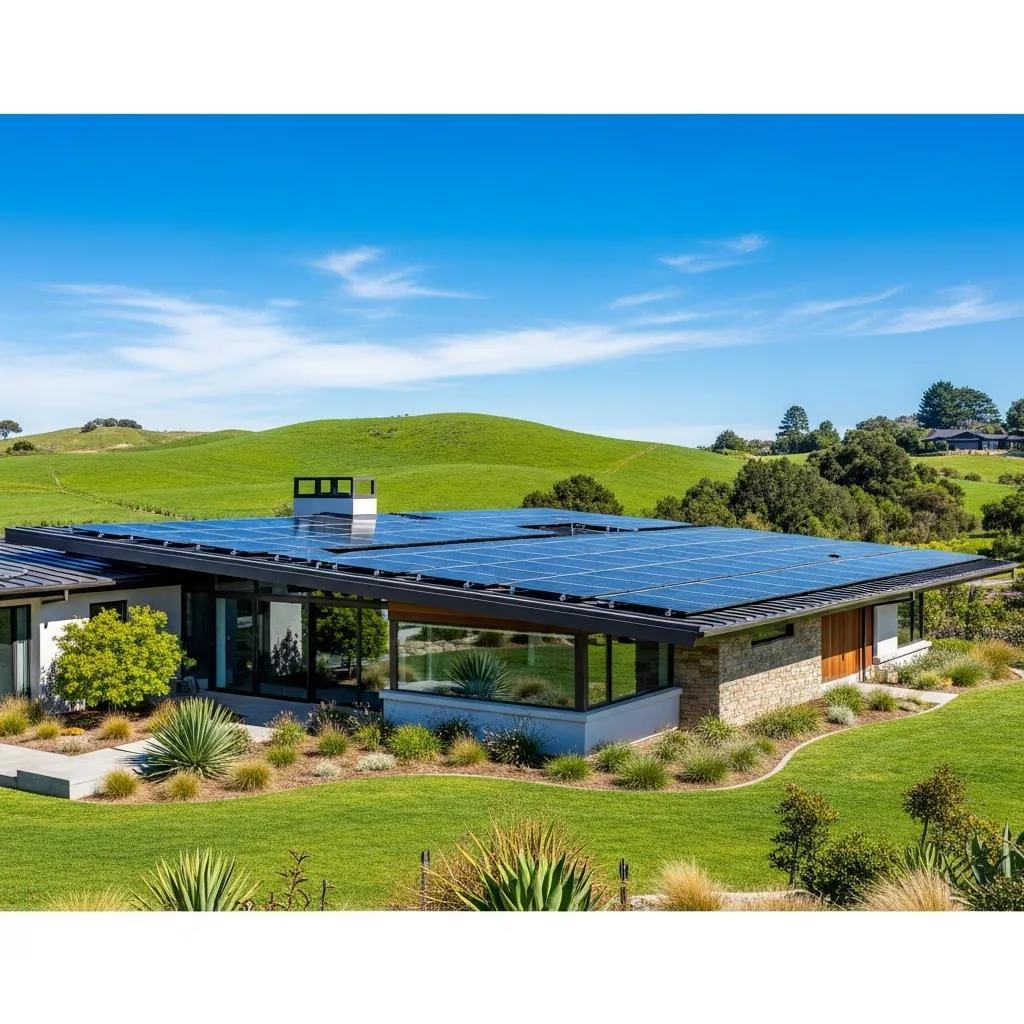
More homeowners are looking to lower bills and shrink their environmental footprint — and solar panels keep rising to the top of the list. This guide walks through the real benefits of residential solar: the potential savings, environmental advantages, what to expect during installation, and the incentives that make the math work. We’ll also cover upkeep and recent technology improvements so you can decide whether solar is a smart move for your home.
Key Takeaways
- Solar panels can cut energy bills and may even generate extra income by selling surplus power back to the grid.
- Federal and local incentives, including tax credits, significantly lower the upfront cost for homeowners.
- Switching to solar reduces carbon emissions and helps decrease dependence on fossil fuels.
- A typical installation follows site assessment, system design, installation, and a final inspection.
- Simple, regular maintenance—cleaning and inspections—keeps panels operating efficiently over the years.
- New tech like bifacial modules and home batteries boosts overall system performance and flexibility.
- Most solar panels last 25–30 years and come with manufacturer performance warranties.
Financial Benefits of Solar Panels
The most immediate attraction of residential solar is the potential for meaningful savings. Generating your own electricity cuts monthly utility bills, and in many places you can offset costs further by selling excess production back to the grid. Add tax credits and rebates, and the effective price of a system drops substantially — often shortening the payback window and improving return on investment.
Empirical studies and case reports back up these financial gains for households that adopt solar.
Financial Viability & Savings with Residential Solar
Solar energy is increasingly popular with households aiming to reduce electricity costs. In one reported case, the system cut electricity expenses so the household’s bill was reduced to just 751 euros, demonstrating clear savings. These outcomes indicate that residential solar can be a sound long-term investment, lowering household energy spending while supporting a more stable and sustainable energy supply.
Financial Viability and Energy Efficiency of Residential Solar Power Systems: A Case Study from Serbia, L Djordjević, 2025
To make the financial picture clearer, here’s a quick comparison of key cost items and expected values:
When you add incentives and lower monthly bills, solar often becomes a financially sensible choice for homeowners prepared to make the initial investment.
If you’re weighing solar, run the numbers for your household: upfront cost, local incentives, and your typical electricity use will determine how quickly you break even and start seeing net savings.
Practical approach to estimating savings: start with your annual electricity use (kWh) from utility bills and multiply by your per-kilowatt-hour rate to get an annual spend. Compare that to modeled annual production for a candidate system size in your location, accounting for local climate and roof orientation. Subtract expected self-use from gross production to estimate what you would buy from the grid each year versus what you supply. Include modest allowances for routine maintenance and possible inverter replacement when calculating the longer-term return. This step-by-step view gives a homeowner a realistic sense of the payback window and longer-term value.
Financing choices also influence the effective cost and payback. Common paths include paying cash, taking a home equity or solar loan, or engaging third-party financing such as power purchase agreements or leases where available. Cash purchases typically maximize long-term savings but require higher upfront funds. Loan options spread cost and can still deliver positive cash flow when monthly payments are lower than previous utility bills. When evaluating offers, compare the total lifecycle cost, included warranties, and the transferability of any financing if you sell the home.
Environmental Impact and Sustainability
Solar power reduces greenhouse gas emissions by replacing electricity normally produced from fossil fuels. For homeowners, that means a smaller household carbon footprint and a direct contribution to cleaner air and a more sustainable energy mix.
Widespread residential adoption also eases demand on centralized, nonrenewable generation. That collective shift can produce measurable declines in pollution and help communities move toward greater energy independence.
Solar systems use very little water compared with many traditional generation methods, which helps conserve local water resources. Altogether, these factors make solar a strong option for homeowners who want to lower environmental impact while meeting their energy needs.
Looking at sustainability beyond operation, homeowners are increasingly focused on lifecycle impacts: the energy used to manufacture modules, materials sourcing, and end-of-life handling. Many manufacturers and recyclers now offer recycling options for modules and associated components, and installers can often describe local pathways for responsible disposal or reuse. Choosing equipment with longevity and backing warranties helps lower the effective embodied carbon per unit of electricity produced over the system’s lifetime.
There are also community-level environmental benefits. Distributed rooftop systems can reduce transmission losses by creating power nearer to consumption and can help communities meet local clean energy targets. In neighborhoods where many households adopt solar, local air quality improvements and reduced strain on distribution infrastructure during high-demand periods can be noticeable over time.
Solar Panel Installation Process
Installing rooftop solar follows a straightforward set of steps designed to ensure safety and optimal performance.
- Site Assessment : A technician inspects your property to find the best panel layout based on sun exposure and roof condition.
- System Design : Installers design a system sized to match your energy needs and roof constraints.
- Installation : Certified crews mount panels, wire the system, and connect inverters and safety equipment.
- Post-Installation Inspection : Authorities or installers perform final checks to confirm the system is safe and operating as specified.
Knowing these phases helps homeowners plan for timelines and any preparations needed before crews arrive.
In practice, the installation sequence includes additional administrative steps that homeowners should expect: securing required permits, arranging grid interconnection approval, and coordinating any necessary roof repairs or reinforcement before panels are installed. A trusted installer will manage permit submissions and communications with the utility, but it helps homeowners to be prepared with clear access to historical utility bills, property records, and any homeowner association guidelines. If your roof needs repair or replacement soon, scheduling that work before solar installation can prevent removing and reinstalling panels down the line.
On the roof itself, crews typically evaluate shade patterns, select an optimized tilt and layout, and choose mounting gear appropriate to your roofing material. Installers may discuss alternative mounting options such as ground-mounted arrays or carport installations if roof space or orientation limits yield. After physical installation, system commissioning includes functional testing, inverter setup, and configuring monitoring so you can track production from day one.
Government Incentives and Tax Credits
Incentives at federal, state, and local levels are a major reason more homeowners choose solar. These programs reduce upfront costs and improve the overall economics of a system.
- Federal Tax Credits : Homeowners may claim a federal tax credit covering a share of installation expenses — currently 30%.
- State-Specific Incentives : Many states offer additional programs such as rebates, performance-based incentives, or tax exemptions.
- Local Rebates : Municipalities or utilities sometimes provide rebates or incentives that further lower net costs.
Combined, these incentives can significantly reduce the out-of-pocket price and shorten the payback period for many homeowners.
To locate incentives that apply to your property, consult the database maintained by your state energy office or your local utility’s customer programs page. Installers frequently help identify applicable rebates and complete required paperwork. When claiming tax credits, keep careful records of invoices, equipment specifications, and completion dates: proper documentation speeds processing and ensures you can substantiate claims in the tax filing year that applies.
Some incentives are time-limited or phase down as policy changes, so factor the current rules into your planning rather than assuming programs will remain unchanged indefinitely. Working with a credible installer who stays current on incentive programs will help you capture applicable savings while avoiding surprises.
Solar Panel Maintenance and Lifespan
Routine care keeps a solar array productive for decades. Typical maintenance includes:
- Cleaning : Removing dirt and debris so panels absorb as much sunlight as possible.
- Inspection : Periodic checks for wear, loose connections, or physical damage.
- Monitoring : Using monitoring tools to track energy output and spot performance drops quickly.
Most panels are rated to perform well for 25 to 30 years, and manufacturers usually back that with performance and product warranties. Regular maintenance helps protect that lifespan and your investment.
A practical seasonal checklist helps preserve output and catch issues early: visually inspect panels after major storms, clear leaves and debris in fall and spring, check for shading changes as trees grow, and confirm that mounting hardware remains secure. Many systems include online monitoring that alerts homeowners to sudden drops in production, enabling quick follow-up with the installer. In some cases, inverters or balance-of-system components may require service sooner than the modules themselves; plan for modest, occasional component updates over the lifetime of the system.
When reviewing warranty terms, note what is covered (product defects, performance levels) and what maintenance is required to keep warranties valid. Keep a file with installation documents, permits, and monitoring reports so you can support any warranty claims if necessary.
Technological Advances in Solar Energy
New innovations are making residential solar more efficient and flexible than ever. Notable advances include:
- Bifacial Solar Panels : Panels that harvest sunlight on both sides to increase yield.
- Solar Inverters : Improved inverters convert more of the sun’s energy into usable electricity.
- Energy Storage Solutions : Home battery systems let homeowners store excess energy for use at night or during outages.
These technologies help homeowners get more reliable, higher-performing solar systems and greater control over when and how they use the energy produced.
Recent advances extend beyond module design. Microinverters and module-level power electronics can improve production in partially shaded roofs by optimizing output per panel, while smart string inverters with advanced monitoring provide robust performance for many installations. Energy storage systems are increasingly integrated with home energy management platforms, enabling timed loads, backup power profiles, and improved self-consumption. When evaluating systems, ask installers about monitoring tools, firmware update policies, and options to expand storage or controls in the future.
Frequently Asked Questions
What are the common misconceptions about solar panels?
A few persistent myths hold people back: that panels only work in constant sun, or that they’re always prohibitively expensive. In truth, systems can produce electricity on cloudy days, and incentives plus long-term bill savings often make them financially viable. Clear, realistic cost estimates and local data help homeowners separate fact from fiction.
It’s also helpful to understand that system performance depends on relative sunlight and roof factors rather than perfect conditions. Modern panels and inverters can deliver beneficial energy output even where sunlight is intermittent, and system-level design choices—tilt, orientation, inverter selection—play a large role in real-world performance.
How do solar panels affect property value?
Solar-equipped homes often sell for more than similar homes without systems. Buyers value lower energy bills and the appeal of sustainable features, which can make a property stand out in the market.
The practical impact on resale can depend on whether the system is owned outright or financed, the age and warranty status of components, and local market preferences. When systems are owned and come with transferable warranties and clear documentation, they tend to be most attractive to buyers. If the system is leased or financed, understand how that arrangement transfers at sale and make that information readily available for prospective buyers and their lenders.
What should homeowners consider before installing solar panels?
Before you commit, evaluate your home’s energy use, roof condition and orientation, and local regulations. Check available incentives and talk to reputable installers to compare quotes and financing options. A professional assessment will clarify whether your home is a strong candidate for solar.
Also consider practical items such as expected future electricity use (for example, planned EV charging), potential shading developments (growing trees or nearby construction), and whether you want backup capability. Asking for references, photos of completed work, and examples of completed permits helps separate experienced installers from less established providers.
Can solar panels work during power outages?
Standard grid-tied systems shut off during outages to protect utility workers. To keep power when the grid goes down, you’ll need battery storage or a system with backup capability. If backup power is a priority, include storage in your system design.
If you plan for backup, discuss with installers how long critical circuits will stay powered, whether whole-home backup is feasible, and how the battery charges when the grid is available. Backup solutions differ in complexity and cost, so align the design with your resilience goals.
What are the environmental benefits of solar energy beyond reducing carbon emissions?
In addition to cutting greenhouse gases, solar reduces air and water pollution by displacing fossil-fuel generation. It uses minimal water compared with many conventional power plants, contributing to resource conservation and healthier local environments.
At a neighborhood and grid scale, distributed solar can lower peak demand on local transformers and reduce the need for polluting peaker plants. This makes solar a practical contributor to broader environmental and public health goals in many communities.
How do solar panel warranties work?
Warranties come in two common types: performance warranties (which guarantee a level of output, often up to 25 years) and product warranties (which cover defects in materials or workmanship, typically 10–25 years). Review terms carefully so you understand what’s covered and for how long.
When comparing warranty terms, check whether labor for warranty repairs is included, how to initiate a claim, and any maintenance actions required to keep coverage valid. Keep installation receipts, model numbers, and the installer’s contact information in a single file to streamline any future service requests.
What are the latest trends in solar technology?
Trends include bifacial panels for higher yields, smarter inverters that boost conversion efficiency, and increasingly capable battery systems that improve self-consumption and resilience. These improvements are steadily expanding the practical benefits of home solar.
Additional trends include stronger software tools for system monitoring and analytics, increasing module efficiency, and modular storage options that allow homeowners to scale capacity over time. These innovations give homeowners more choices and greater flexibility to match technology to lifestyle and budget.
Conclusion
Solar panels can deliver meaningful savings and environmental benefits for many homeowners. When you account for incentives, ongoing energy savings, and improving technology, solar is worth considering as a long-term investment in your home and the planet. If you’re curious, start with a site assessment and a few quotes to see how solar could work for your household.
Next practical steps: gather a full year of electric bills, identify roof areas with good sun exposure, and ask several reputable installers for detailed proposals that include production estimates, equipment specifications, warranties, and financing options. Comparing proposals side by side will help you judge value, risk, and expected return so you can decide with confidence.