



Are Agrivoltaics The Future Of Sustainable Agriculture?
Dear EarthTalk: What are agrivoltaics, and why are environmental advocates so bullish on it?
—Pat Billings, Butte, MT
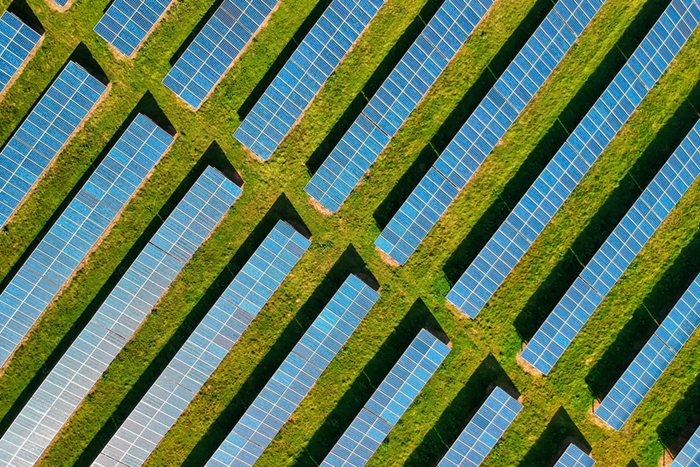
Agriculture requires large amounts of resources, especially water and energy. Almost a third of global greenhouse gases are linked to agriculture. As world population grows, the demand for food and agricultural production only increases. That’s where agrivoltaics come in, utilizing land for both solar installation and agricultural production, fostering a symbiotic bond between agriculture and energy.
Agriovoltaics allows for more efficient land use while also protecting agricultural yields. Solar panels protect plants from intense weather conditions and prevent them from exceeding their light saturation point, while plants help keep solar panels cool. The protection of plants also protects economies that rely on agriculture. At the same time, solar energy can power essential agricultural needs like equipment. The excess energy produced in agrivoltaics is stored in battery banks or transmitted to the grid for other users.
Agrivoltaics represents the epitome of sustainable agriculture and climate resilience because of its ability to address various concerns. It also provides a renewable energy system that directly limits greenhouse gases by reducing reliance on fossil fuels, thus mitigating the carbon footprint involved in agriculture. Agrivoltaics also promotes water conservation by ensuring that plants are not oversaturated with sunlight.
Chad Higgins, an environmental engineer at Oregon State University, told Reuters in 2023 that agrivoltaics nullifies the choice between energy and farm production. “The solar versus ag debate is a non-starter…They’re [solar panels] like any other electronic device, they become more efficient as they become cooler, so it can be a truly symbiotic relationship.”
Challenges still exist, especially cost. The high start-up expenses and the difficulty in having farmworkers adapt to new systems are obstacles that reinforce the importance of realism. Still, the many advantages of agrivoltaics are a reason for optimism. According to Colorado State University, utilizing agrivoltaics for land systems can potentially increase farm productivity from 35 to 73 percent. Through prioritizing sustainability and energy efficiency, agrivoltaics embody a win-win situation.
Agrivoltaics is only becoming more popular. According to the U.S. Department of Energy, solar energy could jump from providing 4 percent of the U.S. electrical supply to 40 percent by 2035. Moreover, policy across the United States from Colorado to New York is working to increase awareness, research, and usage of agrivoltaics systems, amplifying it as the future of sustainable agriculture.
CONTACTS
EarthTalk® is produced by Roddy Scheer & Doug Moss for the 501(c)3 nonprofit EarthTalk. See more at https://emagazine.com. To donate, visit https://earthtalk.org. Send questions to: question@earthtalk.org.