



Climate Changes Makes Our Food Taste Worse
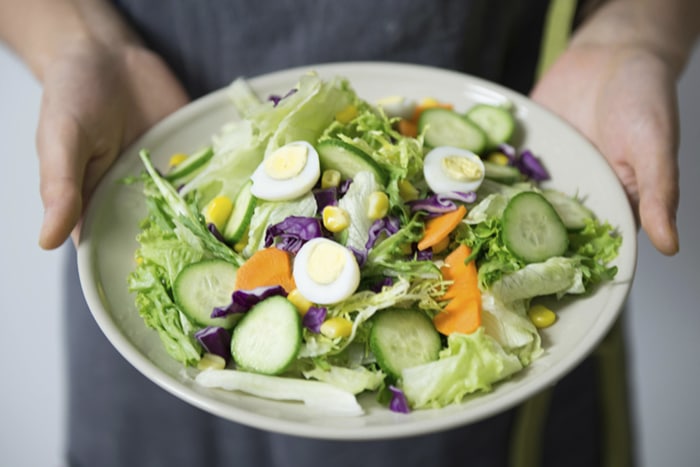
Climate change can and has begun to affect the taste of produce crops through an unforeseen chain reaction from the change in weather caused by climate change impacting the quality of crop production. Crop quality has been impacted by the increasing volatility of weather events as well as hotter temperatures, as illustrated by the .11° F increase in average temperature every decade since 1850 (NOAA).
With these ever-changing climate conditions, produce crops, which are easily impacted by conditions such as temperature, humidity, soil/water composition, and CO2 volume have not fully adapted yet; instead, growth is often stunted.
For example, lettuce can experience a decrease in chlorophyll, making it less nutritional, but more considerably, reduces its ability to grow, making the final head of lettuce much less dense overall, and further, lettuce can even become bitter when exposed to higher average temperatures (BrioAgro Technologies).
Additionally, items such as gin which are produced using berries have experienced a change in taste– according to the Guardian, distillers can experience drastic variations in their gin’s flavor profile based on the growing conditions of the berries used to produce the gin. Given the nature of consistency and quality required for certain producers, volatile conditions can pose a huge risk in production.
It’s not just the taste of crops and their final products impacted, however; while carbon dioxide has been found to significantly increase crop yield, it has also been found to decrease the micro and macronutrients found in plants which are essential for most nutritional standards (Semba, Askari, Gibson, et al., 2021).
With the effects on produce crops caused by climate change not completely understood yet, there is no foreseeable solution or guarantee regarding produce crops’ taste, nutritional value, or output– which has caused havoc for producers of certain specialty items, such as Picodin, a type of French goat cheese. With tight regulations dictating the production of this cheese at standard in place by the Picodin association, there has been a scramble to adapt production to both be regulatorily sound and still tasty (New York Times).
According to Simon Bouchet, an employee of the Picodon Association, “with climate change and droughts, all that has been called into question”, in regards to the availability of resources used in the production of Picodon (New York Times), signalling a shift in the availability of specialty items that rely on crops to be produced due to climate change.
It is not too late to ensure that crops remain nutritious and tasty; a way forward is to endorse local community supported agriculture (CSA) operations, advocate for increased climate awareness and protection, and support sustainable agriculture and practices wherever possible.
CONTACTS
- Local Harvest
- How Climate Change is Transforming Food Flavor and Tradition
- French Cheese To Japanese Apples, How Global Warming Will Change The Flavor Of Food
- Flavour of gin and tonic could be impacted by climate change, study finds
- How climate change affects the taste and nutritional power of vegetables
- Your favorite foods may not taste the same in the future. Here’s why.