






Discover Endangered Species: Threats and Recovery Stories
Endangered Species: Threats, Recovery Stories, and How We Can Help
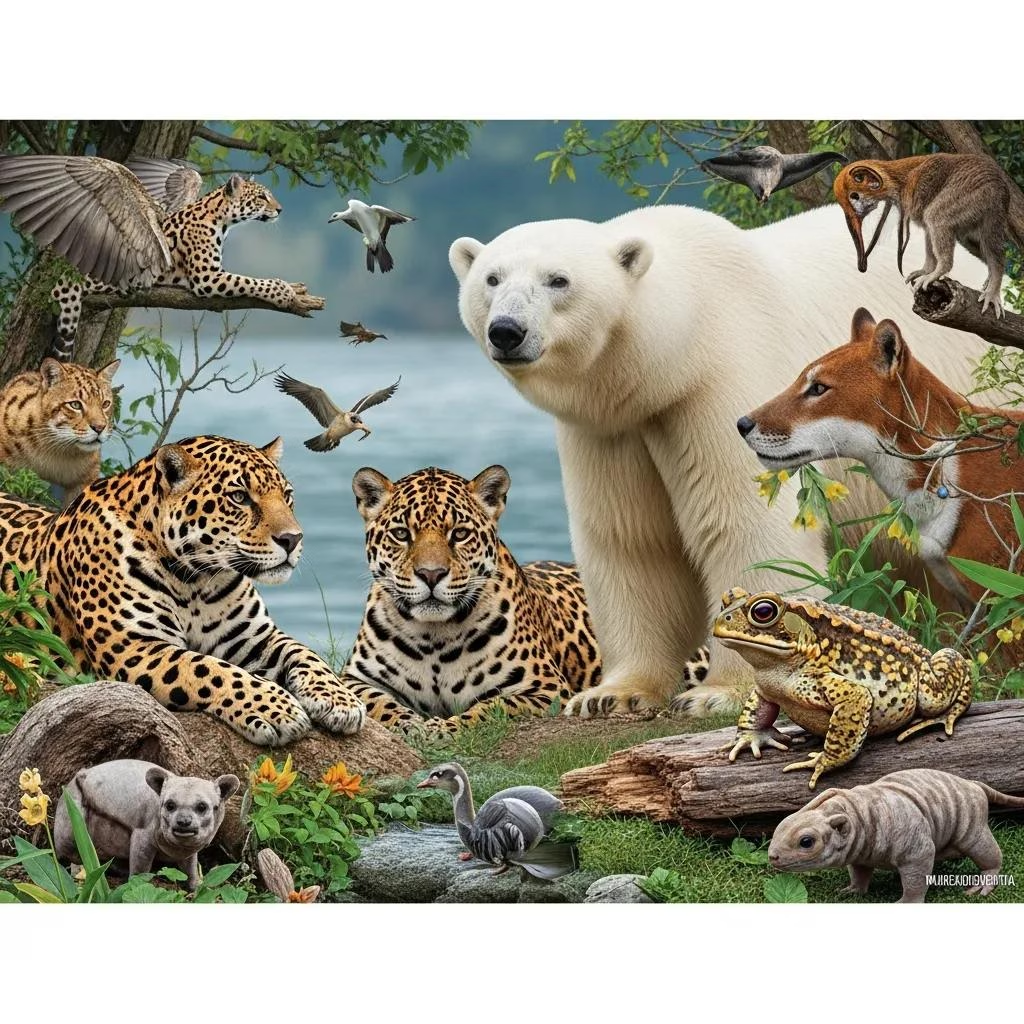
Across the globe, endangered species face a web of threats that undermine ecosystems and the services they provide. This piece explains the main dangers—like habitat loss, climate change and poaching—and highlights hopeful recovery stories that show conservation can work. You’ll learn how these threats operate, which strategies are proving effective, and simple ways people and communities can contribute. The sections below cover the chief threats, proven conservation methods, notable recovery programs, and practical actions anyone can take to help wildlife thrive.
Key Takeaways on Endangered Species Threats and Recovery
- Major threats include habitat loss, climate change, poaching, pollution, and invasive species.
- Habitat loss and fragmentation shrink populations and reduce genetic diversity, increasing extinction risk.
- Climate change reshapes habitats and life cycles—examples include polar bears and amphibians like the golden toad.
- Legal protections and habitat restoration are foundational tools for recovery.
- Captive breeding and careful reintroduction have helped species such as the bald eagle and California condor rebound.
- Protecting biodiversity relies on reserves, community partnerships, and targeted conservation actions.
- Adaptive strategies are needed to address climate-driven threats to species survival.
- Organizations like the IUCN and WWF provide research, monitoring, and advocacy crucial to conservation success.
- New technologies—drones, camera traps, and AI—are expanding monitoring and anti-poaching capabilities.
What Are the Main Threats Facing Endangered Species Today?
Endangered species are being pushed toward extinction by a mix of human-driven and environmental pressures. The primary forces are habitat loss and fragmentation, climate change, illegal hunting and trade, and pollution. Each threat affects species in different ways, so effective conservation depends on understanding and addressing them together.
These threats often interact: habitat loss can amplify climate impacts, and pollution can weaken populations already stressed by overexploitation. When multiple pressures converge on a population, recovery becomes harder and more resource intensive. Recognizing these interactions helps prioritize actions that reduce multiple risks at once.
How Does Habitat Loss and Fragmentation Impact Wildlife Populations?
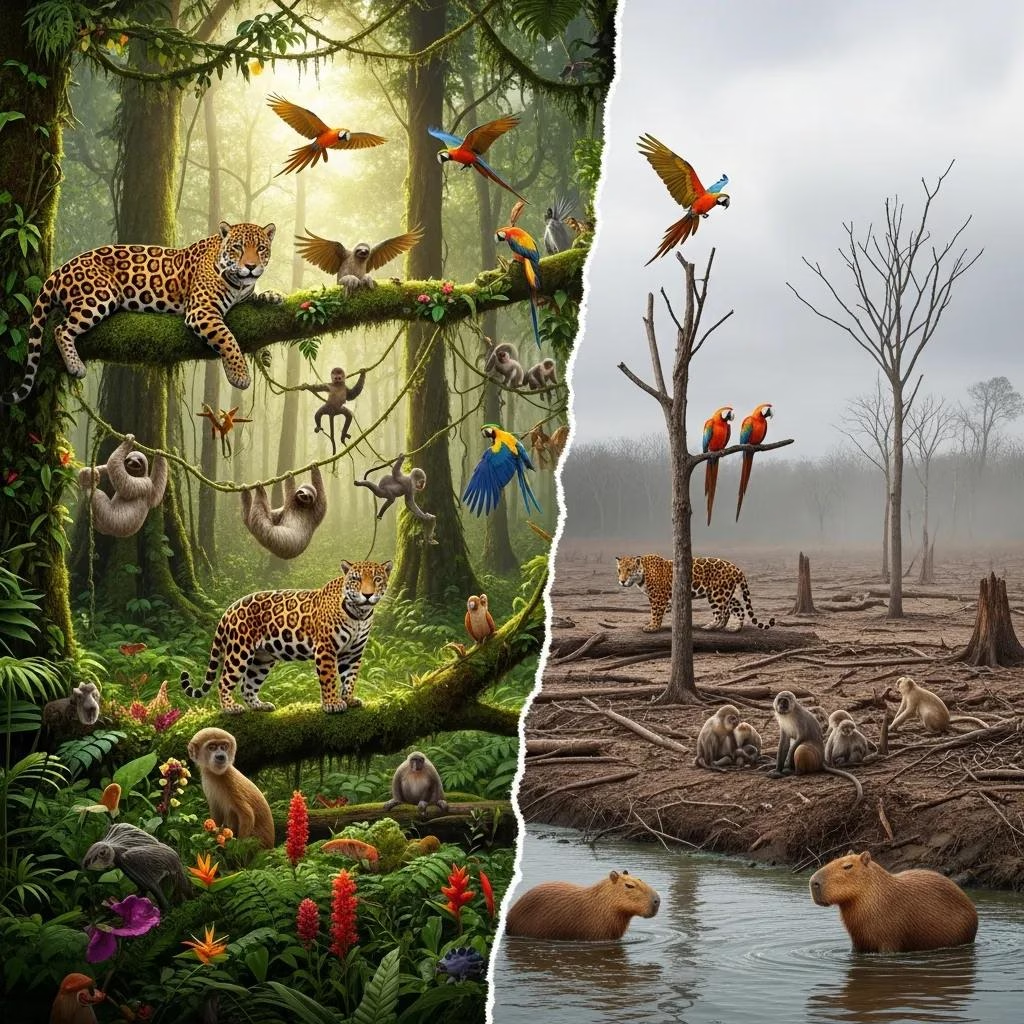
Habitat loss happens when forests, wetlands, grasslands and other ecosystems are cleared or degraded—often for farming, logging, mining or development. Fragmentation breaks once-continuous habitats into isolated patches, limiting animals’ access to food, mates and seasonal ranges. That isolation reduces genetic diversity and increases vulnerability. For example, deforestation in the Amazon has harmed jaguar populations and the Amazon river dolphin by shrinking the spaces they need to survive and reproduce.
Fragmented landscapes also increase edge effects—changes in microclimate, predator pressure and invasive species at habitat margins—that can make remaining habitat less suitable. Connectivity measures such as wildlife corridors, riparian buffers, and stepping-stone reserves help species move, find mates, and maintain healthier gene flow across the landscape.
What Role Does Climate Change Play in Species Decline?
Climate change alters temperatures, rainfall patterns and the frequency of extreme events, forcing many species to shift ranges or adjust life cycles. Some adapt, but many cannot fast enough. Polar bears, for instance, lose critical hunting platforms as sea ice melts, narrowing their access to prey. Amphibians like the golden toad experienced habitat changes tied to climate shifts, illustrating how vulnerable specialized species can be. These impacts demand flexible, forward-looking conservation approaches.
Beyond range shifts, climate change can alter reproductive timing, food availability and interspecies relationships. Plants and insects that co-evolved may fall out of sync, creating ripple effects through food webs. Conservation planning that anticipates these changes—such as protecting climate refugia and ensuring landscape permeability—can give species the best chance to persist as conditions shift.
Which Wildlife Conservation Methods Are Most Effective for Protecting Endangered Species?
Successful conservation blends legal protection, habitat work, science-based management and community involvement. Restoring habitats, enforcing protections, and building local stewardship all contribute to long-term species recovery. Effective programs coordinate across scales—from site-level management to regional planning—to tackle threats comprehensively.
How Do Legal Protections and Environmental Policies Support Species Survival?
Laws such as the U.S. Endangered Species Act set protections for imperiled species and their habitats, channel funding toward recovery, and create legal tools to limit destructive activities. Where properly enforced and resourced, these policies have reversed declines—most notably the rebound of the bald eagle—showing how regulation and targeted recovery plans can restore populations over time.
Policy tools include designation of critical habitat, restrictions on trade, and requirements for environmental assessments before major developments. Effective policy also relies on monitoring and adaptive management: as conditions change or new information emerges, regulations and recovery plans should be updated to reflect the best available science and practical realities on the ground.
What Are Key Habitat Restoration Techniques Used in Conservation?
Restoration can include reforestation, wetland rehabilitation, removal of invasive species, and reconnecting fragmented landscapes with corridors. Local communities are often central to success—bringing traditional knowledge, labor, and sustained oversight. An example is the ongoing work in the Florida Everglades, where multi-stakeholder efforts have improved conditions for many threatened species through large-scale habitat management.
Restoration projects commonly follow staged approaches: removing immediate threats, re-establishing native vegetation and structure, then monitoring and adapting techniques over time. Long-term maintenance and monitoring are essential because restored systems may need follow-up actions—such as invasive species control or supplemental plantings—to achieve resilient habitat that supports target species.
Habitat restoration is a long-term commitment—often combining invasive species control, habitat enhancement, and ongoing monitoring to rebuild resilient ecosystems for endangered populations.
Habitat Restoration for Endangered Species Recovery
Habitat restoration and enhancement are common management tools used to support sustainable populations of endangered species. At the study sites referenced, techniques to control invasive Spartina began in 2005 and have been maintained to the present, demonstrating sustained efforts toward ecosystem recovery.
Endangered species management and ecosystem restoration: finding the common ground, ML Casazza, 2005
How Do Endangered Animal Recovery Programs Achieve Species Rebound?
Recovery programs combine science, hands-on management and public education to bring species back from the brink. Key components often include captive breeding, habitat improvement, threat reduction and long-term monitoring. Successful programs use iterative learning: they evaluate outcomes, refine techniques and scale up what works.
Coordination across agencies, non-profits, academic institutions and local communities enables pooling of expertise, resources and political support. Public engagement and outreach are also important for building the social license needed to protect habitats and sustain long-term funding.
What Are Successful Case Studies of Species Recovery?
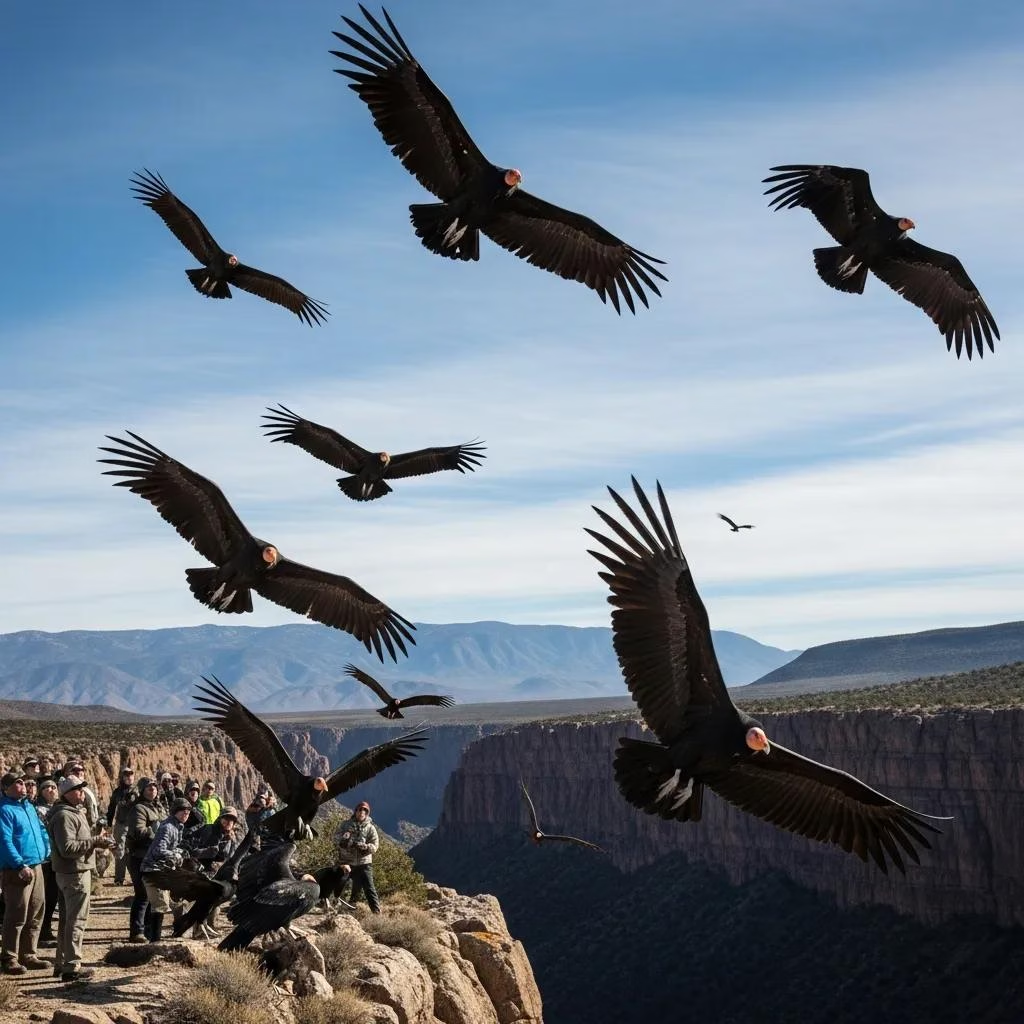
Several conservation success stories show what coordinated action can achieve. The bald eagle recovered after habitat protection, pollution controls, and targeted recovery actions. The California condor’s population has grown thanks to captive breeding and careful reintroductions. These cases underline that recovery is possible when science, policy and community support align.
Other species recoveries often involve sustained investment and long-term monitoring to track health and reproduction, manage threats like lead poisoning and disease, and ensure released animals can thrive. While recovery does not always mean returning to historical population levels, it often means stabilizing populations and securing the species’ role in the ecosystem.
How Does Captive Breeding and Species Reintroduction Work?
Captive breeding raises individuals in managed settings to boost numbers and maintain genetic health. Reintroduction places those animals back into suitable habitats once threats are reduced. Success relies on habitat readiness, genetic management to avoid inbreeding, and post-release monitoring to ensure the population can sustain itself—examples include the careful recovery work for the black-footed ferret.
Captive programs are paired with habitat protection and community outreach to reduce the original causes of decline. Pre-release conditioning, disease screening, and continued support in the early post-release period increase survival and integration into wild populations. Long-term genetic and demographic monitoring informs whether additional releases or management actions are needed.
What Are Biodiversity Protection Strategies and Their Importance for Ecosystem Health?
Protecting biodiversity preserves the variety of life that underpins ecosystem services we all depend on. Strategies range from setting aside protected areas to focusing on biodiversity hotspots and engaging communities in stewardship. Integrating conservation with sustainable development goals helps align human well-being and biodiversity protection.
Landscape-scale planning that balances protected zones with sustainable-use areas can secure both livelihoods and habitat. Mainstreaming biodiversity considerations into agriculture, forestry and urban planning reduces the risk that essential services are eroded over time.
How Do Protected Areas and Biodiversity Hotspots Contribute to Conservation?
Protected areas—national parks, reserves and wildlife corridors—safeguard habitat from development and exploitation. Biodiversity hotspots, places with many unique species facing high habitat loss, are prioritized because protecting them preserves a disproportionate share of global biodiversity. Focusing efforts in these places yields big conservation returns.
Effective protected-area networks combine core reserves with buffer zones and managed-use landscapes to reduce edge pressures and support species that require large ranges. Ensuring connectivity between protected sites helps species move in response to seasonal needs and longer-term environmental change.
What Ecosystem Services Depend on Biodiversity Preservation?
Biodiversity supports pollination, water filtration, soil fertility, and climate regulation—services essential to agriculture, health and economies. When species decline, these services weaken; for example, losses among pollinators can disrupt food production and reduce crop yields, with wide-reaching consequences for people and nature.
Maintaining diverse biological communities also increases ecosystem resilience, helping systems recover from shocks such as floods, fires or disease outbreaks. Conserving biodiversity is therefore both an environmental and an economic imperative for communities that depend on natural resources.
How Can Individuals and Communities Support Endangered Species Conservation?
Every person and community can help, from changing daily habits to taking part in local conservation projects. Combined, these actions strengthen habitats and reduce pressures on wildlife. Education and local leadership often determine whether conservation initiatives are accepted and maintained over time.
What Practical Green Living Tips Help Reduce Wildlife Threats?
Small, consistent choices add up. Practical steps include:
- Reduce plastic use: Cutting single-use plastics lowers pollution that harms marine and terrestrial wildlife. Supporting policies that reduce plastic production and improve waste management multiplies individual actions.
- Choose sustainable products: Buying responsibly sourced goods helps limit habitat destruction and supports ethical practices. Look for credible certifications and favor companies that disclose supply-chain impacts.
- Get involved locally: Volunteer for clean-ups, join habitat restoration projects, or support local conservation groups to make direct, measurable impact. Working with neighbors to plant native species and reduce pesticide use benefits local pollinators and bird populations.
Beyond lifestyle changes, people can support conservation financially or politically—donating to reputable organizations, voting for conservation-minded policies, or engaging in community planning that protects green spaces and natural corridors.
How Do Local and Global Community Actions Influence Conservation Outcomes?
Local projects—wildlife corridors, native planting, and community stewardship—improve habitat connectivity and resilience. Global networks, treaties and funding channels help scale solutions and share knowledge. When local effort and international support work together, conservation outcomes improve substantially.
Community-led programs also create economic incentives for conservation, such as ecotourism or payment-for-ecosystem-services schemes, which can align conservation goals with local livelihoods and reduce pressure to convert habitat for short-term gains.
What Are the Latest Climate Change Impacts on Wildlife and Conservation Efforts?
Climate change adds pressure across ecosystems, creating new management challenges and forcing conservationists to plan for shifting conditions and unpredictability. Conservationists increasingly integrate climate projections into planning, using scenario-based approaches to test management options under different futures.
How Are Recent Climate Trends Affecting Species Survival Rates?
Rising temperatures and more frequent extreme events are linked to population declines in many species. Coral bleaching from warmer oceans, altered migration cues, and mismatches in food availability all lower survival and reproduction for sensitive species. These trends make monitoring and rapid response increasingly important.
Heatwaves and droughts can reduce reproductive success in birds and mammals, while heavy storms can destroy nests and denning sites. Regular monitoring helps detect trends early so managers can implement relief measures—such as temporary water provisioning, habitat shading, or assisted relocation—where appropriate.
What Adaptive Conservation Strategies Address Climate Resilience in Wildlife?
Adaptive strategies include managing for landscape connectivity, protecting climate refugia, assisted migration where appropriate, and breeding for resilience. Ongoing monitoring and flexible management plans help conservationists adjust actions as conditions change.
Integrating local knowledge with scientific models improves predictions about where refugia are likely to persist and which species are most at risk. Collaborative planning across jurisdictions ensures that adaptation measures—such as expanding protected areas or adjusting harvest schedules—are coordinated at the scale species require.
Experts emphasize that adaptation and resilience must be central to modern conservation strategies, given the uncertain and evolving nature of climate impacts.
Climate Change Adaptation in Conservation Strategy
A suite of conservation actions—from understanding and predicting impacts to planning and active management—is required to address climate change. The emphasis is on adaptation and building resilience in conservation strategies to cope with uncertainty about future climate conditions.
Accommodating climate change contingencies in conservation strategy, L Gillson, 2013
How Is Conservation Data and Structured Knowledge Used to Enhance Endangered Species Protection?
Data and structured knowledge let conservationists prioritize actions, track recovery, and make evidence-based decisions. Clear data protocols improve targeting and transparency across programs. Combining field observations with remote sensing, citizen science and genetic data gives a fuller picture of population status and threats.
Structured databases and interoperable standards allow different organizations to share information quickly, reducing duplication and enabling coordinated responses to emerging threats. Open, well-documented data also strengthens accountability and aids fundraising and policy advocacy.
What Role Do Organizations Like IUCN and WWF Play in Species Monitoring?
Groups such as the IUCN and WWF coordinate global monitoring, publish assessments, and advocate for policy and funding. Their research and tools help governments, NGOs and communities identify priorities and measure progress toward species recovery. They also convene experts to review evidence and issue guidance that helps inform national and local conservation planning.
These organizations often provide technical support for establishing monitoring protocols, training local partners, and maintaining long-term datasets that are essential for understanding trends and evaluating the success of recovery actions.
How Does Structured Data Markup Improve Public Awareness and Search Visibility?
Using structured data and clear metadata makes conservation information more discoverable online. Better visibility helps attract public interest, funding and volunteers—amplifying outreach and accelerating conservation impact. Structured content also supports journalists, educators and policy-makers who rely on accessible, accurate information when making decisions or producing outreach materials.
What Are Emerging Trends and Future Directions in Endangered Species Conservation?
Conservation is evolving with new tools, cross-disciplinary collaboration, and a stronger focus on social equity and climate resilience. These trends expand the toolbox for protecting species in a changing world, and emphasize solutions that are both scientifically robust and socially inclusive.
How Are New Technologies Supporting Wildlife Protection?
Drones, camera traps, acoustic sensors and genetic tools are improving how we detect threats and monitor species. Real-time surveillance helps deter poaching and informs rapid response, while genetic analysis guides breeding and reintroduction programs. Combining multiple technologies—such as pairing acoustic monitoring with satellite imagery—gives richer, near-real-time insights that improve management decisions.
Technology also expands participation: citizen scientists using apps to record sightings, or local teams deploying low-cost sensors, can fill monitoring gaps and strengthen long-term datasets. Importantly, technology must be paired with clear protocols, training and ethical safeguards to ensure data quality and respect for communities.
Research increasingly highlights AI and drones as essential tools for anti-poaching efforts and habitat monitoring, enabling faster detection and more efficient fieldwork.
AI & Drones for Anti-Poaching & Habitat Monitoring
AI is widely applied to analyze images and video from cameras, drones and other remote sensors, automatically identifying poachers, vehicles and wildlife and alerting authorities. Drones also provide invaluable habitat monitoring and environmental assessment data to inform conservation planning.
AI-driven Tools for Wildlife Surveillance and Anti-Poaching Efforts, P Selvakumar, 2026
What Policy Changes Are Needed to Strengthen Conservation Efforts?
Stronger enforcement, increased funding for on-the-ground conservation, and improved international coordination are key policy priorities. Closing legal gaps, incentivizing sustainable land use, and supporting community-led conservation will make protections more durable and equitable.
Policies that integrate conservation with rural development and secure land rights for Indigenous peoples and local communities often lead to better outcomes because they align conservation incentives with local livelihoods. Transparent funding mechanisms and measurable targets also improve accountability and help ensure that resources reach priority actions.
Frequently Asked Questions
What are the most common causes of habitat loss for endangered species?
Human activities—urban expansion, agriculture, logging, mining and large infrastructure projects—are the main drivers of habitat loss. These actions fragment and destroy ecosystems, making it harder for wildlife to find food, mates and safe breeding areas. Reducing habitat conversion and improving land-use planning are essential to address these causes.
Effective solutions include stronger zoning, incentives for conservation-friendly farming practices, and restoration of degraded areas. Working with landowners and communities to develop conservation agreements can also protect important habitats while maintaining local livelihoods.
How can individuals contribute to wildlife conservation efforts?
People can help by reducing waste and plastic use, choosing sustainably produced goods, supporting conservation groups, and volunteering in local habitat projects. Advocacy—contacting policymakers or supporting stronger protections—also amplifies individual action. Educating friends and family and participating in citizen science projects further extends individual impact.
What is the significance of biodiversity hotspots in conservation?
Biodiversity hotspots are regions with exceptional numbers of unique species under heavy threat. Protecting these areas preserves many species at once and safeguards ecosystems that provide vital services like clean water and climate regulation—making them strategic priorities for conservation investment.
Prioritizing hotspots helps target limited funds where they can save the most species, but conservation across gradients—from hotspots to less diverse landscapes—is needed to maintain ecological processes and migratory routes.
How do climate change impacts vary across different species?
Impacts depend on a species’ habitat, range flexibility and life history. Polar and alpine species often face rapid habitat loss, while tropical species may face temperature and moisture stresses. Some species shift ranges; others cannot move or adapt quickly enough. Tailored strategies are needed for different vulnerabilities.
Species with specialized diets, narrow thermal tolerances, or limited dispersal ability are particularly vulnerable. Conservation planning that identifies these traits helps managers prioritize monitoring and targeted interventions.
What role do community engagement and education play in conservation?
Engaging communities builds local ownership, taps into traditional knowledge, and creates lasting incentives for protection. Education raises awareness, shifts behavior, and recruits volunteers—making conservation efforts more effective and sustainable. When communities see direct benefits, they are more likely to participate in and sustain conservation measures.
What are the challenges of implementing captive breeding programs?
Captive breeding requires careful genetic management to avoid inbreeding, sufficient resources for long-term care, and suitable habitat for reintroduction. Success also depends on addressing the original threats so released animals have a viable environment to return to. Logistical challenges—such as disease control, behavioral conditioning, and securing release sites—add complexity and cost.
How can technology improve wildlife monitoring and protection?
Technology expands what conservationists can see and do: drones and camera traps cover large or remote areas, GPS tracking reveals movement and survival, and genetic tools uncover population health. Together, these technologies speed detection of threats and guide more effective interventions. Properly managed, technology also reduces costs per unit of monitoring effort and helps prioritize scarce field resources.
Conclusion
Protecting endangered species means tackling multiple threats with coordinated, science-based, and community-driven efforts. Recovery stories—from the bald eagle to the California condor—show that recovery is possible when policy, funding and local stewardship come together. By changing everyday habits, supporting conservation groups, and backing sound policy, each of us can help keep species and ecosystems healthy for generations to come.
Long-term success depends on sustained commitment, adaptable management, and investment in both people and nature. When conservation is integrated with social and economic planning, the benefits extend beyond wildlife to healthy landscapes and resilient communities.