






What the Science Says About Allergy Season Getting Worse
Dear EarthTalk: Why is allergy season longer and more intense lately?
—Sneezing in Snohomish
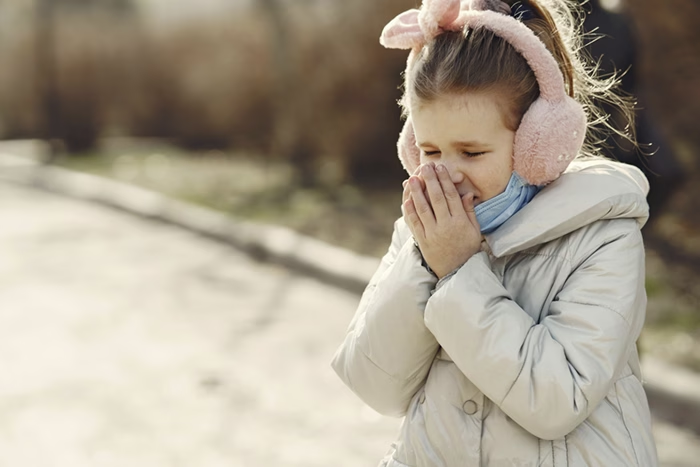
During springtime, many people develop a series of symptoms generalized as seasonal allergies: coughing, sneezing, itchy eyes and congestion, just to name a few. These symptoms are widespread; in 2024, the Asthma and Allergy Foundation of America reported that some 81 million people in the U.S. suffer from seasonal allergies. This number is growing as symptoms are becoming more intense and allergy season is getting longer.
The cause of these allergies comes down to one product of flowering plants: pollen. This substance becomes more prevalent during the springtime, when the warm weather triggers flowers to open up. When pollen accumulates to high levels in the air, humans can develop an immune system response that leads to a physical reaction. The problem is that the air is getting warmer, and plants are producing pollen for a longer duration and in larger amounts than before. “A longer growing season means the plants have more time to produce pollen,” says Dr. Rana Misiak, an allergy specialist at Henry Ford Health. “And that results in pollen circulating in the air for a longer period of time.” In addition, droughts and dry weather can cause more pollen production, along with higher levels of carbon dioxide in the atmosphere. Air pollutants such as carbon dioxide damage the surface of the pollen, making it more allergenic.
Pollen production is heightened by climate change. Human activities are causing global temperatures to rise, subsequently worsening allergy season for many. “To me, [worsening allergies] highlight the fact that our health—even if you just have a pollen allergy—is being impacted by climate change,” says Mary Margaret Johnson, MD, PhD, a research scientist of environmental health at Harvard T.H. Chan School of Public Health. “And some have much more severe health consequences from climate change.” This means that the health of an individual is somewhat out of their hands—it is up to climate change to determine the severity of their allergies.
Taking action to reduce collective carbon emissions and effectively slow the rise of global temperatures will help minimize symptoms felt by allergy season. There are also many studies now being conducted, like the Citizen Science HD’s Pollen Nation Project at Emory University or the National Phrenology Network, that allow civilian participation. If you are interested, you can learn more about these studies and contribute data towards their findings. In addition, any action to reduce your personal carbon footprint or advocate for pro-climate legislation will help to improve the current conditions of seasonal allergies.
CONTACTS
- Do seasonal allergies seem to be getting worse? Blame climate change
- You’re Not Imagining It: Seasonal Allergies Are Getting Worse
EarthTalk® is produced by Roddy Scheer & Doug Moss for the 501(c)3 nonprofit EarthTalk. See more at https://emagazine.com. To donate, visit https://earthtalk.org. Send questions to: question@earthtalk.org.