






Microplastics & Cancer: New Links Emerging
Dear EarthTalk: Is there any evidence suggesting a link between exposure to microplastics and the development of various forms of cancer?
—Dave B., Atlanta, GA
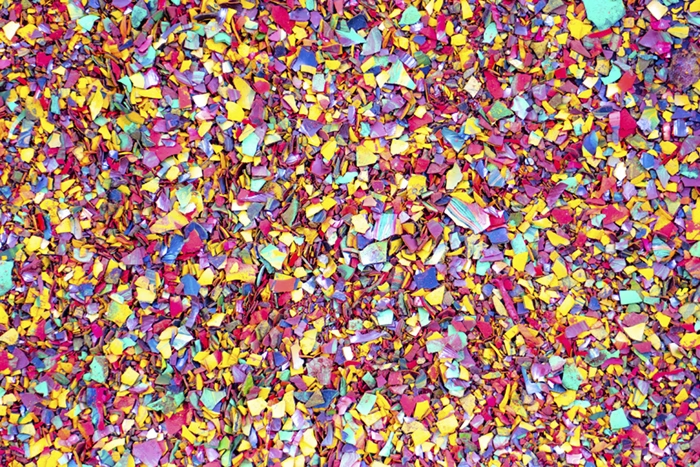
Each year companies produce nearly 460 million metric tons of plastic, a number that is projected to reach 1.1 billion by 2050. Microplastics, defined as plastic particles smaller than five millimeters, or smaller than a grain of rice, have become ubiquitous in the environment. Major sources include plastic pellets, personal care products, paint and resins, synthetic textiles and the breakdown of larger plastics like bags and containers. Even driving contributes, as the tires and road wear release plastic fragments into the air.
Tracey Woodruff, a professor of obstetrics and gynecology at the University of San Francisco who studied the impacts of microplastics, remarks, “Nothing surprises me about how many places plastic is in anymore, but it is sad and surprising in the fact that these things that are in our food…could be releasing microplastics.” On average, a person consumes 39,000 to 52,000 microplastic particles annually. One recent study found that chewing gum can release hundreds to thousands of microplastics into the saliva. On average, 100 microplastics are released per gram of gum, with each piece of gum typically weighing two to six grams. Sanjay Mohanty, the project’s principal investigator and an engineering professor at UCLA remarks that “chewing gum is the only food that is made up of plastics. Yet, most don’t know.”
Microplastics enter the human body through nasal, dermal and oral routes, contaminating multiple organs. Epidemiological studies link exposure to various diseases. In one review of 34 studies, researchers found increased risk of lung cancer tied to PVC microplastic dust. Chemicals found in microplastics, like BPA, phthalates and PFAS, can disrupt processes related to reproduction, growth and metabolism. Co-authors found that exposure to microplastics caused an acceleration of ovarian cancer tumor growth in mice, which could potentially cause similar patterns in humans. Also, the rising rates of colorectal cancer in people under 50 are suspected to be driven by environmental factors like microplastics. As microplastics pass through the gastrointestinal tract, they interact with the colon and rectum and potentially disrupt the protective colonic mucus layer which could increase the likelihood of colorectal cancer.
To reduce exposure, microplastic researchers recommend avoiding microwaving food in plastic, switching to glass or steel water bottles, eating more grains, fruits and vegetables, and reducing red meat consumption. Using natural cleaning products like baking soda or vinegar, or products approved by the U.S. Environmental Protection Agency’s Safer Choice program, can also help reduce contact with harmful chemicals.
CONTACTS
- I’m a Microplastics Researcher. Here’s How To Limit Their Dangers
- Chewing Gum Releases Thousands of Microplastics Into Saliva
EarthTalk® is produced by Roddy Scheer & Doug Moss for the 501(c)3 nonprofit EarthTalk. See more at https://emagazine.com. To donate, visit https://earthtalk.org. Send questions to: question@earthtalk.org.