



Building in the Wild: Energy-Efficient Prefab Cabin Kits Canada Buyer’s Guide
Picture pulling up to a forest clearing and watching numbered panels lock into a weather-tight cabin by Sunday night. Across Canada, we now answer about 1,000 prefab-home inquiries every month as buyers chase faster, greener builds (demand for prefab homes is soaring). Factory-cut kits trim weeks off schedules and preload high-efficiency insulation plus triple-pane windows to meet Canada’s 2030 net-zero-ready code targets, according to Efficiency Canada. In this guide, you’ll learn true costs—about $70–$260 per sq ft, according to Log Cabin Hub—along with permitting steps, budgeting tips, and a shortlist of proven Canadian suppliers. Ready to build smarter, quicker, and cleaner? Let’s dive in.
Why prefab cabin kits? The appeal of factory-built cabins
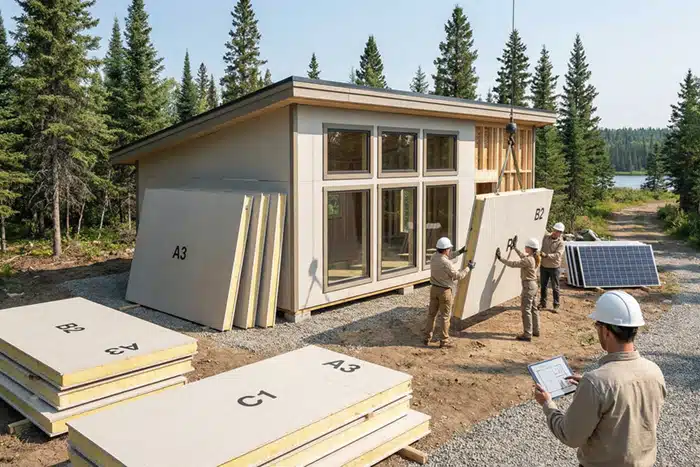
We chase two priorities on any build: speed and certainty. A prefab kit delivers both. Every beam, panel, and screw leaves the factory labeled and ready, so crews skip the measuring and cutting that drag out traditional builds. You spend weekends raising walls, not waiting on weather or late deliveries.
Cost follows the same logic. Because the kit maker buys lumber in bulk and trims waste in a controlled setting, they lock in a clear materials price before a single truck leaves the yard. You see the final figure up front, with no surprise overages or last-minute hardware-store runs.
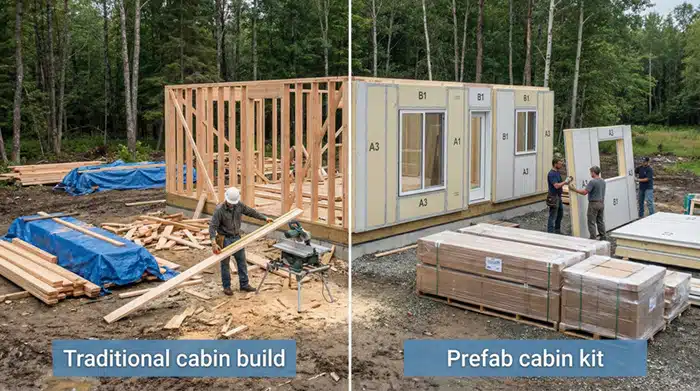
Remote sites are where prefab shines. Picture a cramped cottage road or a barge ride to an island lot. Flat-packed bundles slot neatly on a trailer and unload in minutes. With less freight volume and less onsite cut-off waste, we leave a lighter footprint on narrow tracks and sensitive terrain.
Quality stays high. Factory crews work under dry roofs and steady temperatures, so framing lumber remains straight. Computer-guided cutters hit tight tolerances, and every joint is checked before it ships. You receive pieces that fit on the first try and a structure built to handle Canadian snow loads.
There’s a green upside too. Assembly speed means fewer generator hours, fewer dumpster runs, and lower carbon from repeat site visits. Pair that with high-R insulation and efficient windows baked into many kits, and you start saving energy the day you move in.
Fast, predictable, durable, and kinder to the planet: that’s the simple case for building your cabin the prefab way.
Sustainability and energy efficiency: building green off the grid
High-performance design for Canadian climates
Snow loads, –30 °C nights, and humid summer heatwaves test any cabin. A prefab kit that thrives in those extremes starts with a super-tight shell: thick wall assemblies, continuous insulation, and windows that shrug off frost.
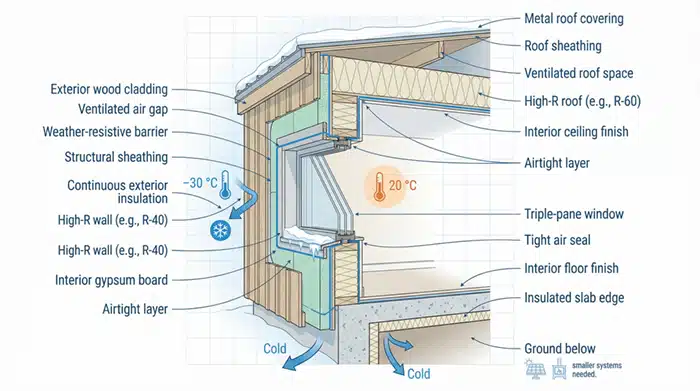
Factories now model each kit against Canada’s climate zones before a saw blade moves. They upsize roof insulation for Northern Prairie sites, add extra air seals for Atlantic gales, and swap glazing packages when a design ships to the Coast. Because the math happens in house, those upgrades flow straight into the cut list instead of being tacked on later at site prices.
Natural Resources Canada estimates that a high-performance envelope can trim space-heating energy by up to 65 percent in Climate Zone 7. The result for you is a cabin that burns less firewood, sips less hydro, and stays comfortable year-round. Less energy in means smaller solar arrays or generators when you choose to live fully off grid. That spells lower operating costs and a lighter carbon footprint, clear wins that start before you even pick up a hammer.
Comparing prefab cabin kit types
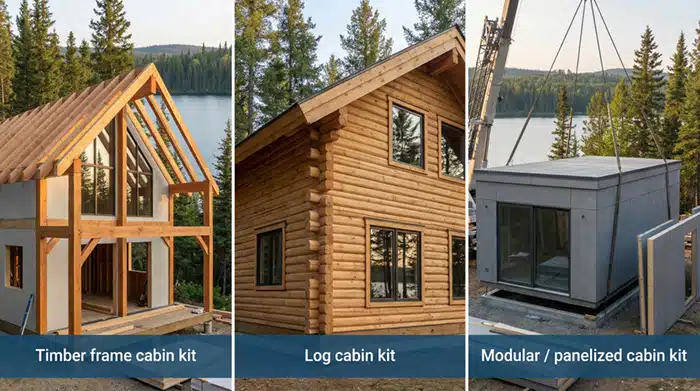
Timber frame cabin kits
Picture soaring rafters, open sightlines, and warm wood columns framing every view. That is the promise of a timber frame kit. Each post and beam is precision-cut in the factory, labeled, and shipped ready for a modern-day barn raising. The crew stands the skeleton in a single day, slips structural insulated panels around it, and your shell is suddenly closed to weather.
Looks are only half the story. Massive timbers allow generous wall cavities, so manufacturers add thick insulation without stealing indoor space. Thermal bridging stays low, air-sealing stays high, and you end up with a cottage that feels centuries old yet scores like a new build on blower-door tests.
British Columbia–based Hamill Creek Timber Homes ships timber frame kits as pre-cut, numbered Douglas-fir bundles complete with 3-D assembly drawings and all hardware. Once on site, the frame locks together quickly and is wrapped in structural insulated panels that boost rigidity and high R-value insulation. That factory precision and airtight detailing help owners meet aggressive blower-door targets and qualify for programs such as LEED.
Because every joint is pre-engineered, inspectors approve these kits quickly. Lenders also favor the clear plans and certified materials. Expect a higher sticker price than a simple log stack, but weigh that against long-term perks: cathedral ceilings that never need renovation and a resale premium every time someone walks in and whispers, “Timber.”
Log cabin kits
Stacking logs is cabin building in its purest form, and the romance is hard to resist. A modern log kit keeps the spirit while removing uncertainty. Each log arrives milled to uniform thickness, kiln-dried to prevent twisting, and pre-notched so walls click together with a rhythmic thud. Two people and a rented telehandler can usually reach roof level in a long weekend.
Energy performance has caught up with nostalgia. Manufacturers embed gaskets between courses, drive concealed threaded rods through the stack, and cut precise corner joints that stop drafts. Solid log offers thermal mass rather than fluffy R-value, but optional interior insulation panels help these cabins meet provincial codes even in Zone 7.
Costs scale with species and diameter. A compact 400-square-foot bunkie in white pine might land under $50 000 delivered, while a 1 200-square-foot cedar lodge can reach six figures before finishes. Plan for maintenance too. Stains go on every few years, and settling spaces under rafters need seasonal checks until the shell relaxes.
Trade a little upkeep for unmatched character and you gain walls that smell of sap on warm days and glow under winter sun. When friends step inside and run a hand over the grain, you remember why you picked logs.
Modular and panelized cabin kits
If speed tops your wish list, modular and panelized kits win. Walls, floors, and even full room pods roll off the line complete with insulation, wiring chases, and weather-proof cladding. They arrive like giant puzzle pieces, tilt upright, and lock together with screws you tighten in minutes.
Factory finish changes everything. Because each panel cures indoors, moisture never sneaks into studs, gypsum, or sheathing. Crews spend time bolting, not cutting, so a small team can reach lock-up in two or three days, even in a tightening autumn work window.
Efficiency is baked in. Panels often use structural insulated cores, wrapping the cabin in continuous R-value with minimal thermal breaks. Windows slot into pre-flashed openings, and blower-door tests show airtightness that rivals full passive houses. Off-grid ambitions get easier when the shell already sips energy.
Modular units push speed further. Picture bathroom or kitchen modules craned into place with fixtures installed and tiles grouted. The trade-off is oversized loads that need clear road access, yet you walk through framed rooms before lunch.
Design keeps pace with function. Clean lines, shed roofs, and large glazing give these cabins a modern edge. Floor plans stay flexible too. Add a second module later, or swap a wall panel for glass when the budget allows. The system evolves with your needs instead of boxing you in.
Choose modular or panelized when timing and energy performance sit at the top of your list and you prefer crisp, contemporary spaces that assemble faster than your first campfire boils water.
Key considerations when buying a prefab cabin kit
1. Size, usage, and design requirements
Start with how you plan to live in the space. Weekend fishing camp or full-time family cottage? Your answer dictates square footage, room count, and the mechanical guts tucked behind each wall.
A compact 100-square-foot bunkie keeps gear dry and offers a crash pad while avoiding plumbing and full permits in many regions. Double that footprint and add a sleeping loft, and you’re sketching kitchen layouts, rain-screen details, and four-season insulation. Once you reach 1 000 square feet, municipal inspectors treat the build like any primary residence, meaning full code compliance from foundation to vent stack.
Think about seasonality too. A summer cabin leans on screened porches and lighter wall assemblies. A year-round retreat asks for thicker insulation, deeper roof overhangs, and heat-recovery ventilation so you breathe easy on –25 °C nights. Sketch the lifestyle first, then match a kit that supports it; upgrades later usually cost more than choosing the right size from day one.
Budgeting: kit price versus total project cost
Sticker price is the easy number, yet it rarely tells the full story. Map every dollar that flows from factory floor to first night’s sleep.
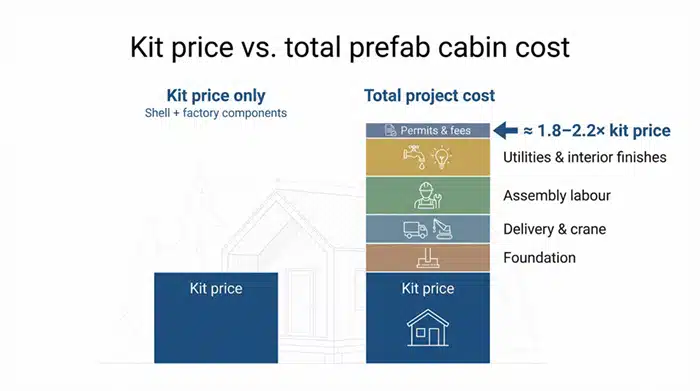
- Shipping and crane time. Long rural hauls, ferry crossings, or pilot cars add hundreds or thousands. A half-day crane rental to place roof trusses runs about $1 500 in cottage country.
- Foundation. Screw piles for a 600-square-foot cabin hover around $8 000. A heated slab can triple that. Soil reports, if required, stack on another few hundred.
- Assembly labour. Do-it-yourself sweat equity saves cash, but hiring a local crew often lands near 30 percent of kit cost.
- Utilities and interior finishes. Septic systems start near $15 000, while a solar array sized for year-round use reaches $20 000 once batteries join the cart. Flooring, cabinets, and appliances can match the kit price again if you pick mid-range finishes.
Add permitting fees, inspection deposits, and that inevitable dash for extra screws, and the grand total often settles at 1.8 to 2.2 times the published kit price. Plan for that ratio now, and you sidestep the budget shock that derails many cabin dreams.
Financing your prefab cabin
Cash feels simple, yet most of us still work with a lender. Banks increasingly view factory-built cabins the same way they see any permanent home, provided the structure meets code and sits on a proper foundation.
Start with a construction mortgage. The lender releases funds in stages as work progresses: land and foundation first, shell erection next, then interior finishes. Because a prefab kit front-loads materials, you submit the paid invoice from the manufacturer as proof of value for the second draw. Keep every receipt and photo; documentation keeps the money moving.
Down payment rules mirror conventional builds. Plan to bring at least 20 percent of the total project cost, including land, to the table. A higher ratio can unlock better interest rates and cushion unexpected overruns.
Certification matters. A kit stamped CSA A277 signals factory quality and reassures underwriters that the home will pass inspection. Some lenders make that label mandatory, while others accept engineer-sealed drawings paired with a fixed-price builder contract. Clarify the requirement early to avoid last-minute paperwork.
Insurance joins the conversation before ground breaks. Your broker will quote a course-of-construction policy covering theft, weather damage, and liability while crews work. Once final occupancy is granted, the policy rolls into regular home coverage. Remote, wood-heated cabins carry higher premiums, so factor that bump into lifetime costs.
Walk into the bank with a detailed budget and timeline. Numbers build confidence, and confidence lowers rates. When you can account for every screw, the lender shifts from gatekeeper to partner.
Permits, zoning, and building codes
Paperwork is not glamorous, but it keeps your project safe, legal, and insurable.
Begin with zoning. Each municipality sets rules on what can rise on a parcel: minimum lot size, setback from water, and limits on secondary dwellings. Call the planning desk before you sign the kit contract. One ten-minute chat can prevent a thousand-dollar redesign.
Building permits follow. Even a prefab shell needs approval once it exceeds 108 square feet in most provinces. Submit site plans, foundation drawings, and the kit’s engineered blueprints. A CSA A277 label or engineer stamp speeds review by showing that the factory work meets the National Building Code.
Plan for site-specific tweaks. Roof truss schedules change when snow loads in Revelstoke exceed those in Windsor. Coastal British Columbia enforces the Energy Step Code, which raises airtightness and insulation targets above the national minimum. Good manufacturers adjust specs before cutting lumber, not after an inspector flags an issue.
Inspections arrive at set milestones: foundation, framing, insulation, and final occupancy. Keep the schedule handy and book each visit early; rural offices often run weeks behind during peak season. Failing one stage pauses the build until fixes pass re-inspection, a delay that costs far more than doing it right the first time.
Environmental permits can surface near shorelines and wetlands. Conservation authorities oversee riparian zones, and a simple crib dock or septic trench may need their approval. Loop them in alongside the building department so clearances arrive on the same timeline.
Treat code compliance as collaboration, not an obstacle. Share clear drawings, follow local amendments, and invite inspectors to walk the site. Red tape then becomes an extra layer of quality control, and you sleep better knowing the cabin will stand strong for decades.
Site preparation and delivery logistics
Before the first truck rattles down your lane, the ground needs to welcome it. Clear a staging area wide enough for flatbeds to turn, unload, and restack bundles. Hard, level ground keeps forklifts from sinking and saves you an emergency gravel order at premium rates.
Access matters as much as acreage. Measure gate widths, overhanging branches, and bridge load limits along the route. Even panelized kits ride on 53-foot trailers, and modular boxes require clearance for a crane swing. If the last kilometre dissolves into a narrow track, plan a transfer point where a smaller truck or skid steer can shuttle loads the final stretch.
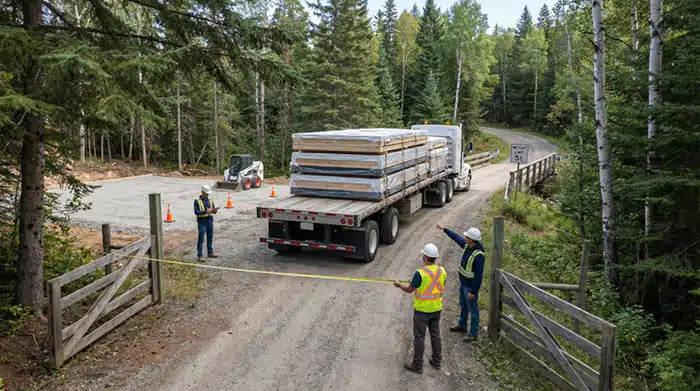
Foundation timing is critical. Screw piles install in hours and can accept framing immediately, while poured slabs need curing days. Schedule kit arrival for the first dry window after concrete reaches strength. Material stacks stay clean, and your crew avoids costly downtime.
Trench utilities early. Run conduit and water lines before machinery crowds the site, then cap and flag them to avoid accidental cuts when walls rise. For off-grid builds, set solar racking posts or bury battery cables now; retroactive digs around finished footings are a headache.
Weatherproof storage provides peace of mind. A rented sea can, or at minimum a tarp-roofed rack, keeps engineered lumber straight and insulation dry if a surprise storm rolls through. Protecting materials for a few days beats chasing warp claims that can stall progress for weeks.
When preparation and delivery align, day one feels less like a scramble and more like the first page of a well-rehearsed script.
Assembly and build process
Day one sets the tone. Start by unpacking each bundle against the manifest, confirming that every panel, fastener kit, and tube of sealant made the journey. A fifteen-minute inventory avoids an hour-long scramble later when you discover the ridge-beam hardware stayed at the yard.
Follow the manual step by step. Kits are engineered sequences, not choose-your-own-adventure carpentry. When the plan calls for wall panel A3, use wall panel A3. Skipping ahead saves no time if holes misalign and you spend the afternoon redrilling steel plates.
Crew size depends on kit complexity. Two experienced builders and a pair of handy friends can raise a 600-square-foot shell in three to four days. Larger timber frames with hefty beams need a certified crane operator and riggers. Brief the team each morning, assign clear roles, and keep a whiteboard with the day’s targets in view.
Inspections slot between milestones. Call framing, electrical rough-in, and insulation checks at least 48 hours ahead. Inspectors appreciate tidy sites and clear access to connection points. Earn their confidence early, and later visits move faster.
Protect your progress. Close openings with temporary plywood or lockable windows as soon as they install. Overnight storms and curious wildlife respect nothing except a closed door. Secure sites also deter theft, keeping those custom aluminum thresholds where they belong—under your front door, not on a reseller’s truck.
Stay patient, trust the kit’s sequencing, and the shell grows in a satisfying rhythm. One morning you see sky through floor joists; by Friday you turn the deadbolt on a weather-tight cabin that already feels like home.
Spotlight: notable prefab cabin kit providers in Canada
Hamill Creek Timber Homes (British Columbia). Specializes in heavy timber frames that are pre-cut, planed, wax-sealed, and shipped as numbered bundles with 3-D drawings and hardware, then wrapped in structural insulated panels for a quick lock-up shell. That precision kit workflow keeps the cathedral-ceiling romance while hitting airtightness targets your utility bill appreciates.
Backcountry Hut Company (British Columbia). Ships flat-pack panels that arrive like oversized IKEA pieces, colour-coded and ready to bolt together. Adventurous owners often pitch in, turning a long weekend into a lock-up shell.
Knotty Pine Cabins (Prairies to nationwide). Offers turnkey service. The catalogue ranges from micro bunkies to spacious cottages, and the team coordinates everything from permits to final trim, ideal if you want a single point of contact.
Confederation Log Homes (Ontario). Leans into classic log construction with engineered pine walls and Energy Star windows. Expect a warm, rustic aesthetic backed by precise milling and decades of field-tested plans.
EkoBuilt (Ontario). Targets Passive House-level efficiency. Factory-built wall systems pair with solar-ready roofs so you can chase net-zero goals without hiring a separate energy consultant.
CABN (Ontario). Focuses on micro, tech-forward cabins with integrated solar arrays, smart-home monitoring, and finishes that feel more boutique hotel than backwoods bunkie.
Every manufacturer excels in a different niche—timber artistry, flat-pack simplicity, or net-zero tech. Shortlist the ones that match your style, then drill into details: certification labels, lead times, and after-sales support. A single afternoon of calls reveals who picks up promptly and who leaves you on hold; that responsiveness often predicts the smoothest build journey.
Conclusion
Prefab cabin kits let Canadians trade months of sawdust and uncertainty for weekends of assembly and decades of efficient, comfortable living. Choose the right kit, prepare the site, and coordinate financing and permits early, and you’ll unlock a faster, greener path to your wilderness retreat.