






Thrifting as Eco-Activism: Embracing Circular Fashion
Dear EarthTalk: Is thrifting a form of environmental activism?
—Jane Jackson, New Orleans, LA
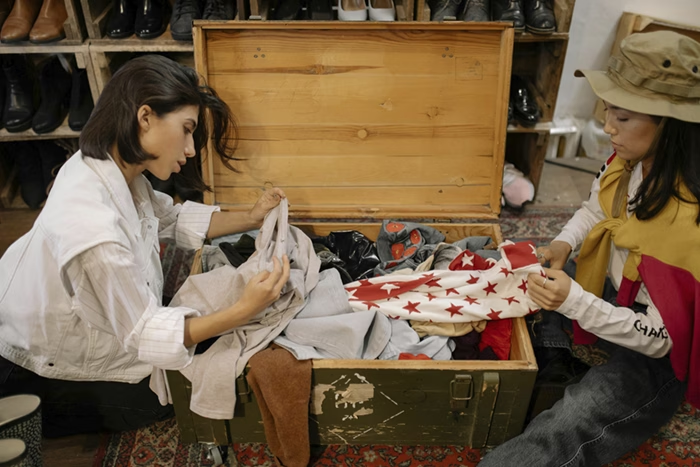
Thrifting is more than the act of buying used items; it’s a lifestyle adopted by people who share a distinct set of values. They are promoting a model of circular fashion, which “encourages the reuse, repair and recycling of garments.” Beyond simply being eco-friendly by extending the lifespan of clothing, thrifting also allows people to creatively express themselves, embrace their individuality, and save money.
With regard to demographics, there are two main groups: thrift-seekers and Creativists. Thrift seekers seek the best bargains. Creativists shop used items for eco-friendly reasons or to find one-of-a-kind items. Creativists are typically Millennials, born between 1981 and 1996, and Gen Z, born between 1997 and the early 2010s. Thrift-seekers are more traditional thrifters and tend to have lower incomes.
In the early 20th century, thrift stores began to become more mainstream and welcomed by the public. However, their primary goal was to encourage consumption rather than promote sustainable practices. From the mid to late 20th century, various outcast groups of society, including Hippies and Bohemians, began to embrace thrifting as a way to rebel against overconsumption and materialism. By the start of the 21st century, the thrift and vintage vibe had gained significant popularity in society. It was not until the late 2010s that thrifting became a form of environmental activism as people, especially the younger generation, became more concerned for the environment and the ethicality of the fast fashion industry. In particular, social media platforms, especially Instagram and TikTok, were crucial to influencing people to support thrifting for both fashion purposes and climate activism.
Thrifting undoubtedly has several eco-advantages over fast fashion—the rapid production of inexpensive clothing that moves quickly from design to retail to meet fleeting trends, encouraging a “disposable” consumer culture—it also further encourages consumers to overconsume. Hence, many low-income consumers are at increased risk of being priced out due to the influx of those thrifting. The environment, social and corporate governance club at McGill University furthered the claim by writing, “Thrifting does present a sustainable alternative to fast fashion…but might not stop clothes’ overproduction and its dependency on consumerist culture.” To fix the long-term environmental issue of overconsumption in the fashion industry, consumers must understand and want to change their buying patterns.
Nevertheless, increasing education and access to thrifting can be the crucial first step towards building more sustainable practices. More importantly, consumers should become more mindful of their purchasing habits to combat the overconsumption norm in society.
CONTACT
- Thrift vs. Fast Fashion: Why Gen Z Is Choosing Secondhand
- Sustainable Fashion: How To Build An Eco Wardrobe
EarthTalk® is produced by Roddy Scheer & Doug Moss for the 501(c)3 nonprofit EarthTalk. See more at https://emagazine.com. To donate, visit https://earthtalk.org. Send questions to: question@earthtalk.org.