






Understanding the Environmental Impact Assessment Process

Understanding the Environmental Impact Assessment Process: A Comprehensive Guide to Environmental Assessment Steps and Climate Change Impact Review
The Environmental Impact Assessment (EIA) process is a critical tool for evaluating the potential environmental consequences of proposed projects before they are approved. This comprehensive guide will delve into the significance of EIAs, their role in climate policy, and the key stakeholders involved in the process. Readers will learn about the procedural steps of the EIA, including screening, scoping, impact analysis, and reporting. Understanding these steps is essential for ensuring that environmental considerations are integrated into decision-making processes, ultimately supporting sustainability and climate resilience.
As environmental challenges become increasingly pressing, the EIA process serves as a vital mechanism for identifying potential impacts and fostering public participation. This article will explore how EIAs contribute to effective environmental management and climate adaptation strategies, providing insights into the latest approaches to climate change impact review.
Importance of EIA
Environmental Impact Assessments are essential for identifying potential environmental consequences of projects, ensuring that decision-makers consider ecological impacts before proceeding. By evaluating the potential effects on air, water, land, and biodiversity, EIAs help mitigate adverse outcomes and promote sustainable development. Furthermore, they encourage public participation, allowing communities to voice concerns and contribute to the decision-making process. This engagement fosters transparency and accountability, ultimately supporting sustainability initiatives.
Role in Climate Policy
The EIA process plays a crucial role in climate policy by evaluating the potential impacts of projects on climate change. It promotes responsible resource management and helps identify strategies for reducing greenhouse gas emissions. By integrating climate considerations into project planning, EIAs support the development of sustainable practices that align with national and international climate goals. This proactive approach is essential for addressing the challenges posed by climate change and ensuring a resilient future.
Key Stakeholders

The EIA process involves various stakeholders, each playing a vital role in its success. Key stakeholders include:
- Government Agencies: Responsible for regulating and overseeing the EIA process, ensuring compliance with environmental laws.
- Non-Profit Organizations: Advocate for environmental protection and public interests, often participating in the EIA process to represent community concerns.
- Industry Representatives: Provide insights into project feasibility and economic implications, balancing development needs with environmental considerations.
- The Public: Engaged through public consultations, their input is crucial for identifying potential impacts and fostering community support.
Main Procedural Steps
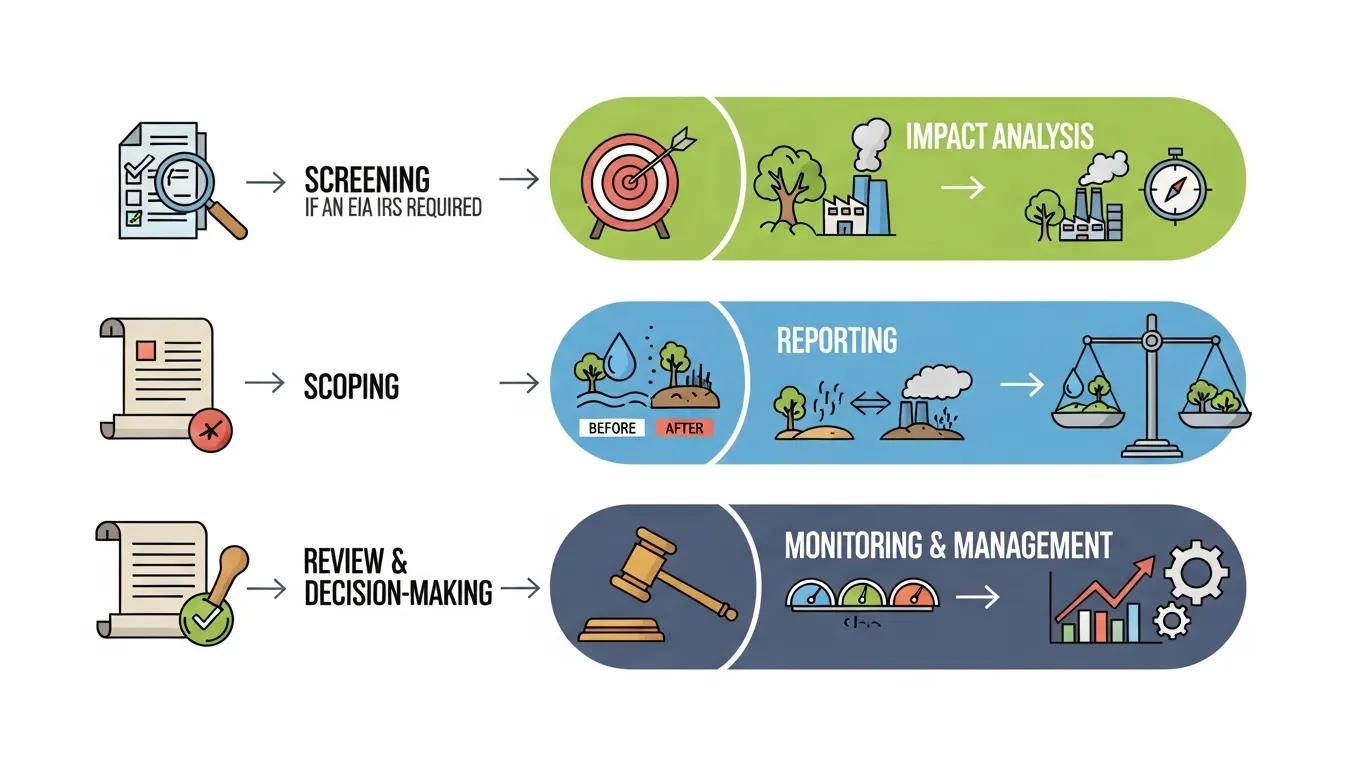
The EIA process consists of several procedural steps that guide the assessment of environmental impacts. These steps include:
- Screening: Determining whether a project requires an EIA based on its potential environmental impacts.
- Scoping: Identifying the key issues and concerns to be addressed in the assessment.
- Impact Analysis: Evaluating the potential environmental effects of the proposed project.
- Reporting: Documenting the findings and recommendations in an EIA report.
- Review and Decision-Making: Assessing the EIA report and making informed decisions regarding project approval.
What is the Environmental Impact Assessment and why is it important?
The Environmental Impact Assessment (EIA) is a systematic process that evaluates the potential environmental effects of proposed projects. It is important because it helps decision-makers understand the implications of their actions, ensuring that environmental considerations are integrated into planning and development. By identifying potential impacts early in the project lifecycle, EIAs facilitate informed decision-making and promote sustainable practices.
How does the EIA process support sustainability and climate policy?
The EIA process supports sustainability and climate policy by incorporating environmental considerations into project planning. It evaluates the potential impacts on ecosystems, resources, and communities, helping to identify strategies for minimizing adverse effects. By aligning projects with sustainability goals, EIAs contribute to climate resilience and promote responsible resource management.
Who are the key stakeholders involved in an EIA?
Key stakeholders in the EIA process include government agencies, non-profit organizations, industry representatives, and the public. Each stakeholder plays a unique role in ensuring that environmental concerns are addressed and that the assessment process is transparent and inclusive. Their collaboration is essential for achieving effective environmental management and fostering community support.
What are the main procedural steps in the Environmental Impact Assessment?
The main procedural steps in the EIA process include screening, scoping, impact analysis, reporting, and review. Each step is designed to systematically evaluate the potential environmental impacts of a proposed project, ensuring that decision-makers have the necessary information to make informed choices. This structured approach is critical for promoting sustainable development and minimizing adverse environmental effects.
What happens during screening and scoping phases?
During the screening phase, projects are evaluated to determine whether they require an EIA based on their potential environmental impacts. The scoping phase follows, where key issues and concerns are identified, guiding the focus of the assessment. These initial steps are crucial for ensuring that the EIA process addresses the most significant environmental concerns.
How are impact analysis, reporting, and review conducted?
Impact analysis involves evaluating the potential environmental effects of a proposed project, considering factors such as air quality, water resources, and biodiversity. The findings are documented in an EIA report, which outlines the assessment results and recommendations. The review phase assesses the report’s findings, informing decision-makers about the project’s environmental implications and guiding approval processes.
Which legal and regulatory frameworks govern the EIA process?
The EIA process is governed by various legal and regulatory frameworks, including national and international laws. In the United States, the National Environmental Policy Act (NEPA) establishes requirements for federal agencies to assess environmental impacts. The Environmental Protection Agency (EPA) plays a key role in overseeing compliance with these regulations, ensuring that environmental considerations are integrated into federal decision-making.
How does compliance ensure effective environmental risk analysis?
Compliance with legal and regulatory frameworks is essential for effective environmental risk analysis. It ensures that projects adhere to established standards and guidelines, promoting accountability and transparency in the EIA process. By enforcing compliance, regulatory agencies can mitigate potential environmental risks and protect public health and safety.
How does public participation and stakeholder engagement influence EIA outcomes?
Public participation and stakeholder engagement are critical components of the EIA process. They provide opportunities for communities to voice concerns and contribute to decision-making. Engaging stakeholders fosters transparency and accountability, ultimately leading to more informed and balanced outcomes. The influence of public input can significantly shape project design and implementation, ensuring that environmental and social considerations are prioritized.
What are practical methods for effective public consultation?
Effective public consultation methods include public meetings, workshops, and online platforms for feedback. These approaches facilitate open dialogue between stakeholders and project proponents, allowing for the exchange of information and concerns. By employing diverse consultation methods, project developers can ensure that all voices are heard and considered in the EIA process.
How do stakeholder roles impact environmental management plans?
Stakeholder roles significantly impact environmental management plans by providing diverse perspectives and expertise. Government agencies, non-profit organizations, and industry representatives contribute valuable insights that shape project design and implementation. By incorporating stakeholder input, environmental management plans can address potential impacts more effectively and promote sustainable practices.
How is climate change integrated into the Environmental Impact Assessment?
Climate change considerations are integrated into the EIA process by evaluating the potential impacts of projects on greenhouse gas emissions and climate resilience. This integration helps identify strategies for mitigating climate-related risks and promoting sustainable development. By addressing climate change in EIAs, decision-makers can ensure that projects align with broader climate goals and contribute to long-term sustainability.
What are the latest approaches to climate change impact review in EIA?
Recent approaches to climate change impact review in EIAs include enhanced modeling techniques and scenario analysis. These methods allow for a more comprehensive assessment of potential climate impacts and adaptation strategies. By incorporating the latest scientific research and data, EIAs can better inform decision-makers about the implications of projects in the context of a changing climate.
Further research highlights the complexities of integrating climate change adaptation into existing assessment models.
Climate Change Adaptation in Assessment Models
Climate change adaptation is a complex human process, framed by uncertainties and constraints, which is difficult to capture in existing assessment models. Attempts to improve model representations are hampered by a shortage of systematic descriptions of adaptation processes and their relevance to models.
Improving the representation of adaptation in climate change impact models, C Brown, 2018
How does EIA contribute to climate adaptation and mitigation strategies?
The EIA process contributes to climate adaptation and mitigation strategies by identifying potential impacts and recommending measures to reduce greenhouse gas emissions. By integrating climate considerations into project planning, EIAs support the development of sustainable practices that enhance resilience to climate change. This proactive approach is essential for addressing the challenges posed by a changing climate.
What environmental mitigation and monitoring strategies follow the EIA process?
Following the EIA process, environmental mitigation and monitoring strategies are implemented to address identified impacts. These strategies may include habitat restoration, pollution control measures, and ongoing monitoring of environmental conditions. By establishing clear mitigation plans, project developers can ensure that potential impacts are effectively managed and minimized.
How are environmental risks addressed through management plans?
Environmental risks are addressed through management plans that outline specific actions to mitigate potential impacts. These plans may include measures for monitoring environmental conditions, implementing best practices, and engaging stakeholders in ongoing assessments. By proactively managing environmental risks, project developers can enhance sustainability and protect natural resources.
What monitoring practices ensure sustainability outcomes?
Monitoring practices that ensure sustainability outcomes include regular assessments of environmental conditions, compliance with regulatory requirements, and stakeholder engagement. By establishing clear monitoring protocols, project developers can track the effectiveness of mitigation measures and make necessary adjustments. This ongoing evaluation is essential for promoting long-term sustainability and minimizing adverse environmental impacts.