



Solar Panels for Home in 2026: Costs and Savings Explained

Solar Panels for Home in 2026: Real Costs, Tax Incentives, and Solar Energy Savings
As the world increasingly shifts towards renewable energy, solar panels are becoming a popular choice for homeowners looking to reduce their carbon footprint and save on energy costs. In 2026, the landscape for solar energy adoption is expected to evolve significantly, with advancements in technology, changes in government incentives, and a growing awareness of environmental issues. This comprehensive guide will explore the costs associated with home solar installations, the potential savings, available incentives, and whether solar panels are the right choice for your home. By understanding these factors, you can make an informed decision about investing in solar energy. We will cover expected installation costs, the impact of different solar panel types, the installation process, savings calculations, available tools, and the environmental benefits of solar energy.
Key Takeaways
- Average cost for a typical 5-kW home solar system ranges from $15,000 to $30,000, including equipment, installation, and permits.
- Homeowners can expect typical annual savings of around $1,000 to $5,000 depending on energy usage and local electricity rates.
- The federal Residential Clean Energy Credit provides a 30% tax credit on solar installation costs through 2032, stepping down to 26% in 2033 and 22% in 2034.
- Payback periods generally range from 5 to 10 years, influenced by system size, local incentives, and energy consumption.
- Grid-tied photovoltaic systems with net metering maximize savings by crediting excess kilowatt-hours (kWh) back to the homeowner.
- Battery storage and solar inverters enhance energy independence and backup power capabilities, especially in areas with less reliable grids.
Written by James Hartwell, Energy Journalist and Contributing Editor at eMagazine. James has covered residential energy, sustainability, and climate policy for over 12 years. He holds a Certificate in Sustainable Energy from Stanford University and has interviewed solar installers, utility executives, and policy researchers across the United States. Connect with James on LinkedIn.
What Is a Home Solar System and How Does It Work?
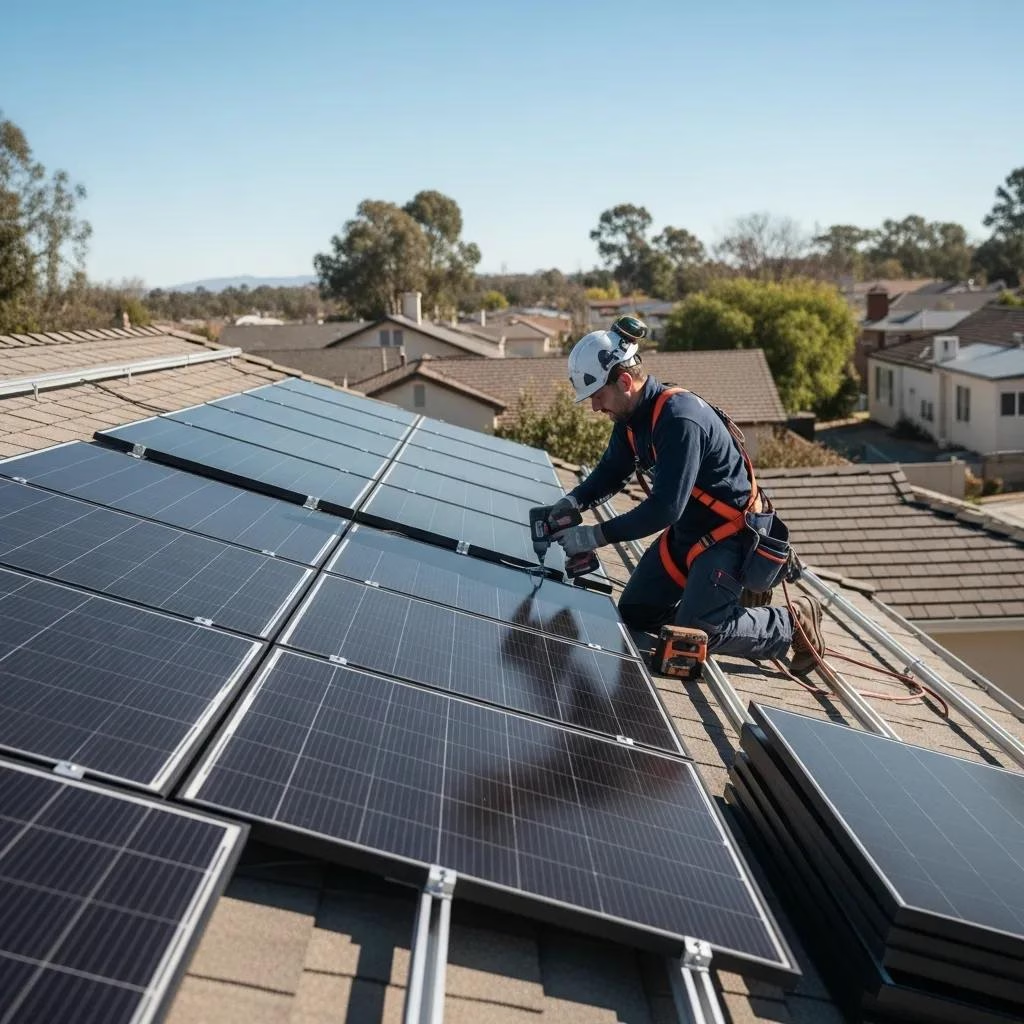
The expected costs for home solar installation in 2026 will vary based on several factors, including the size of the system, the type of solar panels chosen, and local installation rates. On average, homeowners can expect to pay between $15,000 and $30,000 for a typical 5-kW solar system. This price range includes equipment, installation, and any necessary permits. Factors that can influence the overall cost include the complexity of the installation, roof type, and geographic location.
How Solar Panels Convert Sunlight Into Electricity
Solar panels consist of photovoltaic cells that convert solar irradiance into direct current (DC) electricity. This DC electricity is then converted to alternating current (AC) by a solar inverter, making it usable for home appliances or export to the grid. Different types of solar panels can significantly impact installation prices. The three main types of solar panels are:
- Monocrystalline Solar Panels: These panels are known for their high efficiency and longevity, costing between $0.70 to $1.00 per watt. They are ideal for homeowners with limited roof space due to their higher power output.
- Polycrystalline Solar Panels: Generally less expensive, these panels cost about $0.50 to $0.70 per watt. While they are slightly less efficient than monocrystalline panels, they offer a good balance of cost and performance.
- Thin-Film Solar Panels: These panels are lightweight and flexible, costing around $1.00 to $1.50 per watt. They are suitable for specific applications but typically have lower efficiency compared to crystalline panels.
Understanding the cost differences between these panel types can help homeowners choose the best option for their needs and budget. Additionally, considering the solar panel degradation rate and annual degradation (typically 0.5% per year) is important for long-term performance expectations.
Grid-Tied, Off-Grid, and Hybrid Home Solar Systems Explained
Home solar systems can be configured as grid-tied, off-grid, or hybrid systems. A grid-tied system connects to the local utility grid, allowing homeowners to export excess electricity and receive credits through net metering or virtual net metering. An off-grid system operates independently, often requiring battery storage to provide power when solar irradiance is low. Hybrid systems combine both approaches, using battery storage alongside grid connection for enhanced reliability and energy management.
The installation process for solar panels involves several key steps, each with associated fees. Typical steps include:
- Site Assessment: A professional will evaluate your home to determine the best solar solution, which may cost around $200 to $500.
- Design and Permitting: Customizing the solar system design and obtaining necessary permits can range from $500 to $1,500.
- Installation: The actual installation costs can vary widely, typically ranging from $10,000 to $30,000, depending on the system size and complexity.
- Inspection and Interconnection: After installation, the system must be inspected and connected to the grid, which may incur additional fees. This step involves the utility interconnection agreement.
Budgeting for these steps is crucial to ensure a smooth installation process.
Solar Panel Cost in 2026: What Homeowners Are Actually Paying
Calculating your solar energy savings and payback period involves understanding your initial investment and potential annual savings. The initial cost for a 5-kW solar system typically ranges from $15,000 to $30,000. Homeowners can estimate annual savings by considering their current electricity bills and the amount of energy the solar system will generate, measured in kilowatt-hours (kWh).
For example, if a homeowner saves approximately $5,000 annually on energy costs, the payback period can be calculated by dividing the total installation cost by the annual savings. This means that if the installation cost is $20,000 and the annual savings are $5,000, the payback period would be four years.
Average Cost of Solar Panels for Home Installation

Several tools can help homeowners estimate potential savings from solar panels:
- Energy Audits: Conducting an energy audit can provide insights into current energy usage and potential savings.
- Online Solar Calculators: Many websites offer calculators that estimate solar savings based on location, energy consumption, and system size.
- Consulting with Solar Experts: Engaging with professionals can provide tailored estimates and insights into the best solar solutions for your home.
These tools can help homeowners make informed decisions about their solar investments. Homeowners interested in further reducing their utility bills may also want to explore home energy efficiency upgrades.
Key Factors That Affect Your Home Solar System Price
Recouping the investment in solar panels typically takes between five to ten years. This timeframe can vary based on factors such as installation costs, energy savings, and available incentives. Homeowners who invest in high-efficiency systems or live in areas with favorable net metering policies may see a quicker return on their investment.
Understanding the timeframe for recouping solar panel investments is essential for homeowners considering this renewable energy option.
Solar Panel Cost vs. Long-Term Solar Energy Savings
In 2026, several incentives and tax credits are available to homeowners who install solar panels. These incentives can significantly reduce the overall cost of installation. Key incentives include:
- Federal Tax Credits: Homeowners can benefit from the Residential Clean Energy Credit, which allows for a 30% deduction of the installation costs from federal taxes through 2032, stepping down to 26% in 2033 and 22% in 2034.
- State-Specific Incentives: Many states offer additional incentives, such as rebates or tax credits, to encourage solar adoption.
- Local Rebates: Some local governments and utility companies provide rebates for solar installations, further reducing upfront costs.
These incentives make solar energy more accessible and affordable for homeowners.
Federal Solar Tax Credit and Renewable Energy Incentives for Homeowners
Government incentives play a crucial role in lowering solar panel installation costs. The Residential Clean Energy Credit (Section 25D) is one of the most significant incentives, allowing homeowners to deduct 30% of their solar installation costs from their federal taxes through 2032, then stepping down to 26% in 2033 and 22% in 2034. This credit applies to photovoltaic cells and related equipment, including solar inverters and battery storage when charged by solar energy. Additionally, net metering policies enable homeowners to receive credits for excess energy produced by their solar systems, further enhancing savings.
How the Federal Solar Tax Credit Works in 2026
The Residential Clean Energy Credit allows homeowners to deduct 30% of a solar panel system’s cost from their federal taxes through 2032 under IRS Form 5695. The credit then steps down to 26% in 2033 and 22% in 2034 before expiring for residential installations. This credit applies to both equipment and installation costs, including solar inverters and battery storage systems charged by solar energy.
State and Local Incentives That Reduce Your Solar Panel Cost
Home solar panels offer significant environmental benefits, primarily through the reduction of carbon emissions. By generating clean energy, solar panels help decrease reliance on fossil fuels, which are major contributors to greenhouse gas emissions. Additionally, some states and localities offer Solar Renewable Energy Certificates (SRECs) or other incentives that can provide ongoing financial benefits to solar system owners.
Net Metering: How to Maximize Your Solar Energy Savings
Net metering policies allow homeowners with grid-tied photovoltaic systems to send excess electricity back to the utility grid in exchange for credits, effectively reducing their electricity bills. Understanding local net metering rules and utility buyback rates is essential to maximize savings and optimize the levelized cost of energy (LCOE) from your solar investment. Some areas also offer virtual net metering or participate in a community solar program to expand access.
Solar Panel Performance by Region
The performance and payback period of solar panels vary significantly by region due to differences in solar irradiance, local electricity rates, and incentives. The table below summarizes average annual solar irradiance, estimated system output, and typical payback periods for a 5-kW system across five U.S. regions.
Note: These are estimates and can vary based on roof orientation, shading, and local utility rates.
Average Solar Panel System Costs by Size (Before and After Tax Credit)
Note: Costs vary by installer, location, and panel brand.
Should You Add Battery Storage?
Battery storage systems are increasingly popular additions to home solar installations, providing energy independence and backup power during outages. The average cost of a home battery system varies by brand and capacity:
- Tesla Powerwall: Approximately $10,000 to $12,000 installed.
- Enphase IQ Battery: Approximately $8,000 to $10,000 installed.
Battery storage makes financial sense in areas with time-of-use (TOU) rates, frequent power outages, or where net metering is unavailable or limited. The 30% federal tax credit also applies to battery storage systems installed alongside solar panels, reducing upfront costs.
Typical battery capacities range from 10 to 13.5 kWh, which can provide several hours of backup power for an average home, depending on energy consumption. Integrating a solar monitoring system helps optimize battery usage and manage peak demand charges effectively.
Federal Solar Tax Credit and Renewable Energy Incentives for Homeowners
Government incentives play a crucial role in lowering solar panel installation costs. The Residential Clean Energy Credit (Section 25D) is one of the most significant incentives, allowing homeowners to deduct 30% of their solar installation costs from their federal taxes through 2032, then stepping down to 26% in 2033 and 22% in 2034. This credit applies to photovoltaic cells and related equipment, including solar inverters and battery storage when charged by solar energy. Additionally, net metering policies enable homeowners to receive credits for excess energy produced by their solar systems, further enhancing savings.
How the Federal Solar Tax Credit Works in 2026
The Residential Clean Energy Credit allows homeowners to deduct 30% of a solar panel system’s cost from their federal taxes through 2032 under IRS Form 5695. The credit then steps down to 26% in 2033 and 22% in 2034 before expiring for residential installations. This credit applies to both equipment and installation costs, including solar inverters and battery storage systems charged by solar energy.
State and Local Incentives That Reduce Your Solar Panel Cost
Home solar panels offer significant environmental benefits, primarily through the reduction of carbon emissions. By generating clean energy, solar panels help decrease reliance on fossil fuels, which are major contributors to greenhouse gas emissions. Additionally, some states and localities offer Solar Renewable Energy Certificates (SRECs) or other incentives that can provide ongoing financial benefits to solar system owners.
Net Metering: How to Maximize Your Solar Energy Savings
Net metering policies allow homeowners with grid-tied photovoltaic systems to send excess electricity back to the utility grid in exchange for credits, effectively reducing their electricity bills. Understanding local net metering rules and utility buyback rates is essential to maximize savings and optimize the levelized cost of energy (LCOE) from your solar investment. Some areas also offer virtual net metering or participate in a community solar program to expand access.
Key Considerations Before Installing Solar Panels
- Roof Age, Condition, and Orientation: A roof in good condition with a south-facing orientation typically receives the highest solar irradiance, optimizing energy production. Roof age and structural integrity should be assessed before installation. Consider securing a solar easement to protect sunlight access.
- Local Net Metering Policies and Utility Buyback Rates: These vary by location and impact the financial benefits of exporting excess energy to the grid.
- Homeowners Association (HOA) Rules and Permitting Requirements: Some HOAs have restrictions on solar panel installations, and local permits are required to ensure compliance with building codes.
- Shading from Trees or Neighboring Buildings: Shading can significantly reduce system efficiency by blocking sunlight from photovoltaic cells.
- Energy Usage Patterns and Future Plans: Consider your current energy consumption and whether you plan to add an electric vehicle (EV) charger or battery storage, which can affect system size and design. For those considering electric vehicles alongside solar, understanding EV charging at home is increasingly relevant.
Financing Options for Home Solar Systems
Homeowners have several financing options available to make solar panel installations more affordable. These include:
- Cash Purchase: Paying upfront for the system, maximizing long-term savings and eligibility for tax credits.
- Solar Loans: Loans specifically designed for solar installations, offering competitive interest rates and flexible repayment terms.
- Leasing Agreements: Leasing solar panels with little to no upfront cost, paying a fixed monthly fee without ownership or tax credit eligibility.
- Power Purchase Agreements (PPAs): Paying for the electricity generated by the solar system rather than the system itself, with no upfront cost and limited tax benefits.
How Much Can Solar Panels for Home Actually Save You?
The measurable impact of solar panels on carbon emissions reduction is substantial. Research indicates that a typical residential solar system can offset approximately 100 tons of carbon dioxide over its lifetime, mostly within a 25-30 year operational period. This reduction contributes to improved air quality and a healthier environment for future generations.
Calculating Your Potential Solar Energy Savings
Estimating savings involves analyzing your current electricity consumption in kilowatt-hours (kWh), local electricity rates, and the expected solar energy production based on solar irradiance in your area. Tools such as online solar calculators and energy audits can assist in this process. Factoring in net metering credits and available incentives will provide a clearer picture of your payback period and levelized cost of energy (LCOE).
Payback Period: When Does Your Home Solar System Break Even?
The payback period is the time it takes for the savings from solar energy to cover the initial investment. This period varies widely but typically ranges from 5 to 10 years, depending on system cost, energy savings, and incentives. A shorter payback period is often achieved with higher local electricity rates, strong net metering policies, and the 30% federal tax credit.
How Solar Panels Help You Reduce Carbon Footprint at Home
Solar panels reduce reliance on fossil fuels by generating clean electricity from sunlight. This transition lowers greenhouse gas emissions and supports energy independence. Integrating battery storage systems allows homeowners to store excess energy for use during peak hours or outages, further enhancing environmental benefits and grid resilience.
Is Renewable Energy for Home Right for You? Key Factors to Evaluate
- Roof Condition and Orientation: Ensure your roof is structurally sound and ideally south-facing for maximum solar irradiance.
- Local Electricity Rates and Grid Reliability: Higher rates and less reliable grids increase the value of solar and battery storage.
- Financing Options: Evaluate cash purchase, loans, leases, and PPAs to find the best fit for your financial situation.
- Permitting and HOA Rules: Confirm local regulations and HOA policies to avoid installation delays.
- Energy Usage and Future Needs: Consider current consumption and plans for EV charging or battery storage integration.
Step-by-Step Guide to Installing Solar Panels for Home
The installation process typically involves the following steps:
- Site Assessment: A professional evaluates your roof, shading, and energy needs.
- System Design and Permitting: Customized design and obtaining necessary permits.
- Installation: Mounting photovoltaic panels, wiring, and installing the solar inverter and battery storage if applicable. Consider the choice between a string inverter vs. microinverter for system optimization.
- Inspection and Interconnection: Final inspections and connecting the system to the grid for grid-tied systems.
Choosing a Qualified Solar Installer
Selecting an experienced and certified installer is critical. Look for certifications such as NABCEP and check customer reviews. A qualified installer ensures compliance with local codes, optimizes system performance, and assists with incentive paperwork including IRS Form 5695 for tax credits.
What to Expect During the Solar Installation Process
Installation typically takes a few days to a week, depending on system size and complexity. The process includes mounting panels, installing inverters and battery storage, and connecting to the electrical system. After installation, inspections ensure safety and compliance before activation.
Frequently Asked Questions
What maintenance do solar panels require?
Solar panels are generally low-maintenance. Regular cleaning to remove dust, debris, and bird droppings helps maintain efficiency. Professional inspections every few years check for issues like loose connections or inverter performance. Monitoring systems can alert homeowners to drops in energy production.
How do I choose the right solar installer?
Research local installers with certifications such as NABCEP. Compare multiple quotes, inquire about warranties, and check customer feedback. A reputable installer will provide detailed proposals and assist with permits and incentives.
What are the environmental benefits of installing solar panels?
Solar panels reduce carbon emissions by generating clean electricity, offsetting approximately 100 tons of CO2 over their lifespan. They decrease reliance on fossil fuels, improve air quality, and support sustainable energy independence.
Can I install solar panels myself?
DIY installation is generally not recommended due to the complexity of electrical work, safety concerns, and local code requirements. Professional installation ensures system efficiency, safety, and eligibility for incentives.
What happens if I move after installing solar panels?
You can sell your home with the solar system, potentially increasing its value. If under a lease or Power Purchase Agreement, these contracts may be transferable to the new owner. Relocating owned panels is possible but costly and complex.
Are there financing options available for solar panel installations?
Yes. Options include cash purchase, solar loans, leasing agreements, and Power Purchase Agreements (PPAs). Each has different upfront costs, ownership structures, and eligibility for tax credits.
How long do solar panels for home last?
Most solar panels have warranties of 25 years or more and can continue producing electricity beyond that with slightly reduced efficiency.
Can solar panels for home work during a power outage?
Standard grid-tied systems shut down during outages for safety. However, systems with battery storage and appropriate inverters can provide backup power during outages.
What is the best home solar system size for my house?
System size depends on your energy consumption, roof space, budget, and future plans such as EV charging or battery storage. A professional assessment can recommend the optimal size.
For homeowners in high-solar regions with adequate roof space, a strong credit score for financing, and annual electricity bills above $1,500, solar panels in 2026 represent one of the most financially sound and environmentally impactful home improvements available. The combination of the 30% federal tax credit, declining installation costs, and rising utility rates makes the calculus more favorable than at any previous point.
This article is for informational purposes only. Tax credit eligibility varies. Consult a tax professional and licensed solar installer for personalized advice.